Off the Roll: Highlights of a Global Textiles ProjectMain MenuOff the Roll: Highlights of a Global Textiles ProjectHome PageClothing - Wearable ArtCreatures - Real and ImaginedDecorative Techniques from Around the WorldSpiritual Iconography and Ceremonial ObjectsThe Things that Make a HomeTextiles Photography ProjectJessica Nelson9a5eb8d4bf9f59a8ae5935bcd61eb6b29c513138
1999-62-7
1media/1999-62-7_thumb.jpg2024-08-07T13:59:49+00:00Jessica Nelson9a5eb8d4bf9f59a8ae5935bcd61eb6b29c51313821Ahyallo (Quechan); image by Juan Arceplain2024-08-07T13:59:49+00:002024052011042320240520110423Jessica Nelson9a5eb8d4bf9f59a8ae5935bcd61eb6b29c513138
This page is referenced by:
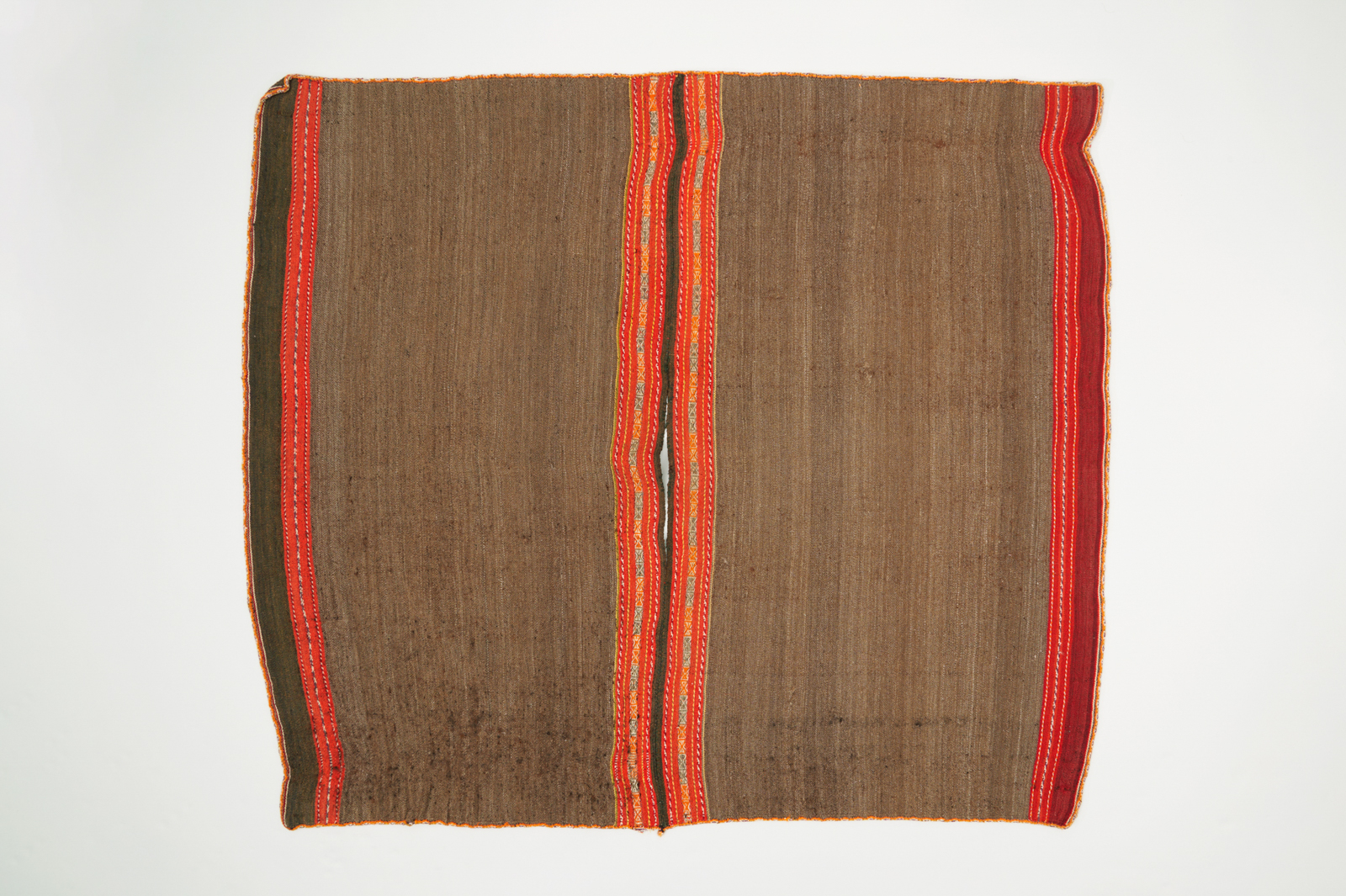
12024-08-22T01:22:55+00:00Poncho (Quechua)24plain2026-03-26T14:37:11+00:00Maker Once Known, Quechua People (Bolivia) Poncho (early 20th century) wool 99.5 x 114.0 cm Donated by Prof. Dwight B. and Anna Cooper Heath as the David B. Heath Memorial Collection 1999-62-7
This is a wool poncho. It consists of two lengths of finely woven wool sewn together. It is dark brown with predominantly red and orange bands with an elaborate diamond design as edging.
This textile was produced by the Quechua, a South American Indigenous people living in the Andean highlands from Ecuador to Bolivia. There are many regional varieties of Quechua, which was the language of the Inca empire and which later became the common language of the Spanish and Indigenous people throughout the Andes. For more on Andean weaving traditions, please visit the Centro de Textiles Tradicionales del Cusco where weavers from the Andes have put together a timeline of the region's long-standing textile traditions.