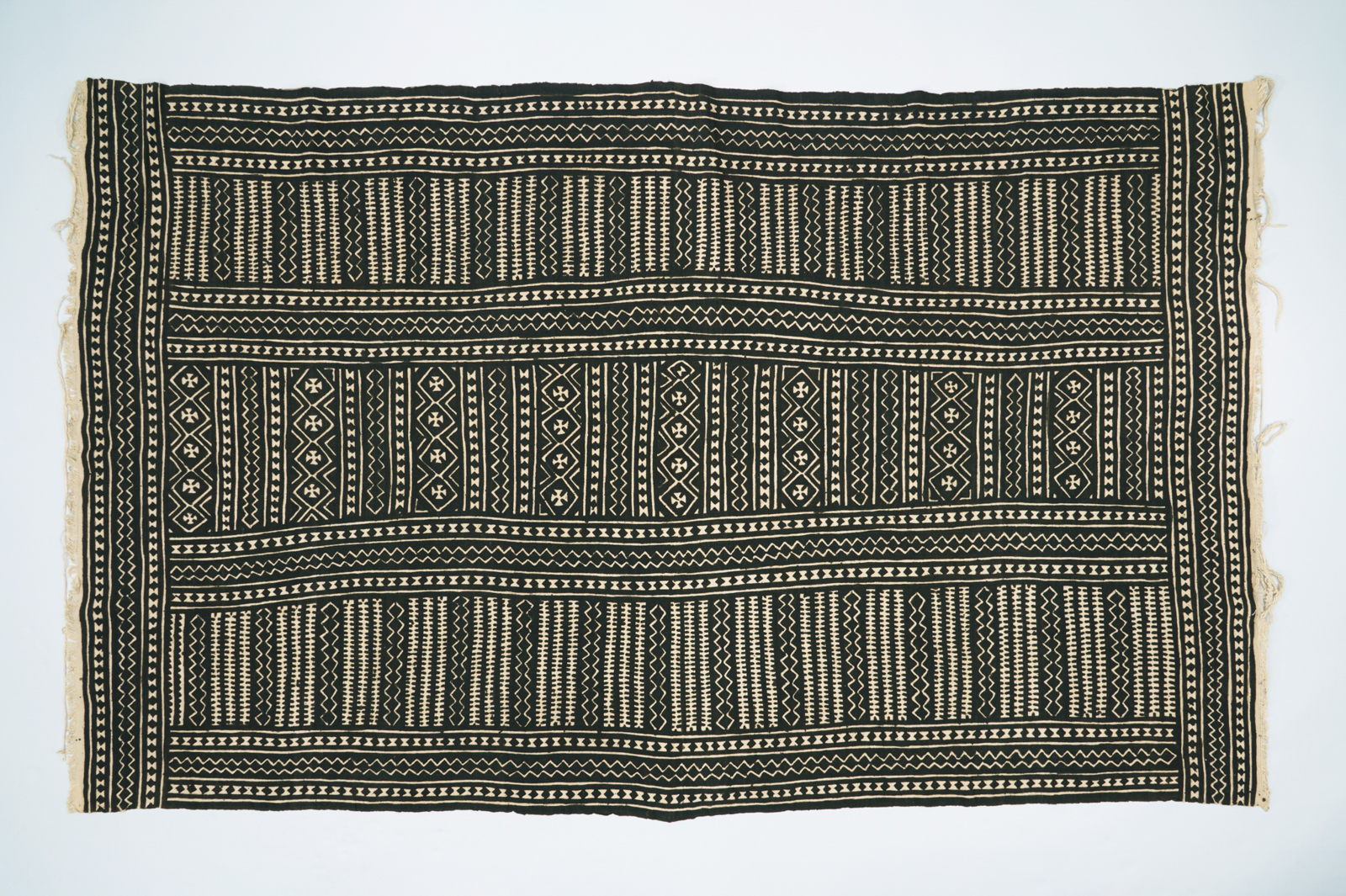
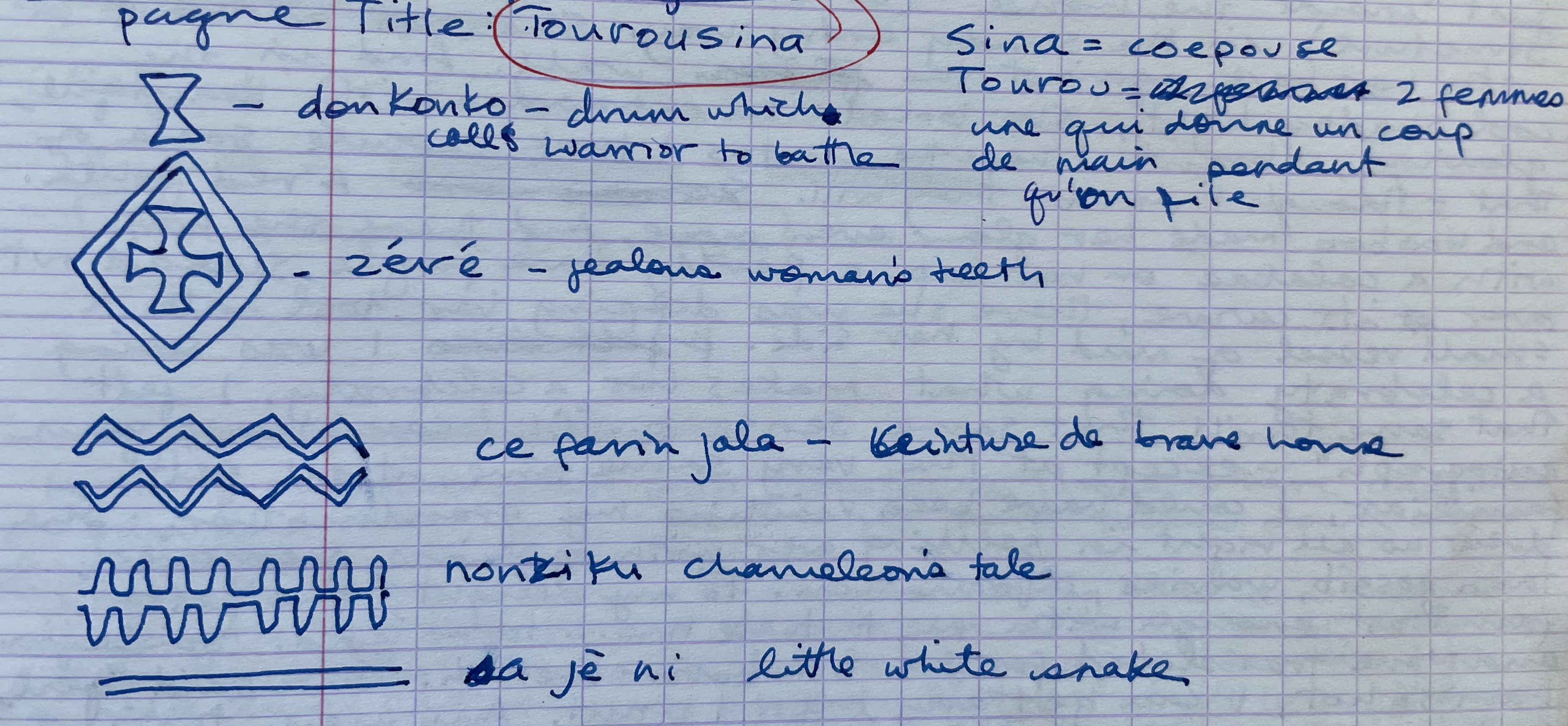
This is a skirt, or pagne (wrapper) made out of bògòlanfini, or mud cloth. The Haffenreffer commissioned this piece from Nakunte Diarra, an internationally renowned bògòlanfini practitioner, and her son Binde Diarra in January 2004. Titled "Tourousina" this pagne is composed of strip cloth, which is used for both ceremonial and everyday wear by bògòlanfini makers. As one might infer from the phrase mud cloth, bògòlanfini is a decorative tradition which uses specially fermented mud in conjunction with pre-treated cloth to create designs. According to the Metropolitan Museum of Art's catalog,
"Although the technique used superficially resembles a resist technique, it is one of direct application of the colorant onto a pre-mordanted cloth. The designs appear as the unpainted areas when the background is painted with a specially prepared fine black clay. A spatula or feather is used to apply the paint onto the surface. Once the surface is dry, both the clay and the yellow color are removed through the application of specially prepared "soaps," leaving a gray-white ground. In addition to their powerful graphic qualities, the designs and patterns left on the cloths hold symbolic significance."
The artist Nakunte Diarra is famous for both her technical skill in this process as well as her artistic sensibility. In