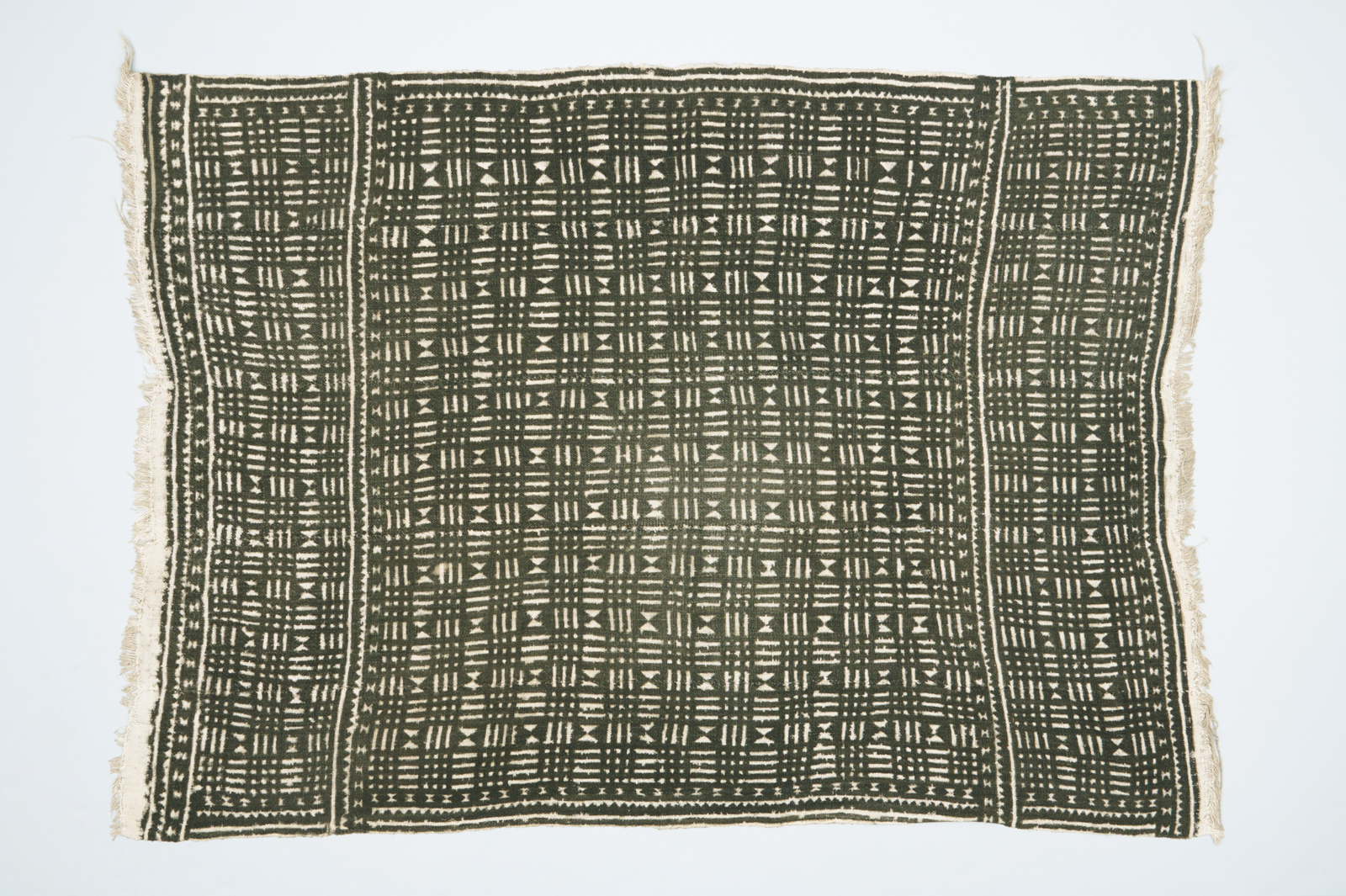
"The word bogolanfini literally translates into mud-cloth (bogolan=something made by using mud; fini=cloth). In this Malian tradition central to Bamana culture, men weave the cotton cloth strips that are sewn together, thus producing the canvas that women decorate through a complex resist process using plant extracts and mud. In addition to their powerful graphic qualities, the numerous designs and patterns painted on the cloths denote symbolic significance. Young women acquire the knowledge and understanding of this visual language from their mothers through a long-term apprenticeship. The motifs are usually abstract or semi-abstract representations of everyday objects. Used in association with one another, they can give expression to a proverb or a song, articulate a message, or represent an historical event. Women's wrappers were worn during important transitional periods: prior to the consummation of marriage or immediately following childbirth."