2004-1-32
1 media/2004-1-32_thumb.jpg 2024-08-07T12:53:28+00:00 Jessica Nelson 9a5eb8d4bf9f59a8ae5935bcd61eb6b29c513138 2 1 'Seduction' (Dogon); image by Juan Arce plain 2024-08-07T12:53:28+00:00 20240513 160651 20240513 160651 Jessica Nelson 9a5eb8d4bf9f59a8ae5935bcd61eb6b29c513138This page is referenced by:
-
1
2024-08-16T15:34:01+00:00
"Seduction" (Dogon)
37
plain
2026-03-26T14:29:08+00:00
Souleymane Goro, Dogon people (Mali)
"Seduction" (Wall Hanging), (1985)
cotton, earth pigment, plant dye, mordant, bleaching agent
90.0 x 48.0 cm
Field collected by Claire Grace with funds from the Haffenreffer Special Fund
2004-1-32
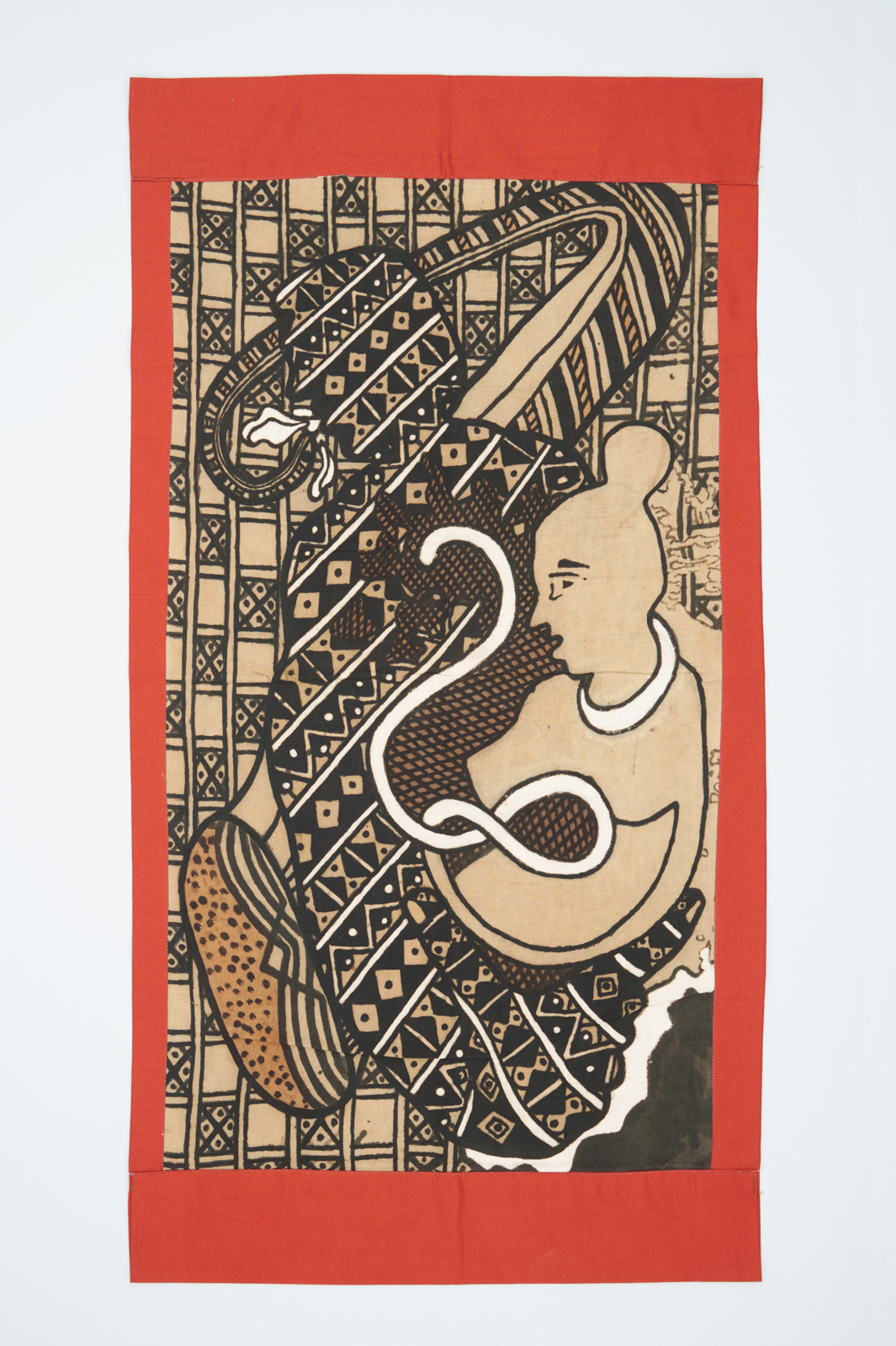
This bògòlanfini (mud cloth) wall hanging, titled "Seduction," combines traditional artistic techniques with contemporary themes. Bògòlanfini is an artistic tradition which uses fermented mud in conjunction with specially prepared cloth to create designs and motifs. The artist Souleymane Goro described his techniques to Claire Grace, an art historian who acquired this and other pieces on behalf of the Haffenreffer Museum, in conversation while visiting one of his favorite spots to work:"describe(d)... how he'd lay out his cloth right here on the bank of the pond and draw his mud right here and here at these particularly rich areas of the pond- on the far right under the "Barov" (tannin) trees which hung over where the water would have been. Barov trees, Souleymane said, are particularly rich in tannin. Their fruit, which is a dark dry pod, if it falls into water or mud, enriches the iron oxide in the mud an speeds up fermentation. I've met a good number of bogolan artists (Mopti, Segou, Ba'mako) who collect the pods and then add them to their mud stores at home. At Souley's childhood spot, the pods fall in great numbers directly into the mud and that is one reason why it makes for such a rich bogolan solution."
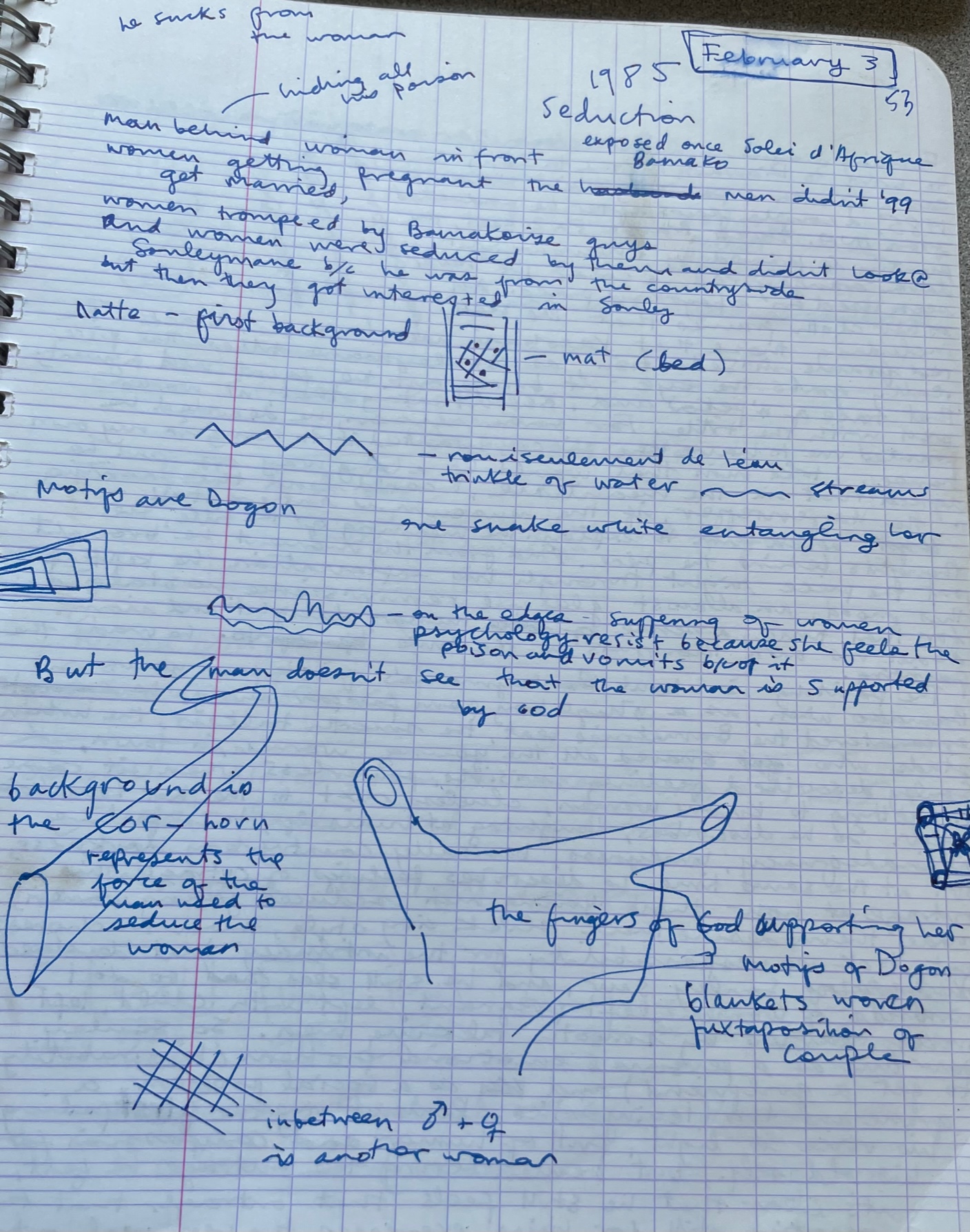
We are fortunate to have extensive notes from Grace about this piece, "Seduction," in particular, and her conversations with Soulamayne Goro about what the piece means to him.
"The red frame in "Seduction" as Soulaymane titles the piece really grabs the eye- it brings out the faint red pigment, that trace of n'pekov and, accenting that, it works well with the title...I [Grace] asked him to explain the meaning of the title, the thoughts behind the piece. And from the moment he brought out the piece right though his explanation he kept up this mood, an almost gleeful reminiscence, nostalgia for that time, a sense of humor, delight and irony about his own thoughts at the time he made the painting. This painting is about Souleymane's first few years in Bamako when, as a village boy from far far away, he encountered the Bamakoise beat, the smooth talkers, the urban studs who snared all the young women in town. Souley described feeling invisible, powerless when it came to getting to know women, clueless next to the hot Bamakoise crew. So he describes, laughing at himself, this feeling of inadequacy, loneliness, basically country-boy dorkiness, BUT at the same time he describes feelings of outrage, his outrage at how these young men seduced young women, made them desire their slick city style, their machoeness, [sic] but took no responsibility for the intimacy that developed. Souley saw, and he still sees (and so do I) hundreds of women left pregnant, left with child, left broken hearted by smooth talking men. So Souley saw this as a personal emotional problem (his inability to get a girlfriend) and as a social problem, a grave and terrible injustice. Remembering the first feeling, his voice is light, full of humor and compassion felt for his old self; but remembering the outrage he felt, it's clear that he still feels that outrage, that the painting still for him expresses the very real outrage he feels." (Grace Field Notes 2004: 53).
In the photographed page of the field notes, following the above segment of text, Grace and Soulamayne pick out some of the symbols embedded in the piece, denoting their various layered meanings. Many of these symbols are Dogon, which, like this mudcloth decorative technique, have a long history in the region. How many of these symbols can you pick out in the painting?
The resulting combination of traditional skills and modern artistic sensibility has given rise to a new life for these cloths, termed bogolan, that have added to the bògòlanfini's roles as clothing and life-stage marker, to becoming fine art as well. For more on contemporary bogolan artists, including Soulamayne Goro, visit the Groupe Bogolan Kasobane.