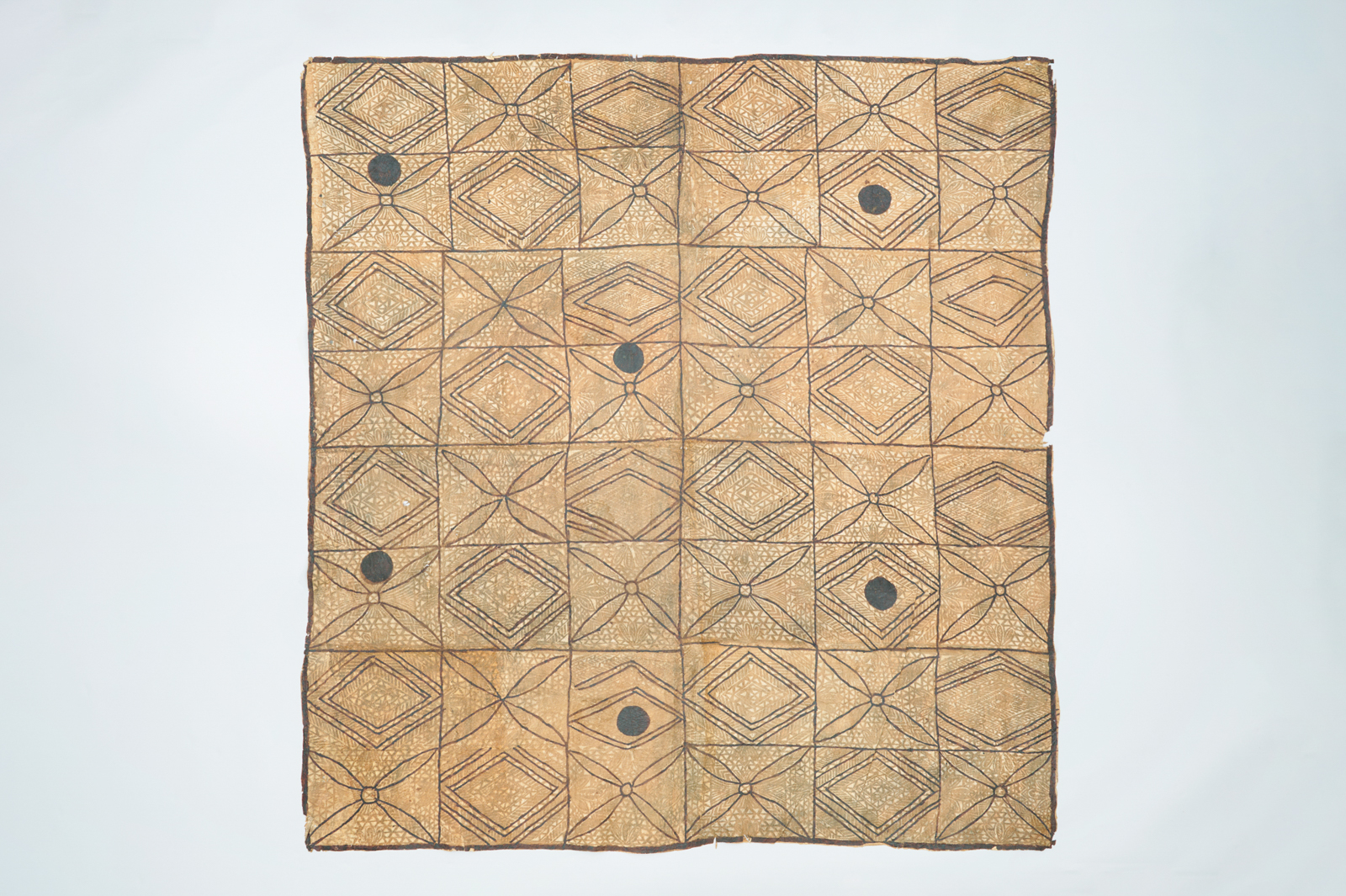
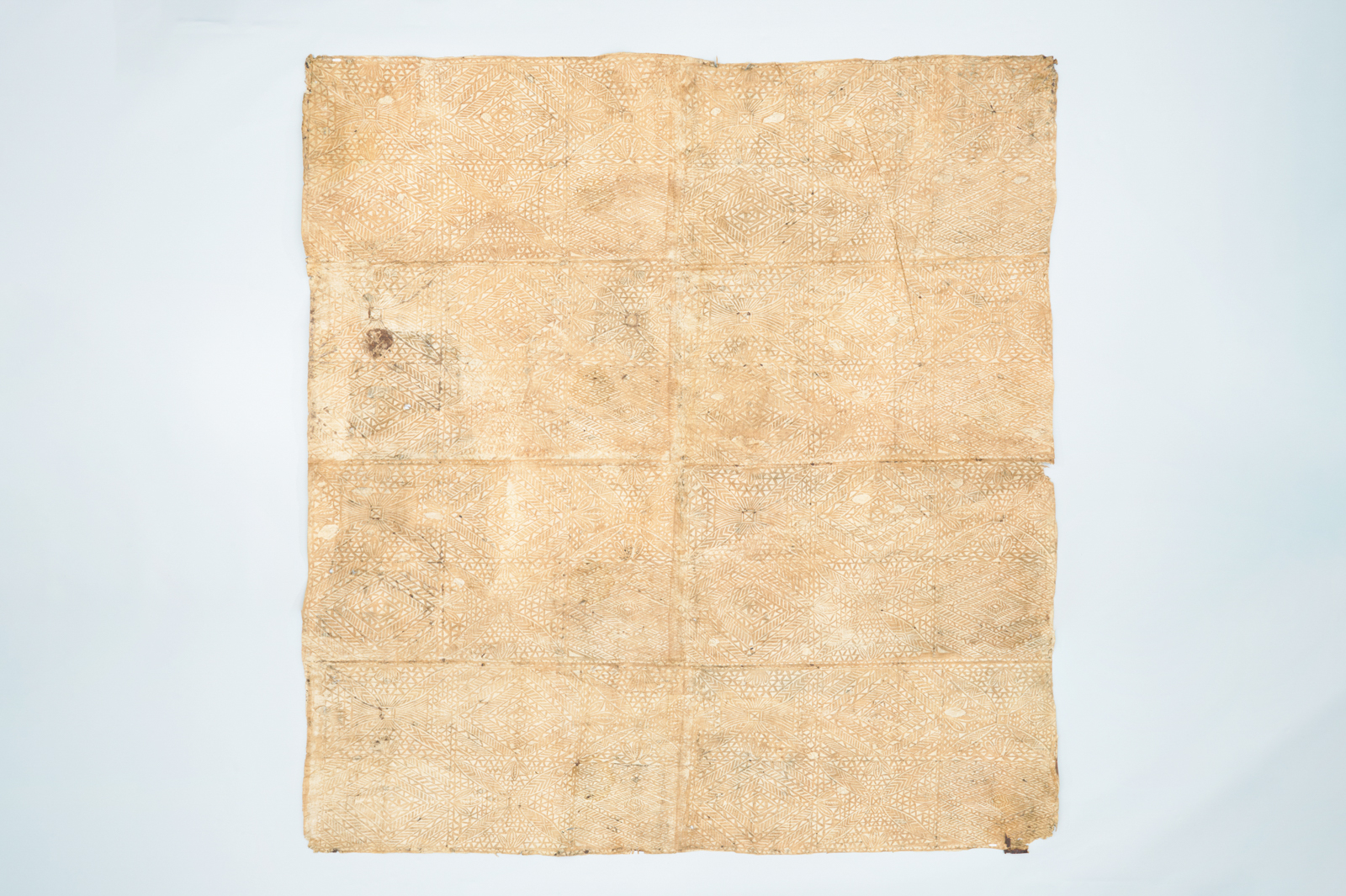
"the production of bark cloth was a lengthy process involving the entire community. Men harvested the paper mulberry trees, stripping the bark from trees and soaking it in water. With grooved wooden beaters, the women would pound the pulp which would soften and expand it several inches, knitting the fibers together resulting in a thready woven appearance. Several strips of bark cloth were pasted together with arrowroot to make a stronger tapa or beaten, slightly overlapped, to make wider pieces."
Following the creation of the cloth, the tapa is decorated using vegetable or earthen-based pigments and in techniques and styles that vary widely, including stenciling, free-painting, stamping, and rubbing."In the eighteenth century and before, tapa served as both daily and ceremonial clothing. It was made into headdresses, turbans, loincloths, sashes, girdles, skirts, and ponchos. The cloth was used for bedcovers, wall dividers, or mosquito curtains as well as for special wrappings of staff gods, for the outer layer of sculptures, for wrapping skulls, and for masks. Individuals were surrounded by tapa at birth, weddings, and death. Special cloths were made for dowries, diplomatic gifts, and treaty agreements. Large-scale accumulation of tapa signified wealth and aided in achieving status. It was also used to pay tribute. Barkcloth material, partially processed or as undecorated sheets, was an important trade item and was exchanged for plaited mats, adzes, whaleteeth, and sandalwood."
While we don't know what purpose this siapo may have been intended for, its size suggests it could have been used as a wall divider or bedcover if not made for trade.