Off the Roll: Highlights of a Global Textiles ProjectMain MenuOff the Roll: Highlights of a Global Textiles ProjectHome PageClothing - Wearable ArtCreatures - Real and ImaginedDecorative Techniques from Around the WorldSpiritual Iconography and Ceremonial ObjectsThe Things that Make a HomeTextiles Photography ProjectJessica Nelson9a5eb8d4bf9f59a8ae5935bcd61eb6b29c513138
66-4219
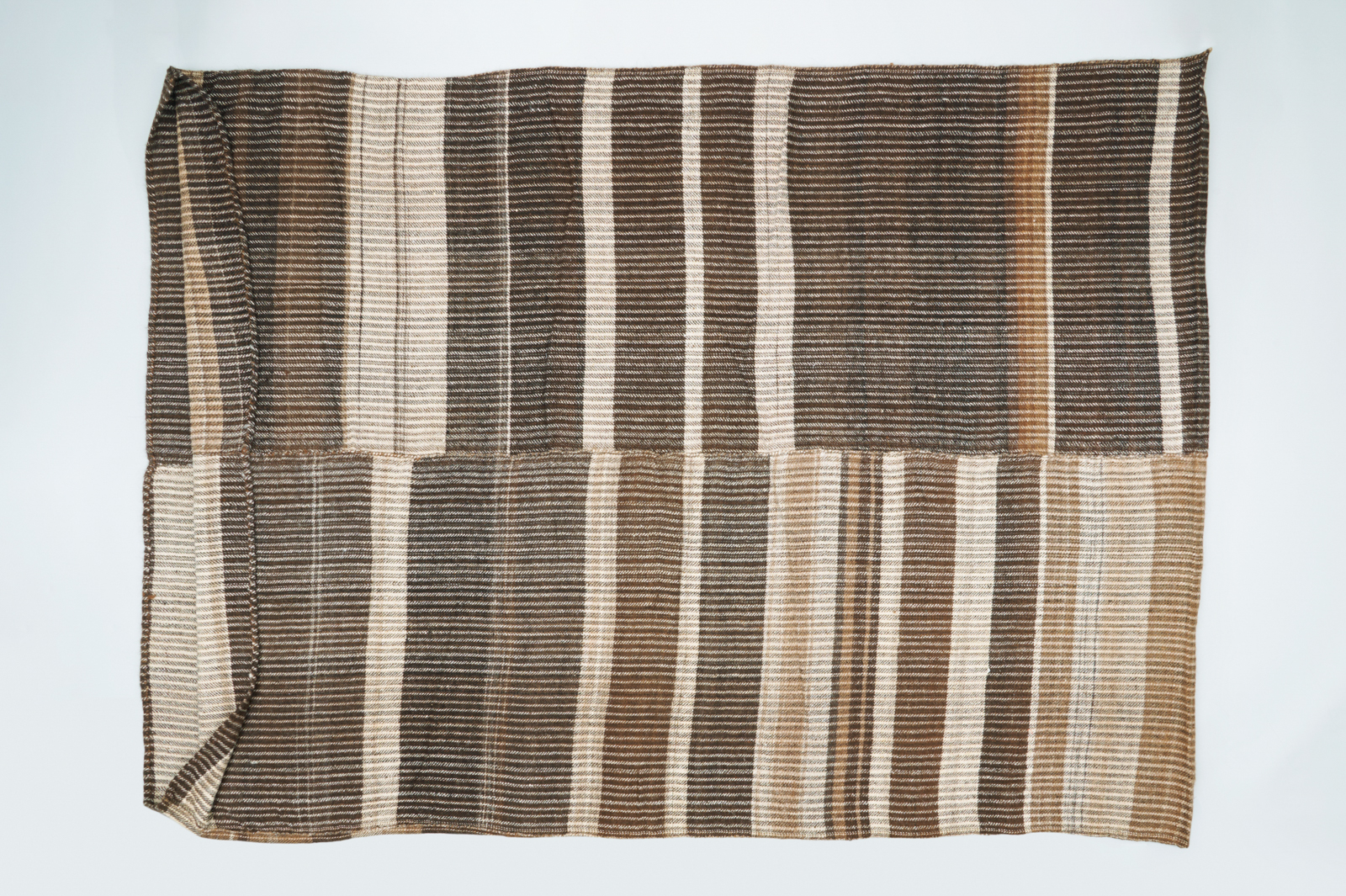
1media/66-4219_thumb.jpg2024-08-07T14:51:56+00:00Jessica Nelson9a5eb8d4bf9f59a8ae5935bcd61eb6b29c51313821Wool Sack (Quechua, Aymara); image by Juan Arceplain2024-08-07T14:51:56+00:002024052014115720240520141157Jessica Nelson9a5eb8d4bf9f59a8ae5935bcd61eb6b29c513138
This page is referenced by:
12024-09-01T02:22:10+00:00Wool Sack (Aymara, Quechua)1plain2024-09-01T02:22:10+00:00 Maker Once Known, Aymara, Quechua People (Bolivia) Wool Sack (pre-1966) llama wool 155.0 x 84.0 cm Field collected by Dwight B. Heath 66-4219
This unusual object is a very large sack woven from llama wool, likely by one of the Aymara or Quechua communities in Yungas, Bolivia where this piece was collected in 1966. A similar type of object, though significantly smaller, is a food bag, called a huayaca, and it is described in Aymara Weavings as a textile form "that has remained virtually unchanged in form, aesthetics, and function since pre-Columbian times. The design pattern consists of stripes of uniform width, usually of natural tones of undyed wool" (Adelson & Tracht 1983: 130). Llama wool is a light weight fiber, that is very insulating, but it is not the most sturdy of fabrics when woven. Consequently, we can infer that this bag, given its size (just over five feet long, and just under three feet wide) would have been used for transporting very light materials, perhaps shorn wool, should it have had this function. Another hypothesis would be that this could be a sleeping bag, perhaps used by travelers or herders while caring for flocks, as the woven llama wool would help keep someone sleeping on the ground warm. The similarity of striping patterns between this object and the food bag form certainly reinforces an interpretation that this Wool sack was a utility object without much decorative function. If you had to guess, what do you think this bag might have been used for?