72-2125 dragon detail
1 media/72-2125 (1)_thumb.jpg 2024-08-07T15:05:56+00:00 Jessica Nelson 9a5eb8d4bf9f59a8ae5935bcd61eb6b29c513138 2 1 Close up of Dragon Detail on a Temple Hanging (Balinese); image by Juan Arce plain 2024-08-07T15:05:56+00:00 20240521 145913 20240521 145913 BROWN UNIVERSITY Jessica Nelson 9a5eb8d4bf9f59a8ae5935bcd61eb6b29c513138This page is referenced by:
-
1
media/72-2125 (1).jpg
2024-08-27T14:03:55+00:00
Stitching it all Together, an example
9
image_header
2024-09-26T16:03:56+00:00
Jen Wicoff, Collections Manager & Registrar
The final stage in this process, of course, was the mammoth task of stitching together and finalizing all of the object images taken over the course of the project. With some oversized objects requiring more than 20 individual images that needed to be stitched together, and just over 400 textiles photographed, the sheer scope of photo editing required on the back end of this project staggers! Juan has been a champion, powering through this daunting mountain of files to create the object record images you see throughout this exhibition, in addition to the many others now attached to object records in our collections management system, MuseumPlus.
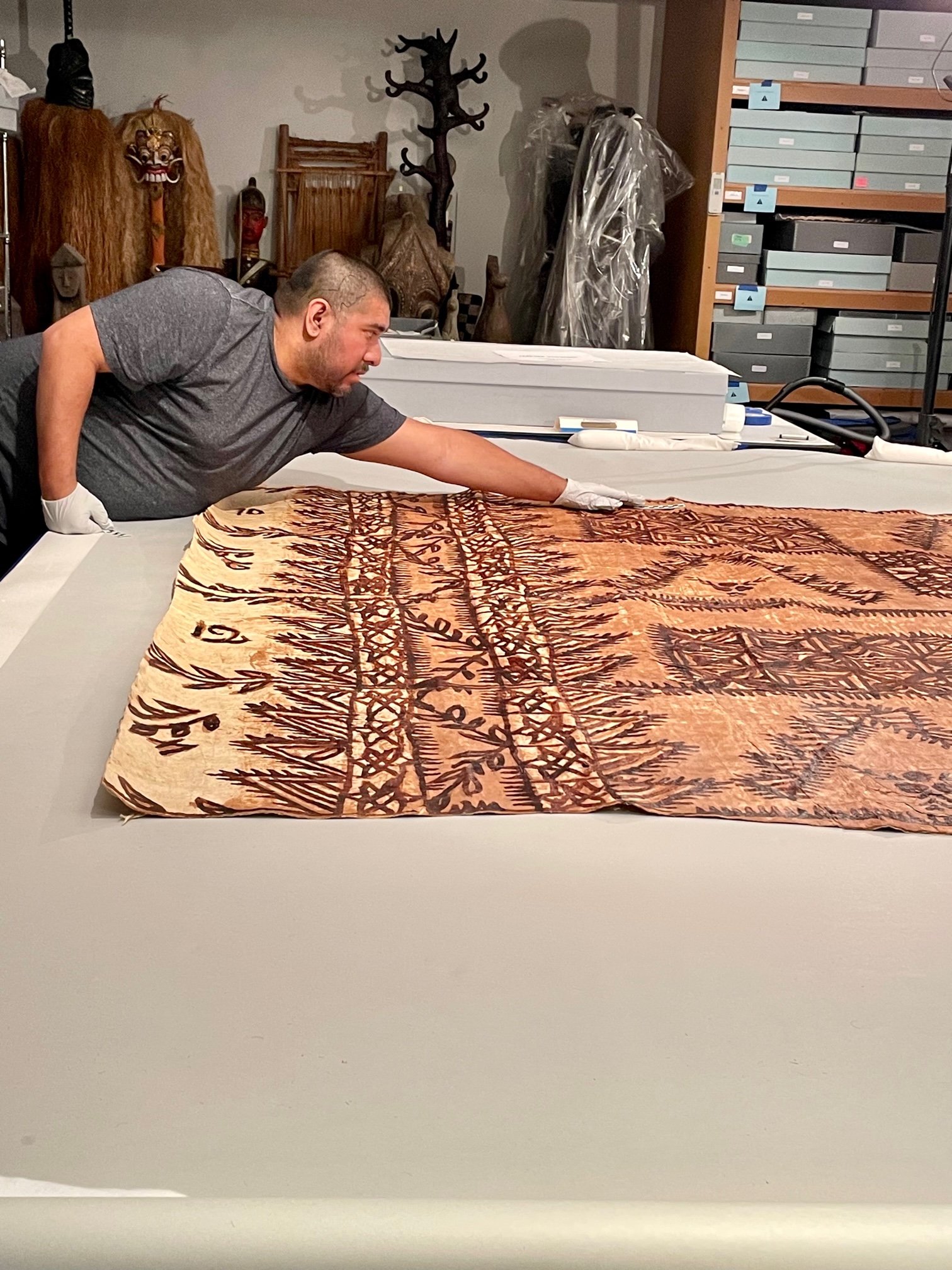
During this stitching process, Juan discovered some unique challenges that some textiles presented. As Juan mentioned in his page about textile photography, stitching images together requires anchor points to give the software something to link the images. The computer is then able to overlap and merge the images, paying attention to fine detail in the process. As Juan discovered, sometimes the software's attention to detail was too fine; despite the presence of anchor points, the software would get hung up on changes in the weave or texture of the textile, forcing him to stitch images manually. Another step in stitching is ultimately removing these anchor points from the final image, as an object record image would look odd with color check squares scattered all over its surface. This can be done in photoshop, but it is another step in the process to creating the final object image.
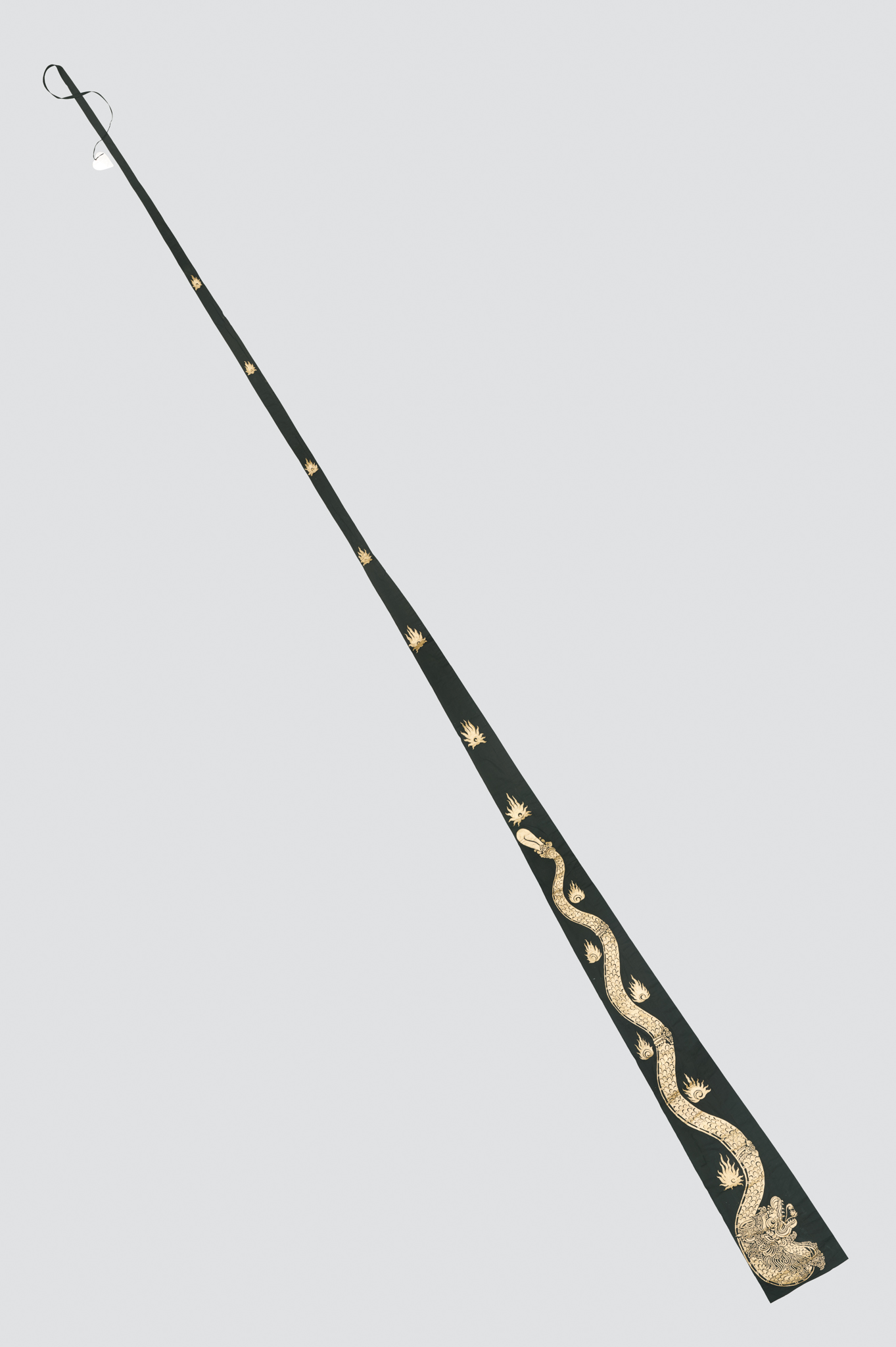
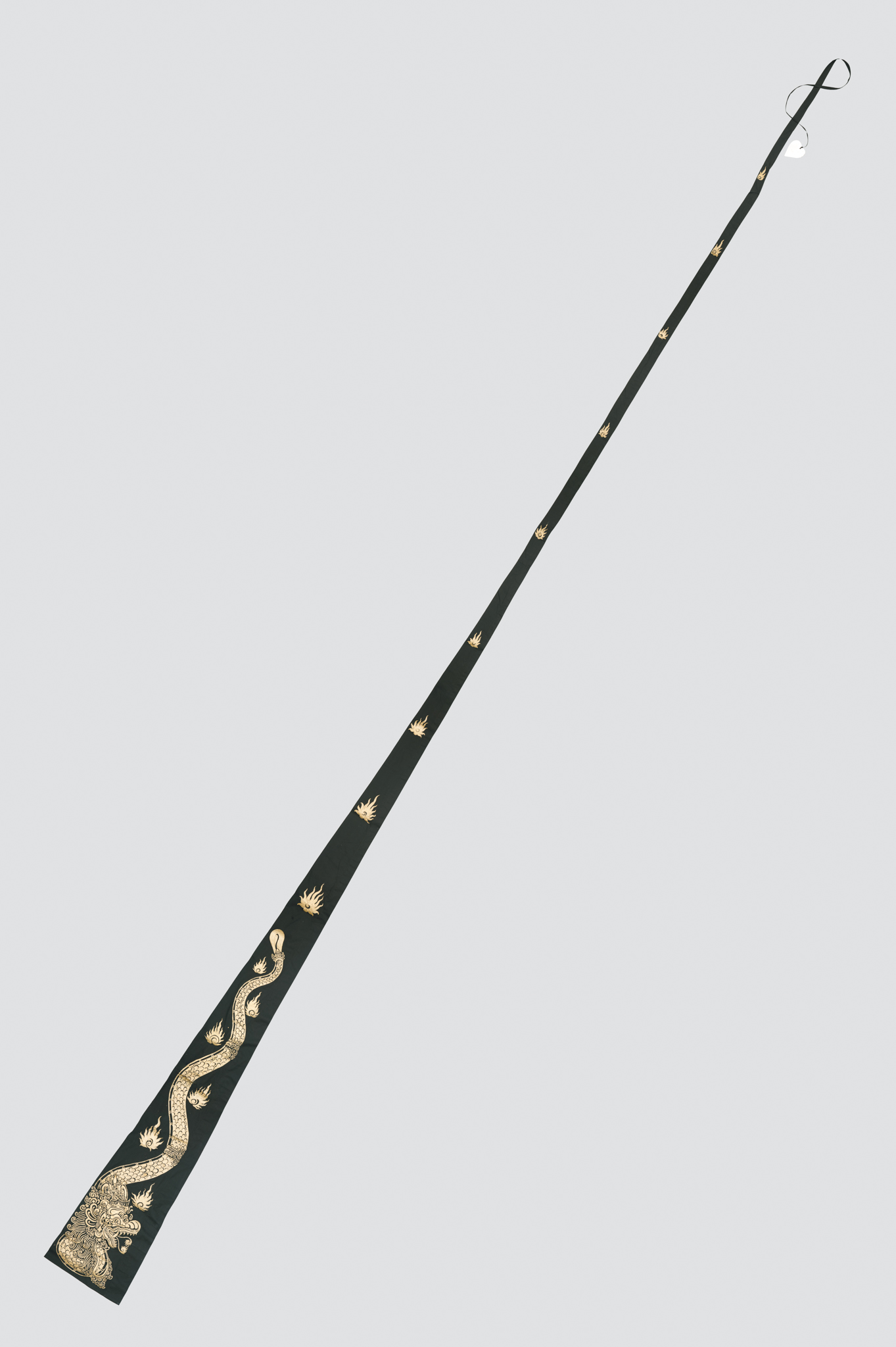
Another difficulty (quirk?) presented by this endeavor lay in marrying the shapes of the object to the medium of photography. As an example, take this Indonesian Temple hanging. This dragon banner, one of a pair photographed during this project, is over 30 feet long, and its tapering shape leading to a heart cut from sheet tin created challenges throughout the photography process. It required multiple images to be stitched together, and for much of its surface, the flaming pearl motifs in the design could serve as the anchor points. Additionally, that shiny heart posed plenty of problems in creating an image that wasn't all reflected light! When it came to combining the photos together, however, we are left with this final image, which the team is affectionately calling 'the toothbrush.' In order to view all of the pieces of this skinny, loooong banner into a single image, we are left with a rather unimpressive strip on a grey field when in reality this textile is larger than life in so many ways.
This banner and the object image for it, which we are thrilled to have, remind us of the privilege we have to work with and steward these collections. We are fortunate to care for and work with collections from cultures around the world every day. In creating this virtual exhibition, we aim to share both those collections and a small part of the work we do to care for them, but we realize that sometimes the objects can best speak for themselves. We hope you enjoyed Off the Roll and that you will visit the museum in person, and see what we have on exhibit in our gallery. -
1
2024-08-28T20:29:25+00:00
Temple Banners (Balinese)
6
plain
2024-09-16T14:26:29+00:00
Maker Once Known, Balinese People (Indonesia)
Temple Banner (20th century)
cotton, paint, tin, acid based dye
938.0 x 52.0 cm
Field collected by Dr. Philip McKean, with funds from the Haffenreffer Special Fund
72-2124, 72-2125
Collected in the summer of 1971, this is a pair of matched Indonesian temple banners. Each cotton cloth triangular banner included a narrow pocket on one edge for a pole (one had fragments of the wooden pole still inside it), and had a large sheet-tin heart attached to the very tip. On one face, gold painted stenciled designs including a dragon and flaming pearl motifs started at the wide base and continued up the banner. It is unclear if the fabric was weatherized or mercerized, but given its texture we suspect this to be the case.
Temple banners, and banners more broadly, play an important role in Buddhist religious practice across Asia. In an article published in the Textile Museum Journal, Rebecca Hall, who has studied Buddhist banners across several South Asian countries, traces the banner tradition in Buddhist practice back to the fifth century in Dunhuang, China, and she describes a trend for a "triangle shape, long rectangular body, bamboo splints, and streamers" which can be seen across many countries (Hall 2019: 79). These banners had painted, dyed, or embroidered decoration on them, sometimes featuring images of Buddhas, bodhisattvas, and other Buddhist figures, or birds, flowers, and plants (Hall 2019: 79). "In China, by the early centuries of the Common Era, banners were a part of Buddhist and Daoist rituals. They were used to adorn religious space, such as pagodas, and hung on poles at the entrances to Buddhist image halls" (Hall 2019: 79-80). Meanwhile, "Tai banners are long, narrow, single lengths of handwoven cloth, most often embellished with designs and motifs that bear some relationship to their Buddhist context. Usually made of cotton, they vary in appearance depending on the weaver's skill, the area where they were made, and, at times, their purpose. The emphasis is not on their shape but rather the length of cloth and the motifs and design" (Hall 2019: 82). While this set of banners, which come from Indonesia, do not exactly fit into either of these descriptions, it is possible to see how this pair of banners might fit into a broader Buddhist banner tradition within the region. Hints of the triangular shape, the painted decoration, and the suspension on a pole fit with the original Chinese practice, while the long, skinny form and the construction of the banners from a single piece of cloth (rather than patched and pieced as in other traditions) is reminiscent of the more local Tai Buddhist tradition.
We encountered some unusual textiles during this project, but this set of banners were two of the most evocative pieces in the collection; from their unwrapping (as they are loooooong skinny textiles with a big tin heart on their tip) to their image editing, surprises abounded!
First, these textiles are huge, just over thirty feet long each, but under two feet wide at the base (their widest point). Wrangling them for photography and object measurements proved challenging as they were longer than the table (and the room) we were working in! Next, the cloth of the banner had been dyed a deep black before painting, but this acid dye is now shedding as it eats away at the body of the textile. Fortunately, both textiles are in great shape right now, but each repositioning of the banners required a pass with a dust cloth to keep the background clean for the next photo.
Finally, let's talk about the dragon! Dragons appear in mythologies across the world, often as lizard or serpent-like creatures, sometimes with wings, sometimes without, and may be benevolent or evil. In East Asian traditions, "the dragon retains its prestige and is conceived as a beneficent creature...Both Chinese and Japanese dragons, though regarded as powers of the air, are usually wingless. They are among the deified forces of nature in Daoism. Dragons also figure in the ancient mythologies of other Asian cultures, including those of Korea, India, and Vietnam." In a post celebrating 2024, the Year of the Dragon, at the San Mateo Buddhist Temple, the author reflects on the significance of the dragon of in Buddhist beliefs:
It seems especially fitting to share these Indonesian Temple Banners featuring their dragons and flaming pearl motifs in the Year of the Dragon."In Buddhism, dragons are revered as protectors of the Buddha’s teaching, or the Dharma. Many temples feature dragon images on incense burners, painted doors, and altar adornments. In his Hymns in Praise of Prince Shotoku¸Shinran Shonin describes how a dragon protects the Dharma at the Shitennoji Kyoden-in temple built in the sixth century by Prince Shotoku in the area of present-day Osaka:
On this site, there is a body of pure water;
It is called Koryo pond.
An auspicious dragon constantly dwells therein;
It protects the Buddhist teaching.
(Collected Works of Shinran, p. 436)
...Since ancient times, Buddhists have invoked the image of the dragon to express their wish for the precious treasure of the Dharma to be protected from the corruption of human selfishness. Dragons are described as marvelous beings endowed with the power to move freely between the mundane realm of human existence and the lofty heights of spiritual perfection."
.jpg)
.jpg)
.jpg)