Off the Roll: Highlights of a Global Textiles ProjectMain MenuOff the Roll: Highlights of a Global Textiles ProjectHome PageClothing - Wearable ArtCreatures - Real and ImaginedDecorative Techniques from Around the WorldSpiritual Iconography and Ceremonial ObjectsThe Things that Make a HomeTextiles Photography ProjectJessica Nelson9a5eb8d4bf9f59a8ae5935bcd61eb6b29c513138
74-111 cradle carrier wrapped up
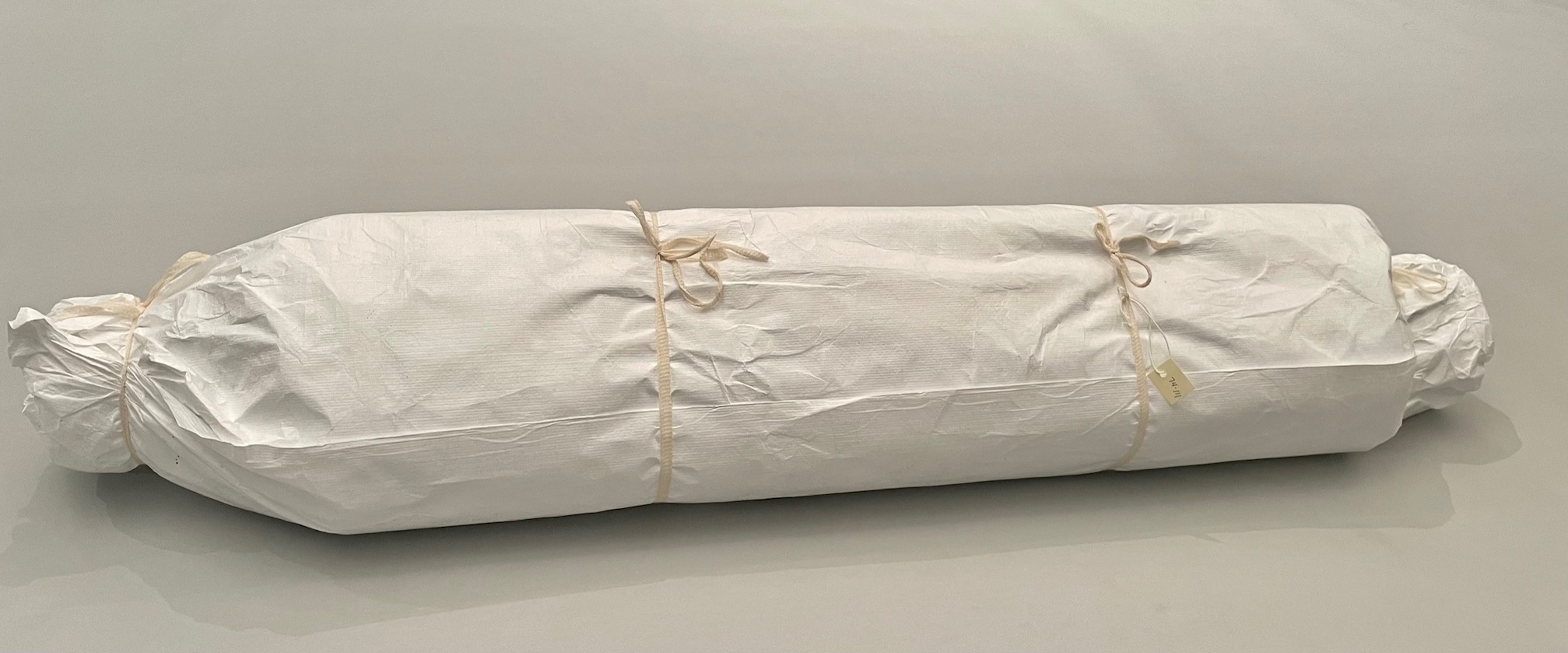
1media/74-111 cradle carrier wrapped up_thumb.jpeg2024-08-07T14:46:15+00:00Jessica Nelson9a5eb8d4bf9f59a8ae5935bcd61eb6b29c51313821Wrapped up Rolled Textile; image by Jessica Nelsonplain2024-08-07T14:46:15+00:00Jessica Nelson9a5eb8d4bf9f59a8ae5935bcd61eb6b29c513138
This page is referenced by:
1media/Condition Report for 98-36-53.jpg2024-08-20T14:59:33+00:00Condition Reporting17image_header2026-03-25T20:47:38+00:00Jennie Smithken-Lindsay, Collections Assistant
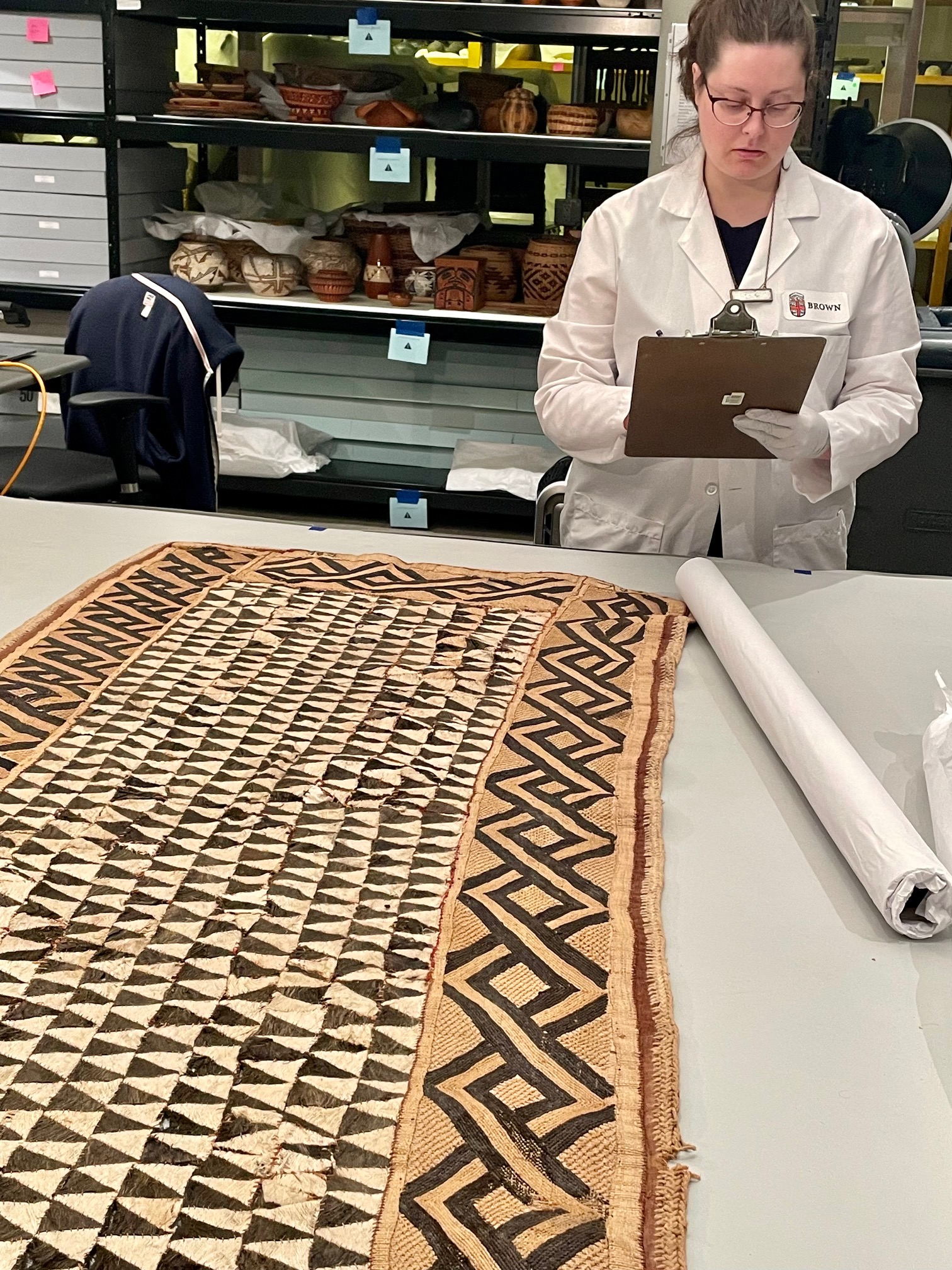
After the textile has been photographed, the next step in this process is to complete a condition report. A condition report is a written and visual description of an object’s appearance, it’s state of preservation, and any damage, at a particular point in time. The information is captured in a standardized document, that allows collection staff to gather the same information in every instance. You can see an example of a blank report here. Condition reports can be conducted on an object when it first enters a collection, when it is going on exhibit, or when it is part of a project like this.
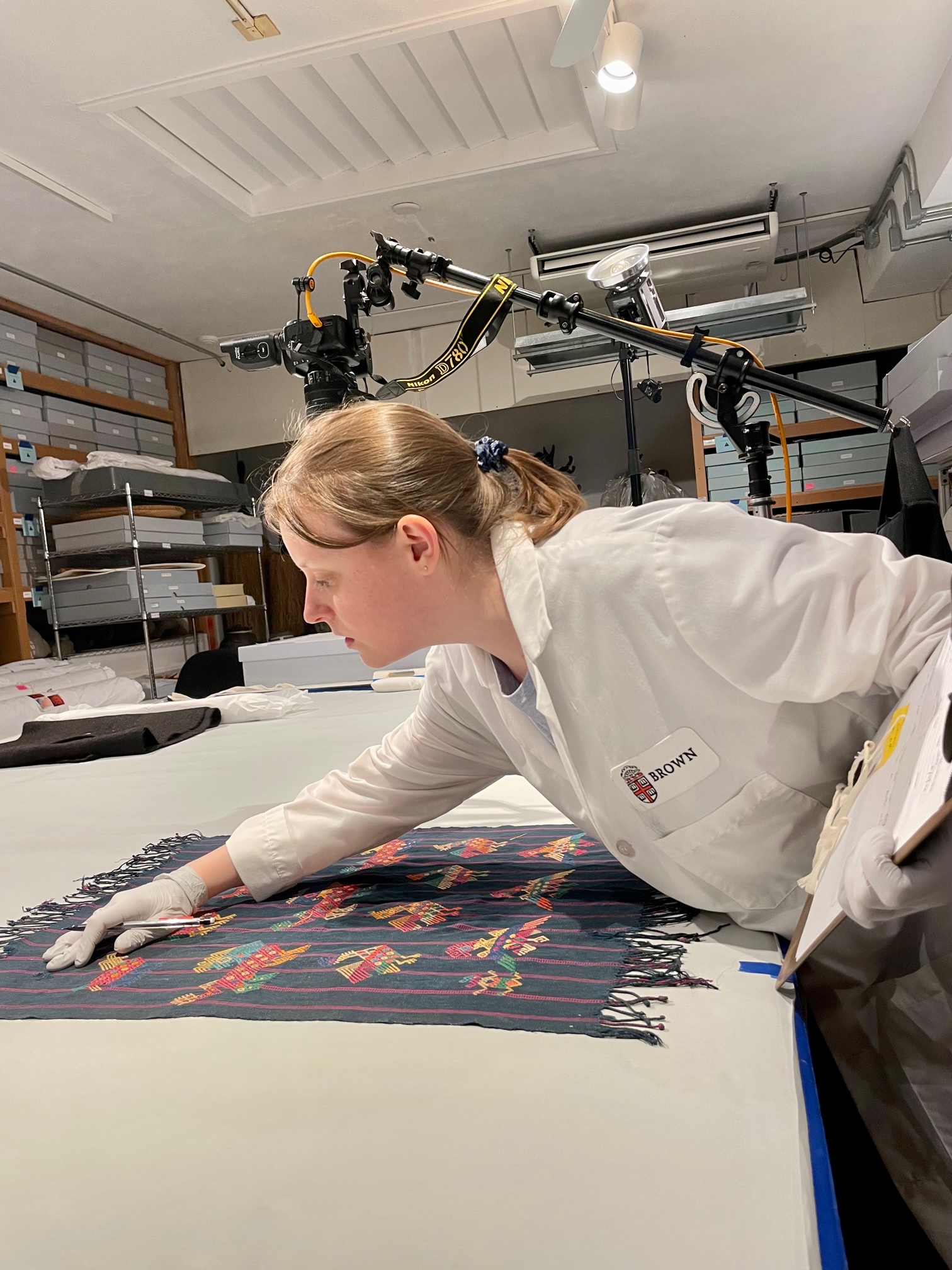
To begin, the textile is laid out on a flat, clean, well-lit area. The tools on hand may be a magnifying glass, a flashlight, a pencil, a paper copy of the condition report form, and a laptop for recording additional information and for access to the museum’s digital collections database. Next, the collection staff member observes the overall object.Does the object appear to be extremely fragile? Extremely fragile object require extra care and consideration when being manipulated, and this fragility is flagged and special handling needs are noted in the condition report.
Then, the staff closely inspects the object. Are there parts or segments that are folded or closed? If these areas cannot be opened easily they are never forced open. Instead a note is made in the report. Are there any stains, spots, chips on buttons, missing pigment, holes, pulled or frayed threads? All of these are examples of damages that are looked for. Are there any previous repairs? Both the size and location of the damages are recorded.
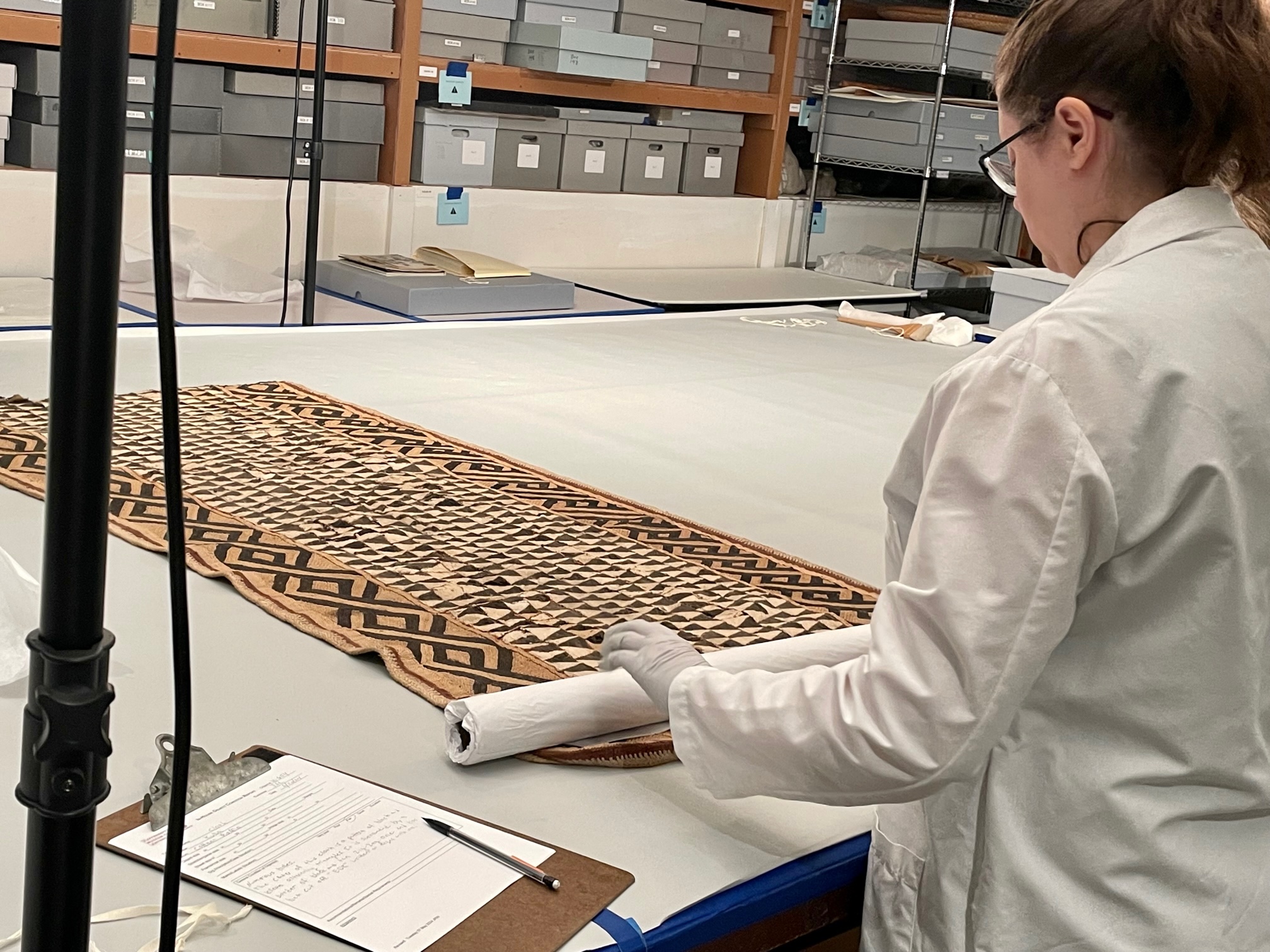
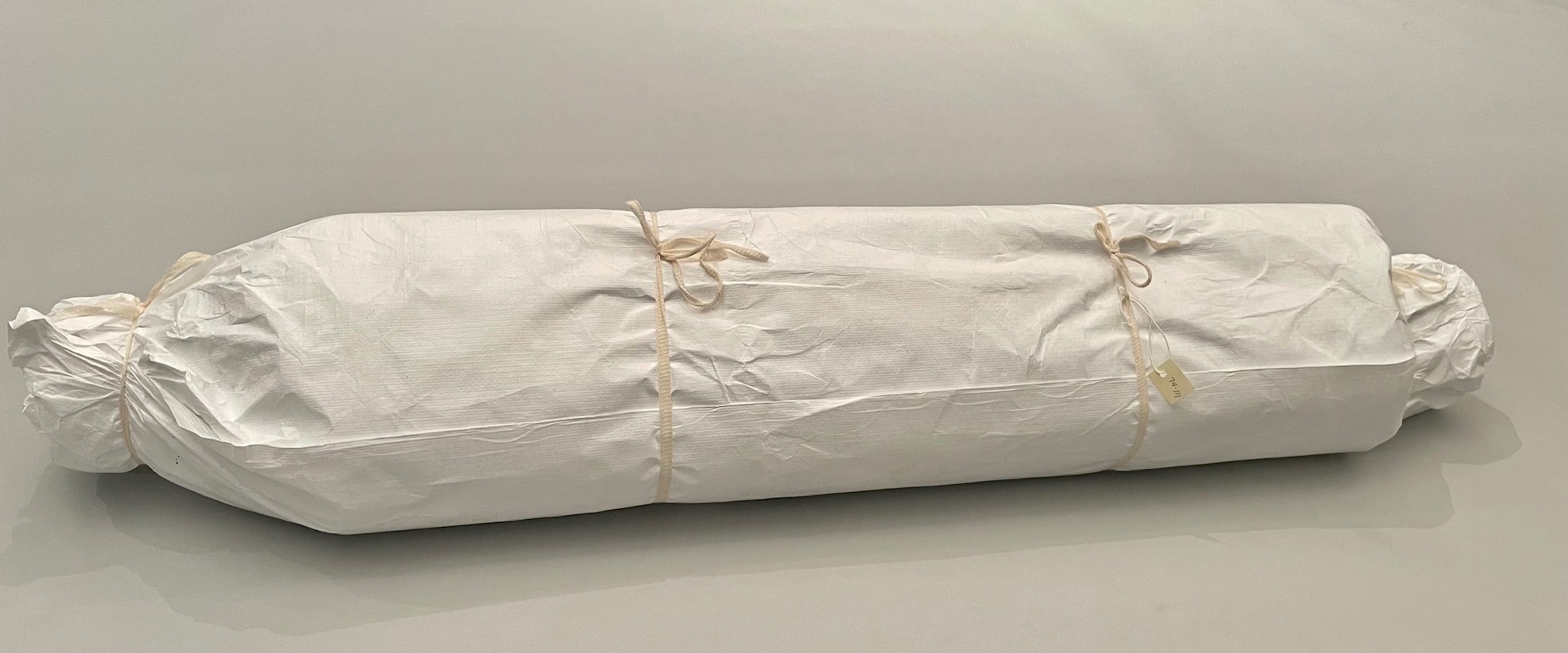
After a condition report is completed, the textile is placed back on its roll. This is done by laying the storage tube at one of the textile, pictured here.Holding the end of the textile to the side of the tube firmly but gently, the staff member begins rolling the tube down the textile, winding the textile around the tube as it goes. Once the entire textile is wound around the tube, a layer of acid-free tissue is tied around it to protect it, as seen here. By doing a condition report, the collection staff will immediately notice any damage that has occurred. This allows staff to keep track of the physical condition of the object, and apply any necessary conservation measures to ensure the stability of the object. These reports also help staff monitor the overall health of the collection.
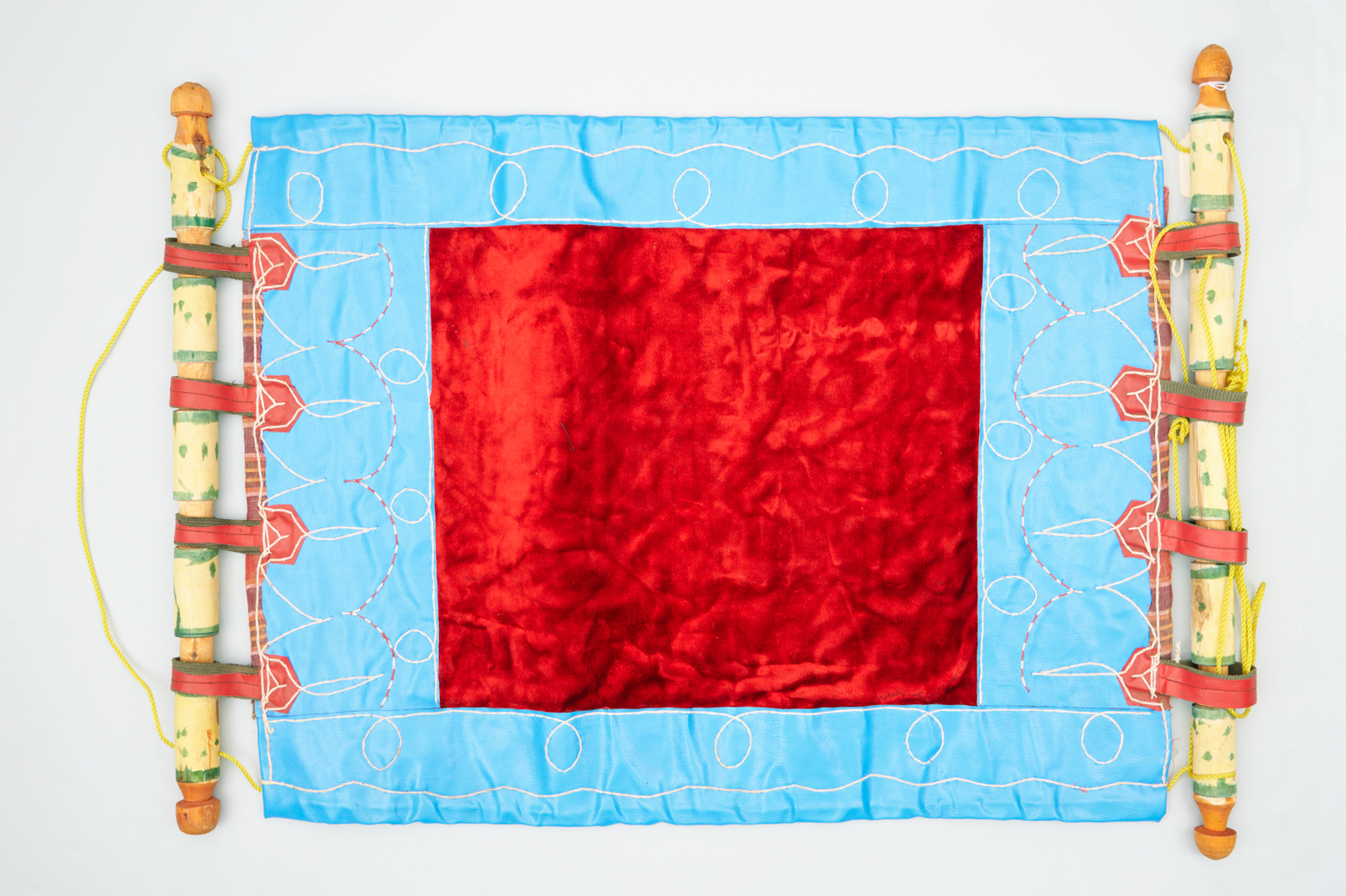
12024-08-19T14:54:07+00:00Cradle Carrier (Qashgai)6plain2024-09-26T15:54:00+00:00 Maker Once Known, Qashgai People (Iran) Cradle Carrier (20th century) plastic, cotton cloth, velvet, wood, nylon cord, paint 103.0 x 65.0 cm Field collected by William Beeman, with funds from the Haffenreffer Special Fund 74-111
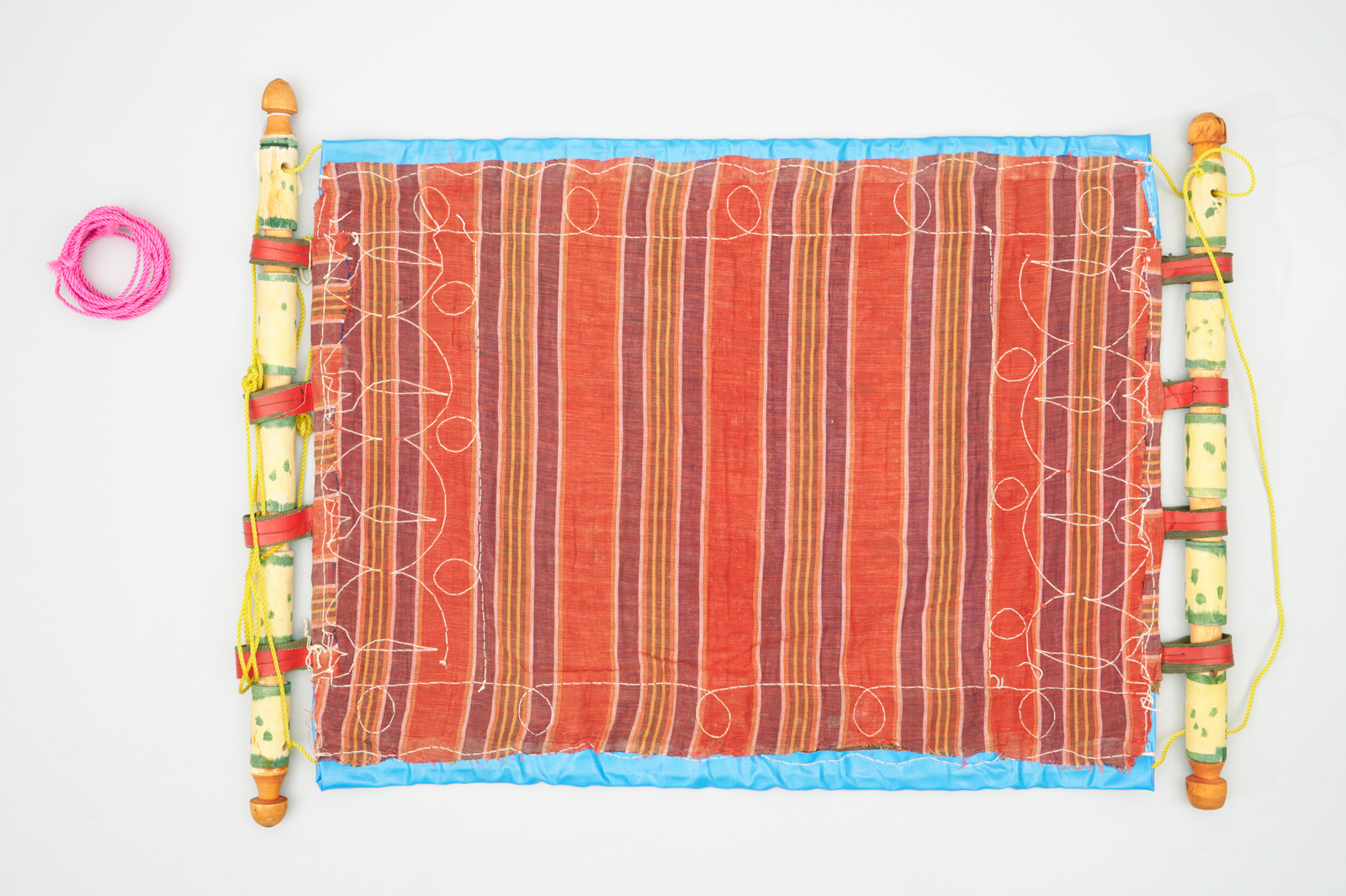
One of the fun parts of this project was unrolling each piece, revealing that object, one that we, the collection team, only knew from an object description, for the first time. Some pieces were rolled face up, so their details were revealed right away. Others, because of the way their fibers curled, rolled face down and needed to be flipped over in a grand reveal. And others, like this cradle or child carrier collected from the Qashgai people in Iran in the 1970s by then Professor William Beeman, presented a mystery right from the start.
Most rolled textiles in their wrappings are cylindrical and somewhat soft; not so with this bundle. It stood on the table with a triangular profile, with hard edges, and what felt like hollows in the roll between the edges. Unwrapping the tissue paper covering revealed a bundle of wooden dowels, nylon cord, and cloth on the storage tube, eventually unrolling to unveil this piece. With its blue plastic backing to reinforce the carrying cloth of red velvet on one side and a woven, striped cotton on the other, vibrantly painted wooden poles, and neon nylon cording, this cradle/carrier was a surprise from start to finish!