Off the Roll: Highlights of a Global Textiles ProjectMain MenuOff the Roll: Highlights of a Global Textiles ProjectHome PageClothing - Wearable ArtCreatures - Real and ImaginedDecorative Techniques from Around the WorldSpiritual Iconography and Ceremonial ObjectsThe Things that Make a HomeTextiles Photography ProjectJessica Nelson9a5eb8d4bf9f59a8ae5935bcd61eb6b29c513138
76-22
1media/76-22_thumb.jpg2024-08-07T14:41:33+00:00Jessica Nelson9a5eb8d4bf9f59a8ae5935bcd61eb6b29c51313822Rug (Diné); image by Juan Arceplain2024-08-26T23:35:14+00:002024051412002320240514120023Jessica Nelson9a5eb8d4bf9f59a8ae5935bcd61eb6b29c513138
This page is referenced by:
1media/2012-14-1.jpg2024-08-14T17:43:11+00:00The Things that Make a Home34image_header2302026-03-26T14:49:11+00:00 We fill our homes with, and sometimes build our homes from, textiles. Here, explore some of the 'soft goods' in our collection, including tent walls, hangings, cradle carriers, handkerchiefs and utility cloths, rugs, blankets, and more.
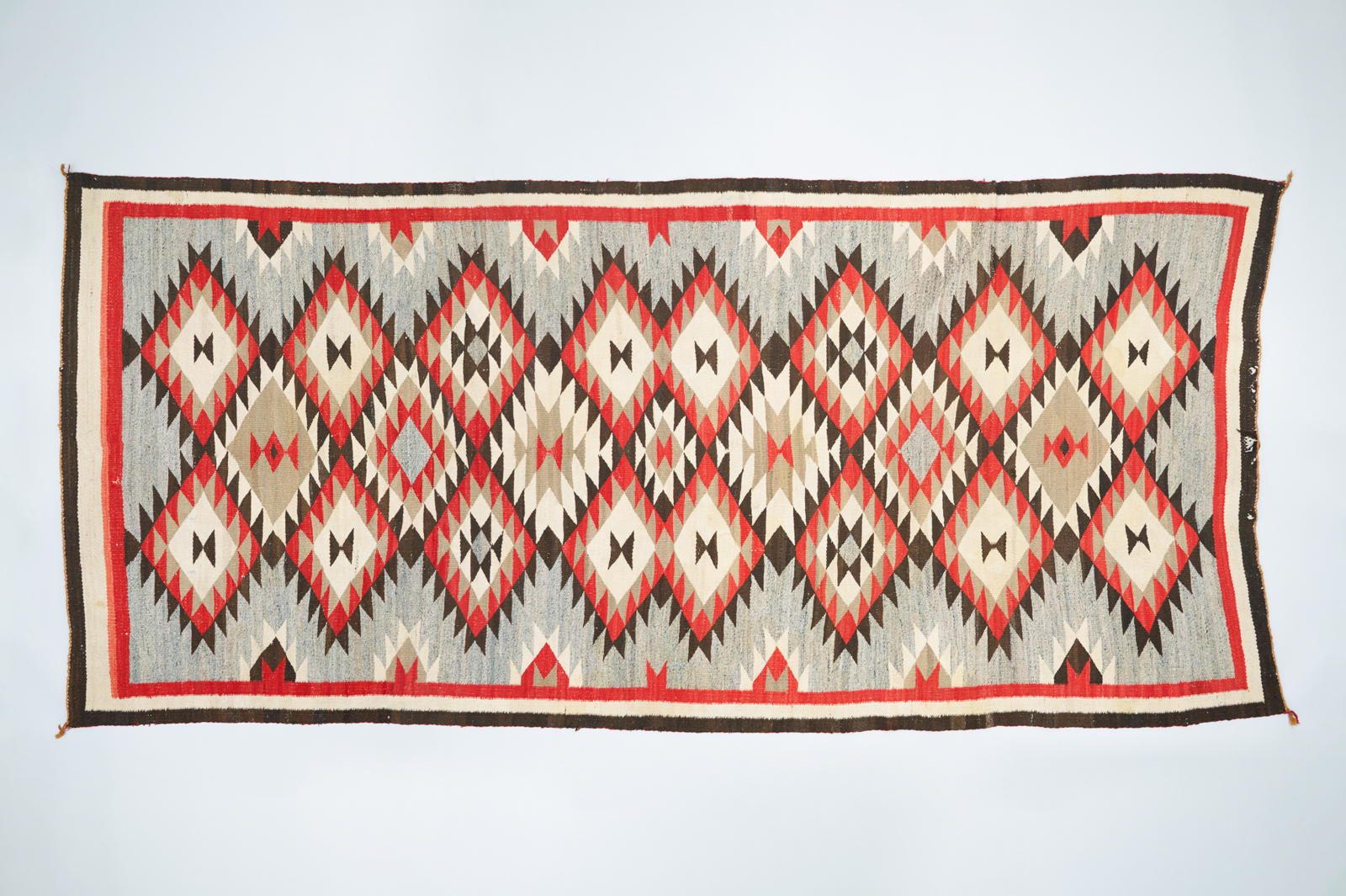
12024-08-22T15:17:48+00:00Rug (Diné)5plain2024-09-25T16:02:02+00:00 Maker Once Known, Diné (Navajo) People (Southwestern United States) Rug (ca. 1920) wool, aniline dyes 322.0 x 145.0 cm Gift of Alfred J. Walker 76-22
This large rug dates from ca. 1920, and is a product of an era where Navajo weavers were often paid by the pound for their work by the trading posts. As a consequence, weavers shifted to bulkier weavings like rugs instead of blankets, and incorporating wool that was not as tightly spun or as finely carded. This rug features handspun wool, some of which remains in its natural form (the grey, brown, and cream tones), and some (the red especially) has been dyed using aniline dyes. When examining this rug during their visit as the Textile Photography Project was ongoing, Tyrrell Tapaha, a Diné sheepherder and 6th generation weaver, quickly identified the type of wool used in this piece as churro. As they explained, "churro grey wool [like you see in this rug] has a blue-undertone. Navajo-Churro sheep and other heritage breed sheep have two fleeces that don't mix together well, so the wool when spun has a speckled appearance." With its striking diamond patterning and vibrant colors, this rug is a beautiful example of Navajo weaving from this period.