Off the Roll: Highlights of a Global Textiles ProjectMain MenuOff the Roll: Highlights of a Global Textiles ProjectHome PageClothing - Wearable ArtCreatures - Real and ImaginedDecorative Techniques from Around the WorldSpiritual Iconography and Ceremonial ObjectsThe Things that Make a HomeTextiles Photography ProjectJessica Nelson9a5eb8d4bf9f59a8ae5935bcd61eb6b29c513138
77-150
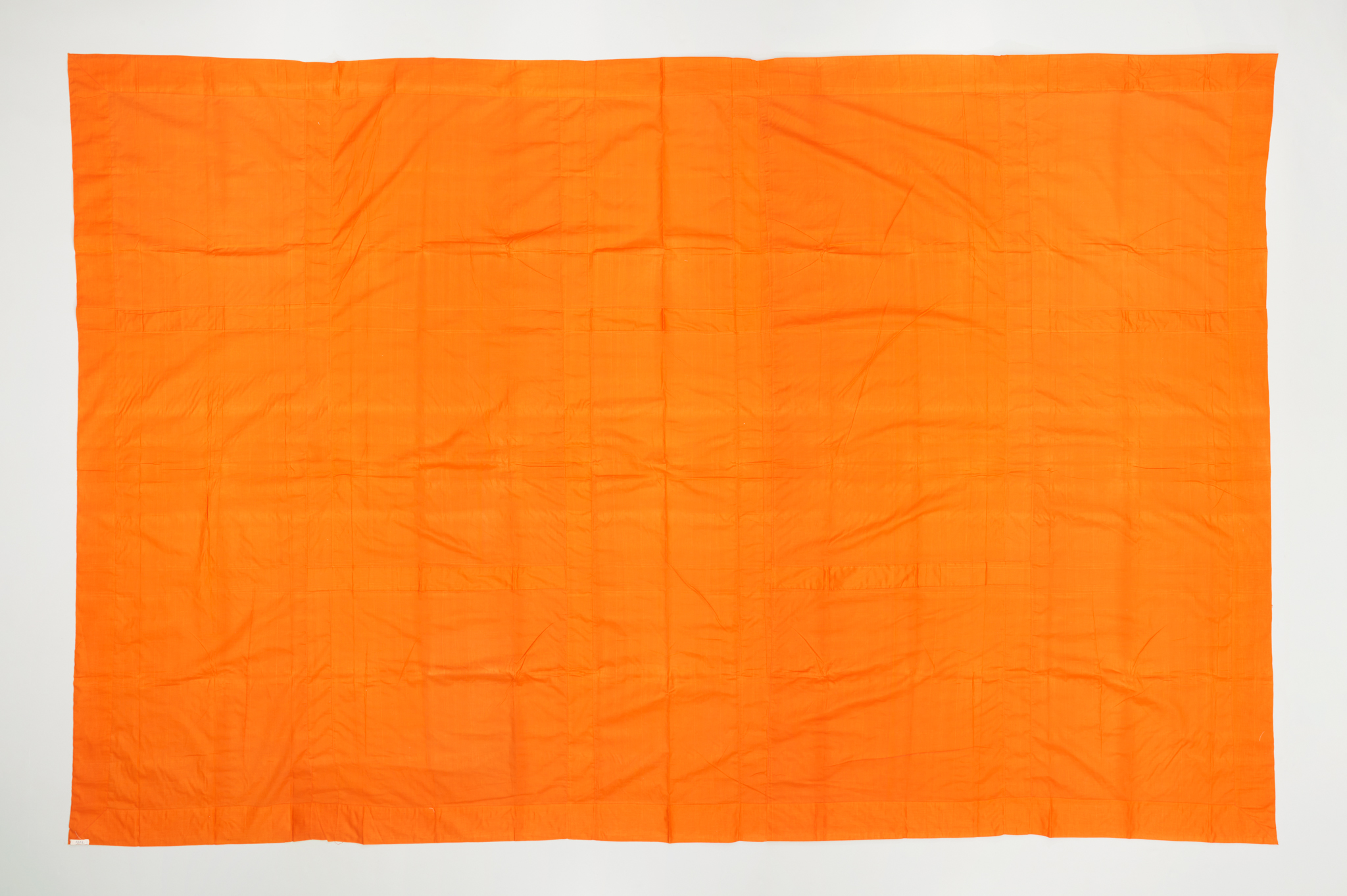
1media/77-150_thumb.jpg2024-08-07T14:40:26+00:00Jessica Nelson9a5eb8d4bf9f59a8ae5935bcd61eb6b29c51313822Monk's Robe (Thai); image by Juan Arceplain2024-08-26T23:54:20+00:002024061311504320240613115043BROWN UNIVERSITYJessica Nelson9a5eb8d4bf9f59a8ae5935bcd61eb6b29c513138
This page is referenced by:
12024-08-29T19:35:58+00:00Uttarsanga (Monastic Robe) (Thai)5plain2026-03-25T20:30:43+00:00 Maker Once Known, Thai People (Thailand) Uttarsanga (Monastic Robe) (pre-1967) cotton, saffron dye 264.0 x 180.0 cm Gift of Professor and Mrs. Robert G. Burnight 77-150
This cloth is an Uttarsanga, a Buddhist monastic robe, collected from Thailand in the mid-1960s. With their distinctive coloring, Buddhist monastic robes are immediately recognizable, and this is intentional. As described in the Tibetan Nuns Project, monastic garb dates back over 2,500 years ago to the time of Buddha, with the rules and colors of robes prescribed in cannon. The cloth for monastic robes, which are rectangular, are always sewn together from smaller pieces; this is symbolic of the first monastic robes which were sewn from scavenged rags of "pure" cloth, or cloth that no one wanted. As they point out on the Tibetan Nuns Project, "The humble nature of the cloth itself represented detachment from the physical world in pursuit of enlightenment." This robe is rectangular in design, hemmed on all edges, and composed of inset strips all of the same material, continuing with this practice of pieced monastic robes.
The Tibetan Nuns Project also explains that the color of monastic robes comes from rules laid out in the Pali Canon, which states that "the robes of fully ordained monks may be dyed 'tinting them red using the bark of the bāla tree, or using saffron, madder, vermillion, āmalakī, ocher, orpiment, realgar, or bandujīva flowers.' It is also said that the robes should be made using a dye that was readily available, not something expensive or special." Saffron is a common natural dye of choice in southeast Asia, including in Thailand, producing the distinctive yellow-orange color that is associated with Buddhist monastic garments in this region.
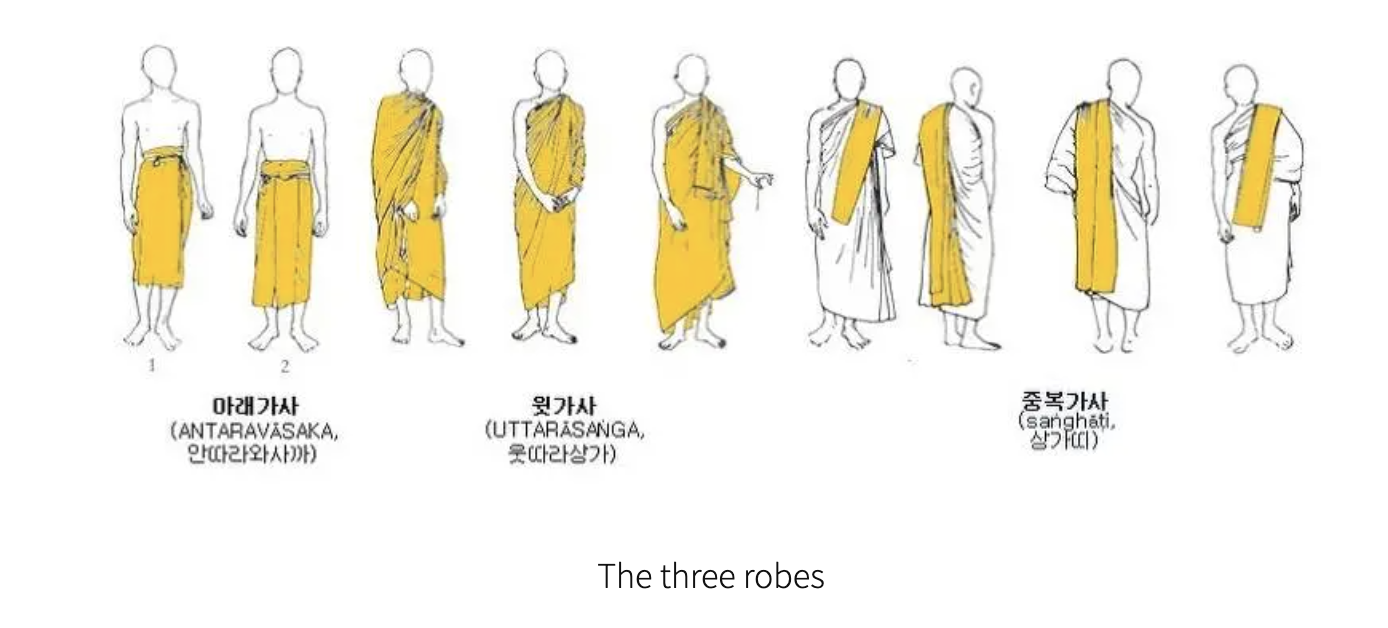
A monastic robe actually consists of three parts: the Uttarsanga, the Antarvasaka, and The Sanghati. As explained on a Buddhist Studies site on Monastic Robes, antarvasaka is the inner garment or waistcloth, worn like a sarong, wrapped around the waist, covering from waist to knees. The uttarsanga, also called the kashaya robe, is the upper robe or main robe, and is worn wrapped around the chest. It can cover both shoulders, but most often is wrapped over the left shoulder leaving the right exposed, as you see in this image. The sanghati is an outer robe used primarily in cold seasons or colder climates. Given the size, coloring, and material of this robe, it is safe to call this robe an Uttarsanga.