Off the Roll: Highlights of a Global Textiles ProjectMain MenuOff the Roll: Highlights of a Global Textiles ProjectHome PageClothing - Wearable ArtCreatures - Real and ImaginedDecorative Techniques from Around the WorldSpiritual Iconography and Ceremonial ObjectsThe Things that Make a HomeTextiles Photography ProjectJessica Nelson9a5eb8d4bf9f59a8ae5935bcd61eb6b29c513138
84-198
1media/84-198_thumb.jpg2024-08-07T14:23:34+00:00Jessica Nelson9a5eb8d4bf9f59a8ae5935bcd61eb6b29c51313821Rug (Diné); image by Juan Arceplain2024-08-07T14:23:34+00:002024051413341220240514133412BROWN UNIVERSITYJessica Nelson9a5eb8d4bf9f59a8ae5935bcd61eb6b29c513138
This page is referenced by:
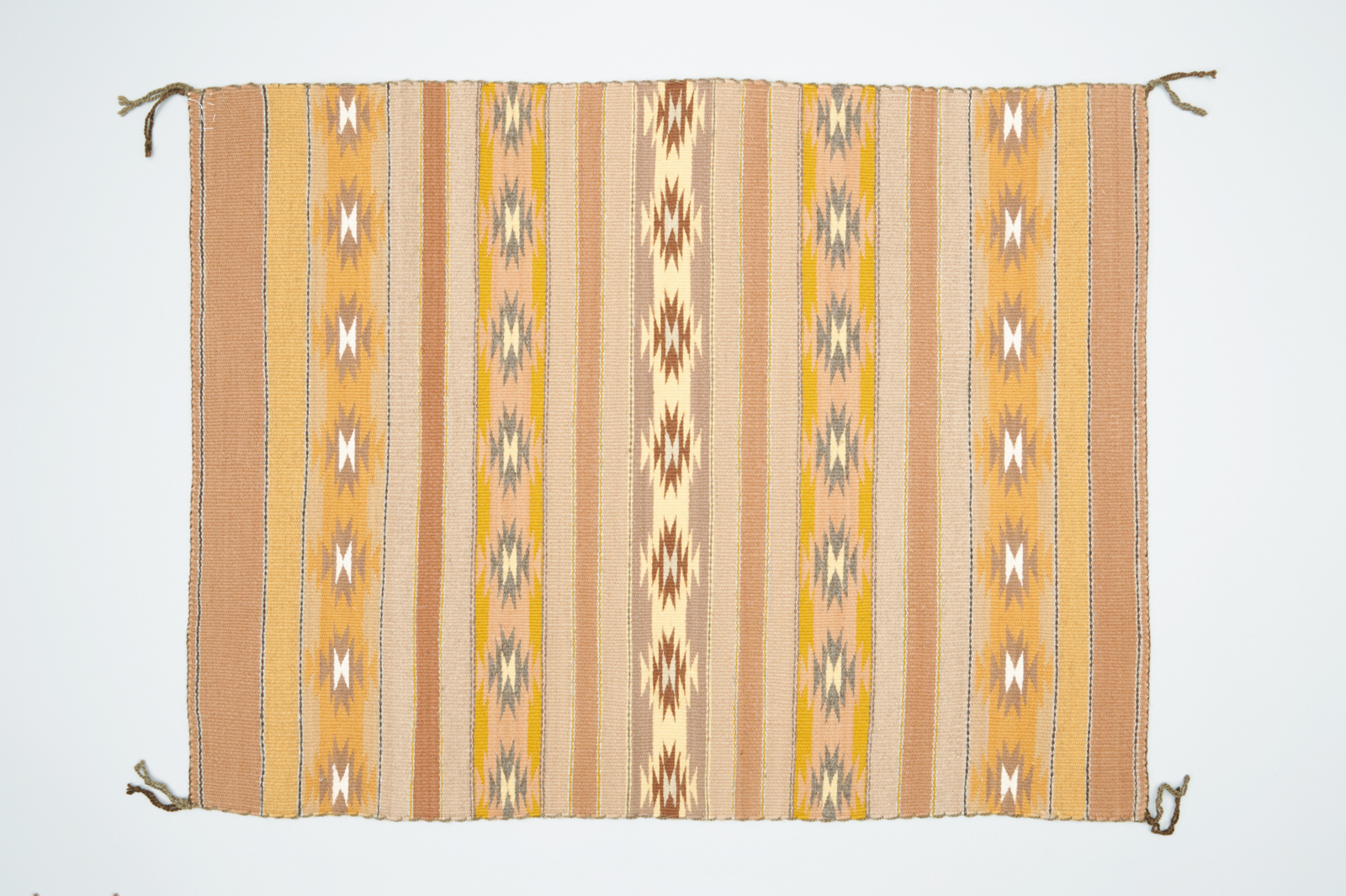
12024-08-22T14:57:06+00:00Rug (Dorothy Yazzie, Diné)4plain2024-09-19T18:52:18+00:00 Dorothy Yazzie, Diné (Navajo) People (Arizona, United States) Rug (20th century) wool, natural dyes 89.0 x 67.0 cm The Greenfield Collection in memory of Myrtle Greenfield (1884-1967) Albuquerque, New Mexico, given by Robert E. and Mary Frances Greenfield 84-198
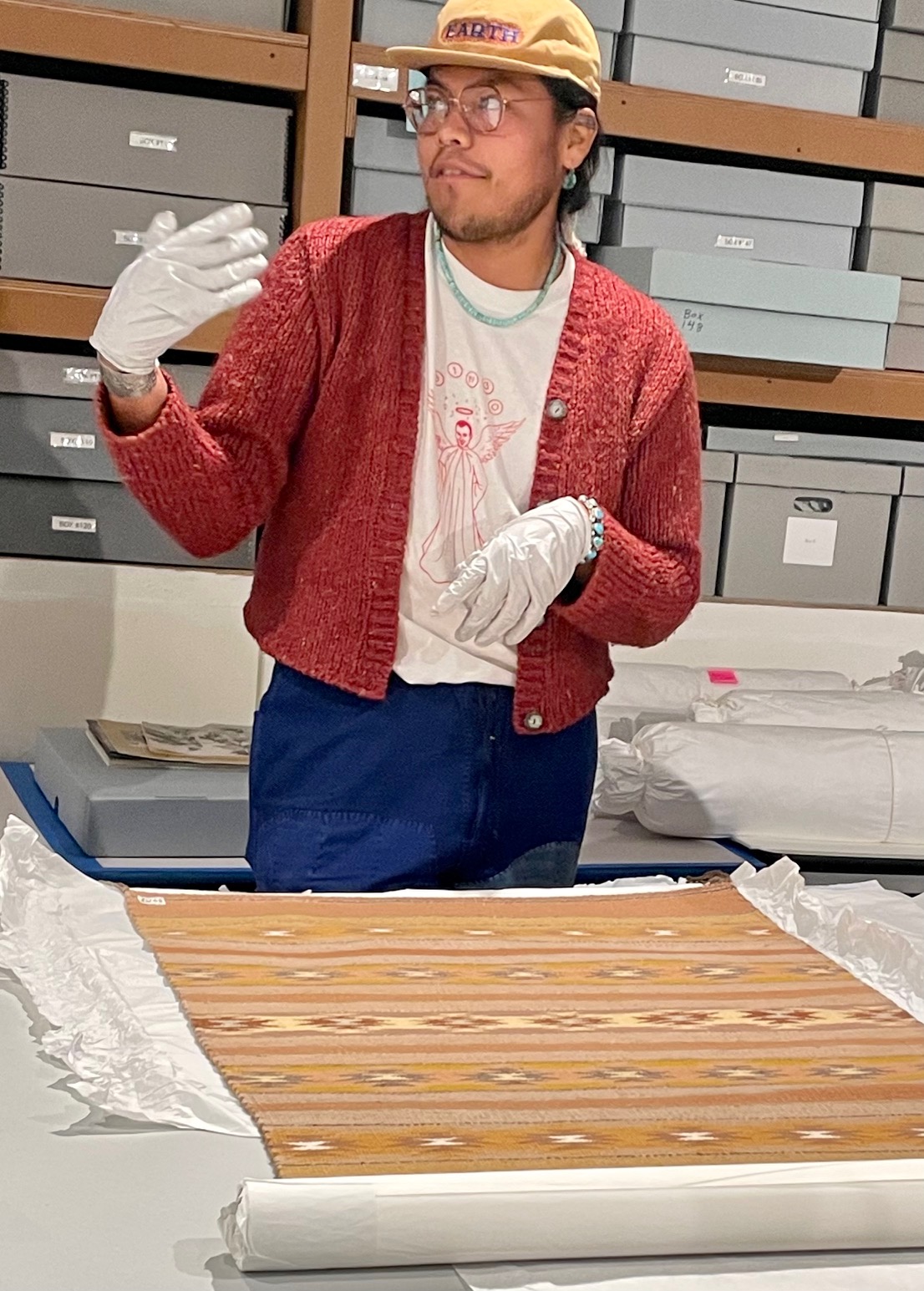
This piece is the work of Dorothy Yazzie (Diné). Woven using a weft-faced weaving technique common to rugs, the warps (the vertical fibers of the rug) are completely covered by the weft (the horizontal fibers). This makes for a thick, dense weave. The design features a striped and diamond banded pattern made from natural (undyed) wools and naturally dyed wools that were both hand and mill spun. When examining this piece during his visit during the Textile Photography Project, Tyrrell Tapaha, a 6th generation Diné weaver, reflected on how this piece continued the weaving traditions specific to this region of Arizona, commenting that "the traders near Chinle Trading Post (Arizona) pushed for more natural dyes in their pieces," during the late 1800s and early 1900s, following the establishment of the Navajo reservation in 1868 via a Treaty which recognized Navajo sovereignty. With its natural wools and use of natural vegetable dyes for the other colors, this piece certainly continues in that tradition.