Off the Roll: Highlights of a Global Textiles ProjectMain MenuOff the Roll: Highlights of a Global Textiles ProjectHome PageClothing - Wearable ArtCreatures - Real and ImaginedDecorative Techniques from Around the WorldSpiritual Iconography and Ceremonial ObjectsThe Things that Make a HomeTextiles Photography ProjectJessica Nelson9a5eb8d4bf9f59a8ae5935bcd61eb6b29c513138
87-267
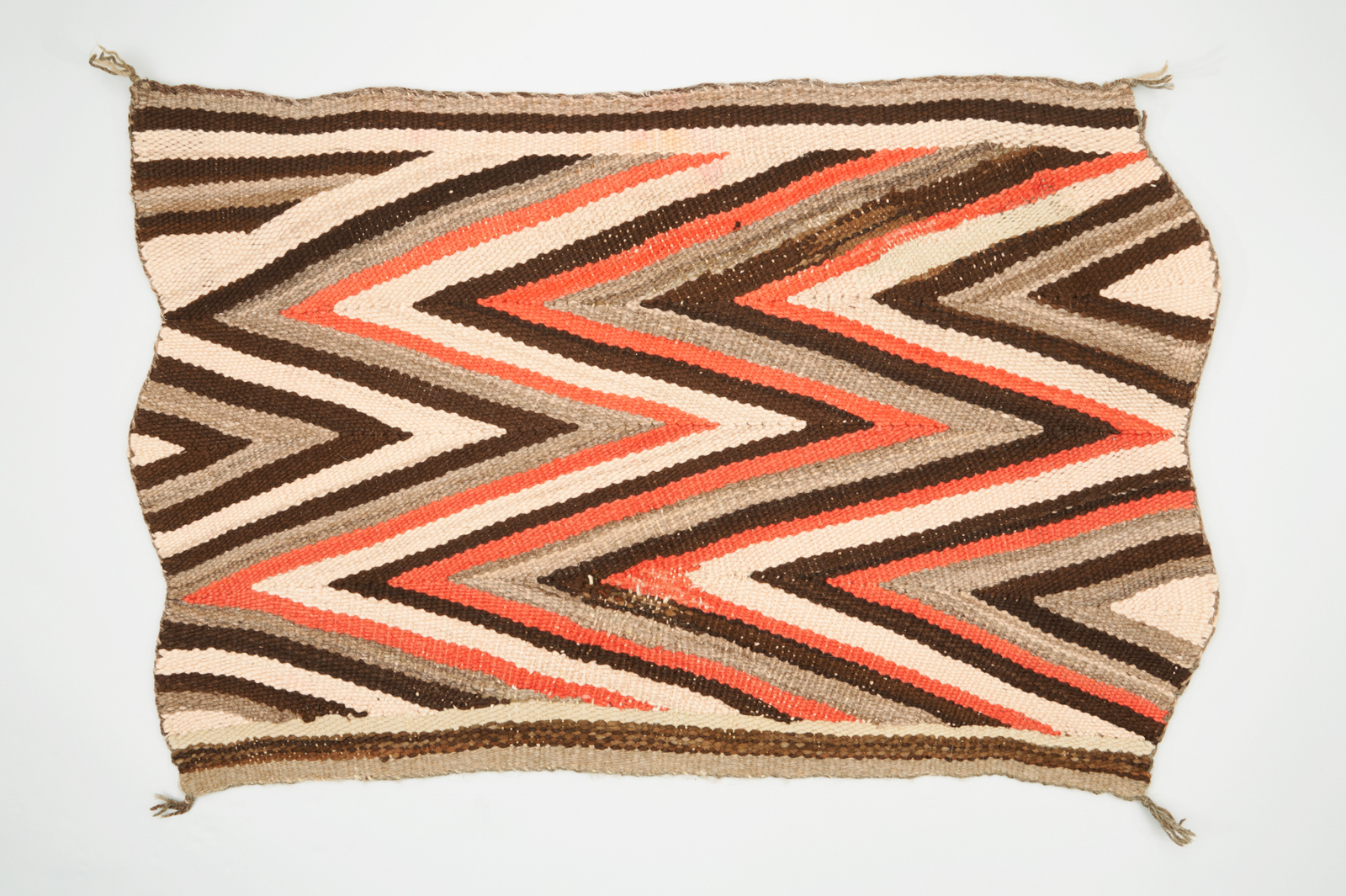
1media/87-267_thumb.jpg2024-08-07T14:14:53+00:00Jessica Nelson9a5eb8d4bf9f59a8ae5935bcd61eb6b29c51313822Wedge Weave Blanket (Diné); image by Juan Arceplain2024-08-26T12:51:01+00:002024051415154120240514151541Jessica Nelson9a5eb8d4bf9f59a8ae5935bcd61eb6b29c513138
This page is referenced by:
12024-08-26T13:41:48+00:00Wedge weave blanket (Diné)4plain2024-08-26T13:44:08+00:00 Maker Once Known, Diné (Navajo) People (Arizona, USA) Blanket (1895-1910) wool, acid-dye 136.0 x 86.0 cm Haffenreffer Special Fund 87-267
This vivid textile is an example of Navajo or Diné wedge weaving in pink, tan, brown, and cream handspun wool. In their exhibit about 19th century Navajo weaving, the Arizona State Museum explains "wedge weave blankets have a unique tapestry structure. Weft yarns are woven diagonally across the warp yarns, pulling the warp yarns askew and creating scalloped edges and distinctive zigzag designs." You can see another example of this type of blanket in their exhibit.
During their visit, Tyrrell Tapaha examined this blanket and identified the wool as handspun and acid dyed. As Tapaha explained, this piece likely came from the paid-for-pound period. During this time, wool would be worked unwashed, spun to be chunky, and woven that way as the products would be worth more. This is the era when rugs developed. You can learn more about this Transitional period at the Arizona State Museum's exhibit. Tyrrell had another interesting take away from examining this blanket "It may have been a learning piece." As a sixth generation Diné weaver, Tyrrell well knows the skill involved in weavings like this, as well as the process of acquiring those skills through trial and error under the guidance of more experienced community members. It is only when people learn and practice these skills that cultural traditions can continue and evolve.