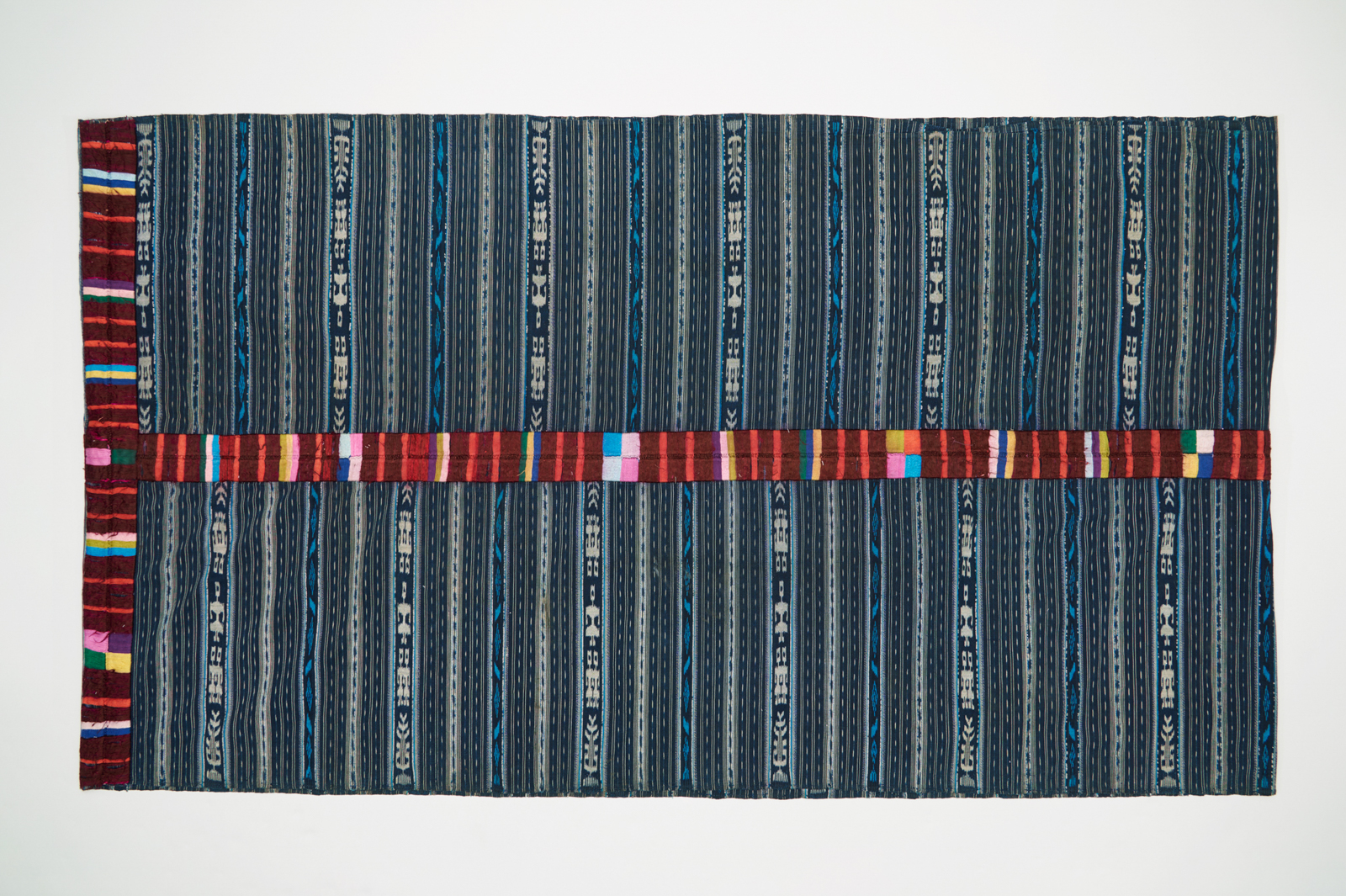
"The making of jaspe thread is a very labor-intensive process. The threads must be measured, wrapped, and tied in the proper sequence from traditional patterns that are precisely kept in the craftsman's memory. Often it is a family operation; by the attitude is very professional. Young boys start out by sweeping, minding the dye vats, or untying the threads, and end up expert artists.The threads are dyed in vats (sometimes more than once) and then hung out to dry. On a clear day the whole village seems festooned with miles of dyed thread. Once they have dried, the ties must be unwrapped and removed, leaving the now indigo-and-white patterned threads to be wrapped on shuttles and thus prepared for the loom. A simple pattern of dotted lines or 'bleeps,' which weavers call 'space-dying,' is easy enough to create. But elaborate ikat motifs such as the tree, urn, lyre, or human figure can be tremendously complicated" (West 1992:66).
The origin of this technique in Guatemala is somewhat fuzzy, though there is some evidence for ikat weaving in pre-colonial Peru, or it could have been a technique picked up as a result of colonialism and the concurrent increased circulation of people and goods (West 1992:66). Jaspe has been practiced in Guatemala since at least the 1860s, the cloth woven in this style is purchased to make skirts, like this one, as well as other clothing items (West 1992:68).
When examining this uk as part of the Textile Photography Project, HMA Head Curator Thierry Gentis pointed out the white single and double human motifs in the striped sections, and the lighter blue geometric patterns, noting that "the ikat [jaspe] section is very tight. This pattern is dyed into the warp before weaving, so this is very impressive work!" In addition to the jaspe patterning woven into the body of this uk, this skirt was finished with an elaborate randa. This is the stripe of vibrant embroidery, done in both silk and cotton thread, that runs down the seam where the skirt panels were joined and along the waistband of the uk. As West attests "a randa takes a long time to execute...a woman may do it herself or pay someone else to do it" (1992:62). It takes time and skill to create this dense band of embroidery, which is double sided, but randas can be both decorative and functional. As in this case, the randa can cover a seam (or be the seam) between two sections of fabric, or it can be purely decorative (as at the waist of this uk). Given the investment of time and money that would have gone into creating this uk, it is likely that this skirt would not have been everyday wear; perhaps it would be reserved for more special occasions.