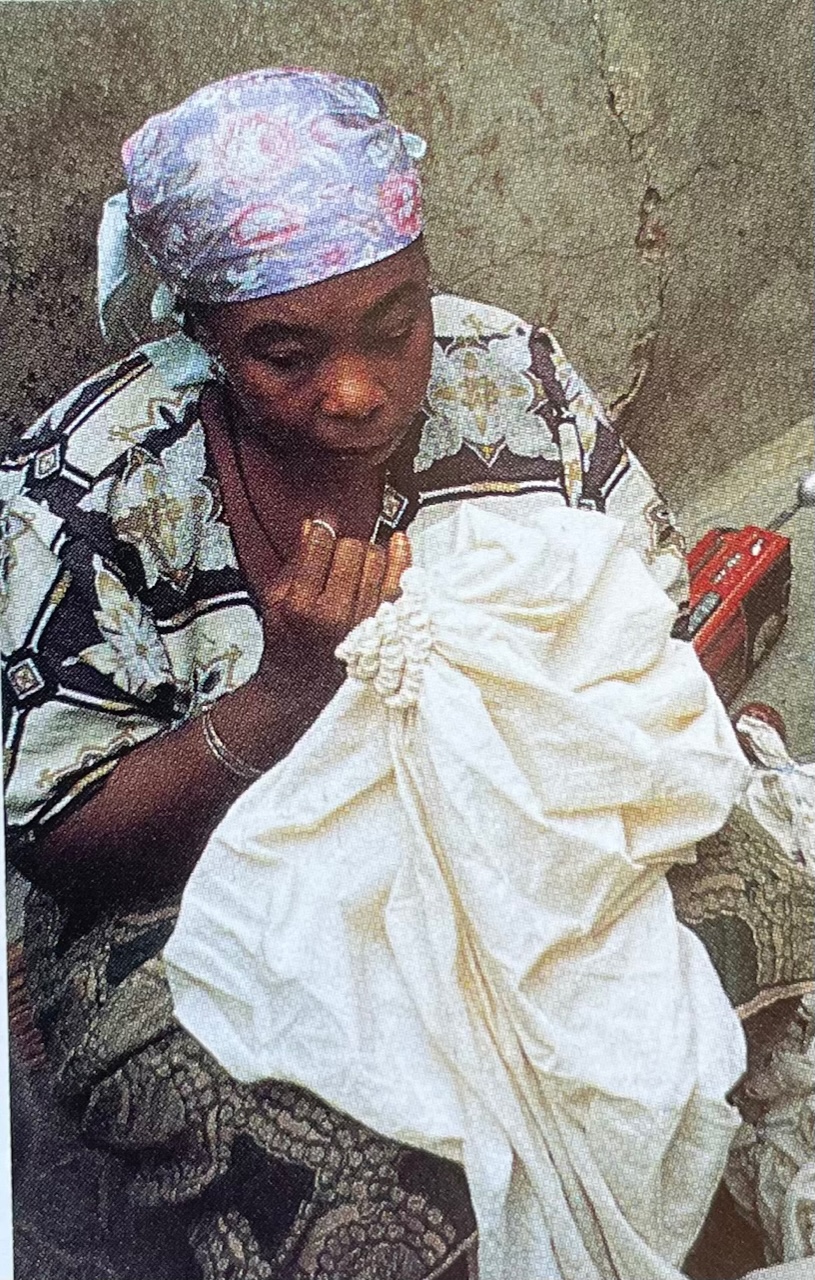
"Àdìrẹ are indigo-dyed cotton cloths decorated using a resist-dying technique to create striking patterns in blue and white. They were traditionally made and worn by women throughout the Yoruba region of south-western Nigeria, West Africa. The cloths were usually made up of two strips of factory-produced cotton, sewn together to form a shape that was roughly square, and worn as wraps around the body....The cloths were usually prepared, and always dyed, by women. Their bright colour comes from imported indigo grains or locally-grown indigo leaves, which were fermented and mixed with water softened with caustic soda to make a dye. The cloth would be dipped into a large pot of dye, and then pulled out to allow it to oxidise – a process which could be repeated to make the colour darker....Before dyeing, the cloths would be treated in a variety of ways to prevent certain parts of the fabric from absorbing dye. This would create the patterns revealed after the dyeing process. Raffia and starch were the two most common forms of resist-dyeing used."