Off the Roll: Highlights of a Global Textiles ProjectMain MenuOff the Roll: Highlights of a Global Textiles ProjectHome PageClothing - Wearable ArtCreatures - Real and ImaginedDecorative Techniques from Around the WorldSpiritual Iconography and Ceremonial ObjectsThe Things that Make a HomeTextiles Photography ProjectJessica Nelson9a5eb8d4bf9f59a8ae5935bcd61eb6b29c513138
97-50-6
1media/97-50-6_thumb.jpg2024-08-07T14:05:04+00:00Jessica Nelson9a5eb8d4bf9f59a8ae5935bcd61eb6b29c51313822Apron (Red Lao); image by Juan Arceplain2024-08-27T01:20:13+00:002024061814543220240618145432Jessica Nelson9a5eb8d4bf9f59a8ae5935bcd61eb6b29c513138
This page is referenced by:
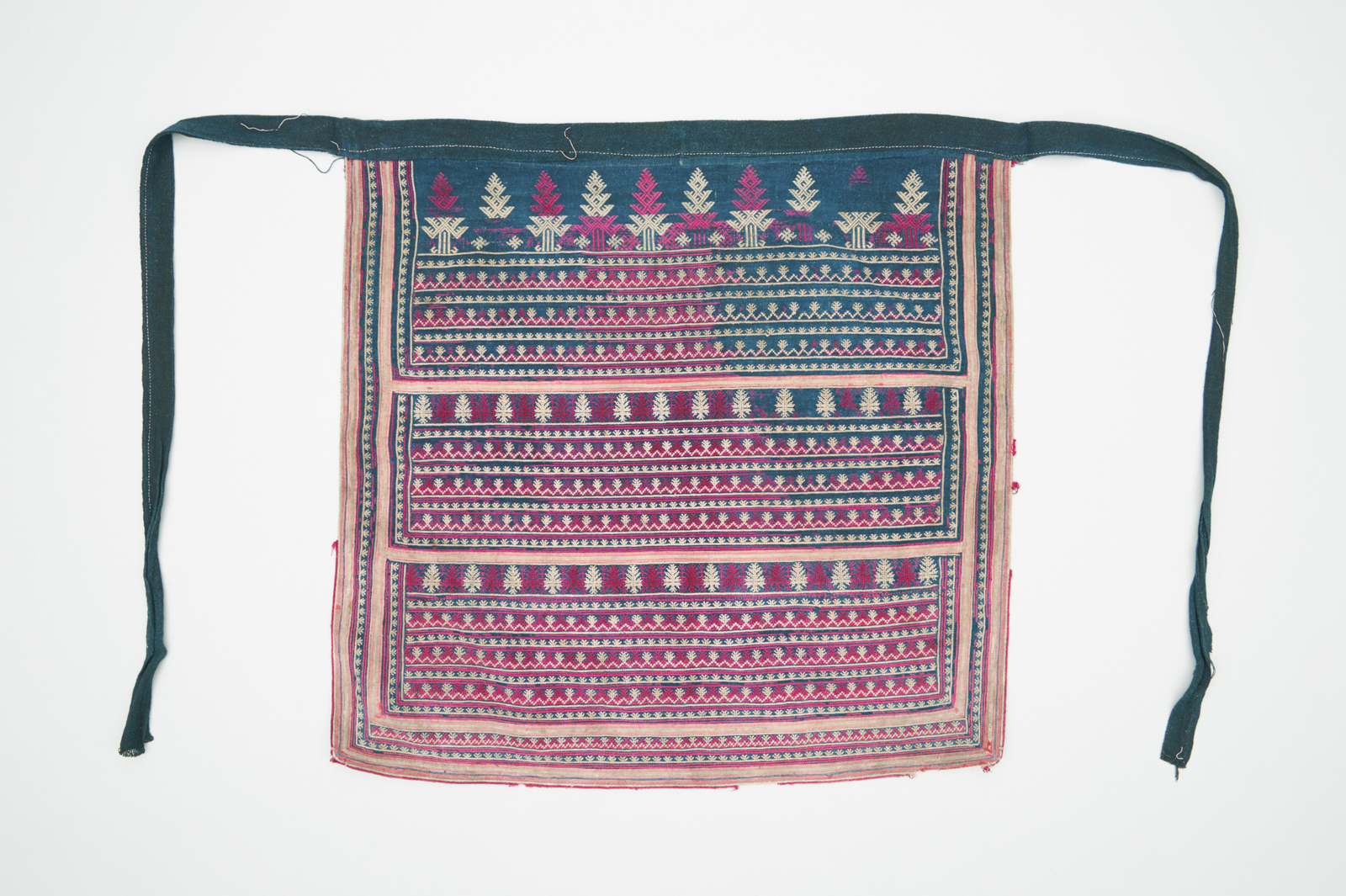
12024-08-21T14:41:32+00:00Apron (Red Lao)7plain2024-09-24T14:02:23+00:00 Maker Once Known, Red Lao People (North Vietnam) Apron (20th century) cotton cloth, cotton thread 52.0 x 53.3 cm Purchased with Haffenreffer Special Fund 97-50-6
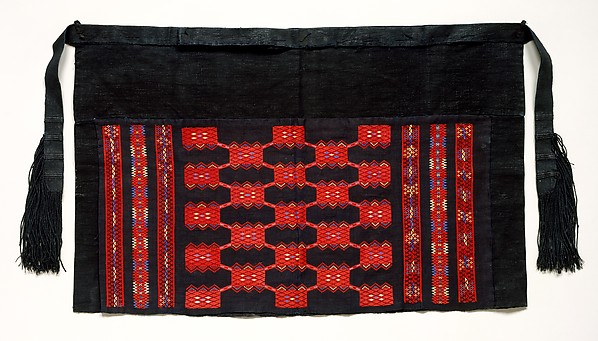
This is a woman's large square apron from the Red Lao communities in Northern Vietnam. Similar to this piece pictured to the right from Hmong communities in China, currently in the Metropolitan Museum of Art, the apron in the HMA collection features a large section of detailed embroidery. The apron serves as an important decorative element in a woman's ensemble rather than a utility piece, as we often think of aprons today. The square body of this apron is fully decorated, using reverse appliqué and cross-stitch techniques to create three patterned registers. The reverse appliqué stripes in pink and white form the frame for each panel, within which the cross-stitched embroidery forms floral and linear motifs. You can learn more about both of these techniques in this exhibit about Hmong Embroidery.