Off the Roll: Highlights of a Global Textiles ProjectMain MenuOff the Roll: Highlights of a Global Textiles ProjectHome PageClothing - Wearable ArtCreatures - Real and ImaginedDecorative Techniques from Around the WorldSpiritual Iconography and Ceremonial ObjectsThe Things that Make a HomeTextiles Photography ProjectJessica Nelson9a5eb8d4bf9f59a8ae5935bcd61eb6b29c513138
97-51-2
1media/97-51-2_thumb.jpg2024-08-07T14:03:47+00:00Jessica Nelson9a5eb8d4bf9f59a8ae5935bcd61eb6b29c51313823Embroidery Panel (Indian); image by Juan Arceplain2024-08-27T01:21:43+00:002024052215191020240522151910Jessica Nelson9a5eb8d4bf9f59a8ae5935bcd61eb6b29c513138
This page is referenced by:
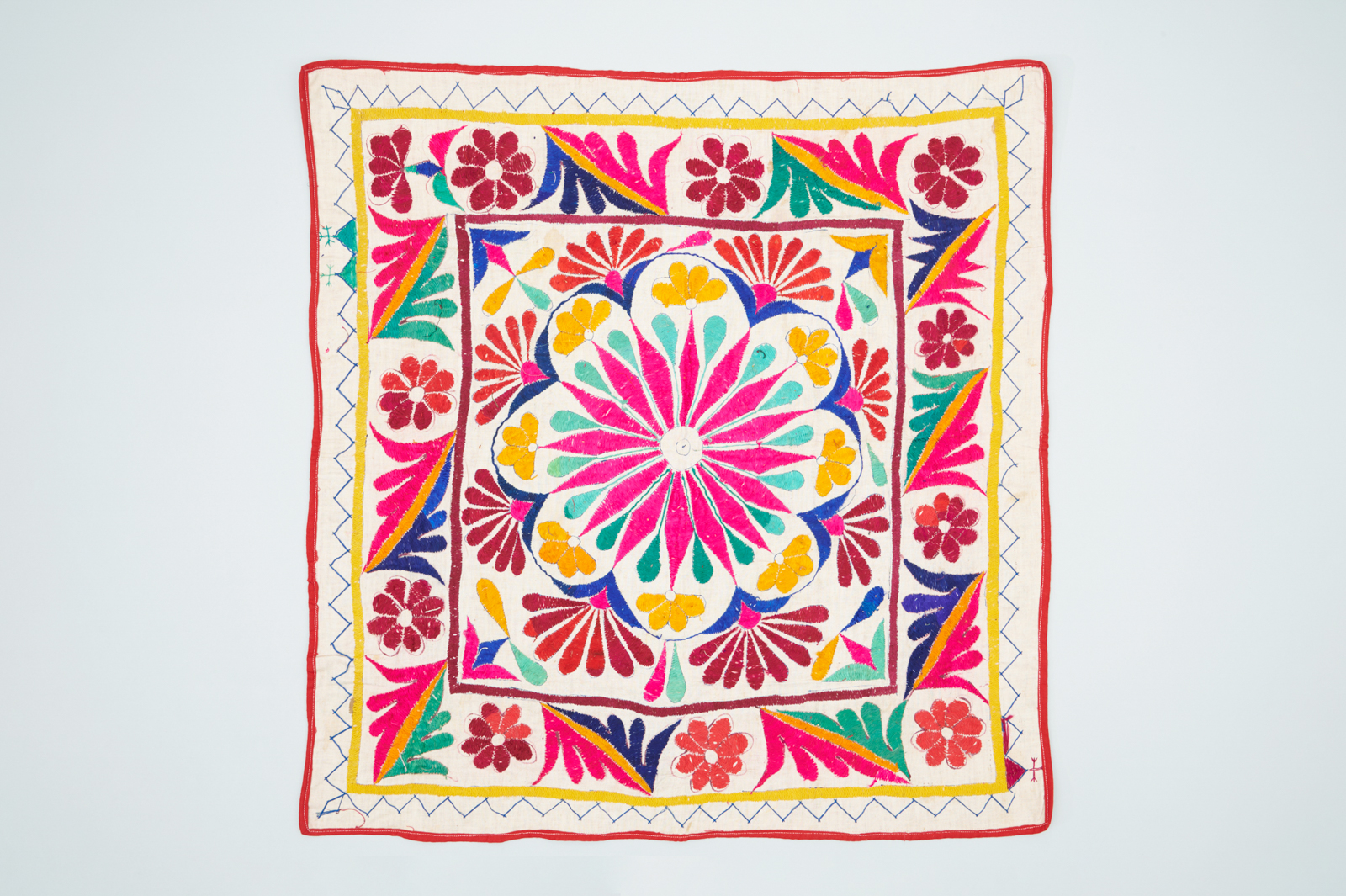
12024-09-03T00:27:01+00:00Embroidery Panel (Indian)2plain2024-09-19T14:42:30+00:00 Maker Once Known, Indian People (India) Embroidery Panel (n.d.) cotton, silk 72.0 x 74.0 cm Gift of James and Alice Houston 97-51-2
This beautiful piece of embroidery comes from India. It is reminiscent of a style of Indian embroidery practiced in West Bengal and Bangladesh called kantha. Traditionally, the kantha technique salvages old and worn garments, picking out the colorful threads and using the cloth and those threads to create new layered textiles that are quilted together and elaborately embroidered. You can see some examples of kantha embroidery in the V&A's Indian Embroidery exhibition. Kantha embroidery continues to be produced today, but instead of layering cloth and quilting as in the past, the practice has transitioned to one of skilled embroidery on a single layer of cloth.
While it is hard to know if this piece is an example of a more modern Kantha embroidery technique without more information about where and when this piece came from (which we are sadly lacking), it does bear some similarities in form and style to popular kantha motifs. One of the common designs, appearing frequently in the V&A's exhibition, is this square shape often with a lotus pattern like this one at the center. You can also see how the stitcher traced out the intended design across the body of the textile, much as kantha embroiderers do, before beginning stitching. Made from cotton cloth and stitched with cotton and silk thread, this piece shows the process of the stitcher more clearly than any finished piece could, as we can see where colors are being chosen for the border, and where shapes are being refined during the stitching process.