Alpaca on Po't
1 media/85-160 (1) copy 4_thumb.jpeg 2024-08-30T16:56:40+00:00 Jessica Nelson 9a5eb8d4bf9f59a8ae5935bcd61eb6b29c513138 2 1 Close up of an Alpaca on the Po't; image courtesy of Juan Arce plain 2024-08-30T16:56:40+00:00 20240613 144453 20240613 144453 Jessica Nelson 9a5eb8d4bf9f59a8ae5935bcd61eb6b29c513138This page is referenced by:
-
1
2024-08-30T16:43:56+00:00
Ceremonial Po't (huipil or blouse) (Kaqchikel)
9
plain
2024-10-29T12:55:36+00:00
Maker Once Known, Kaqchikel People (Santo Domingo Xenacoj, Guatemala)
Ceremonial Po't (Huipil or Blouse) (20th century, pre-1970)
cotton, dye
75.0 x 94.0 cm
Gift of Clare Brett Smith and Burges Smith
85-160
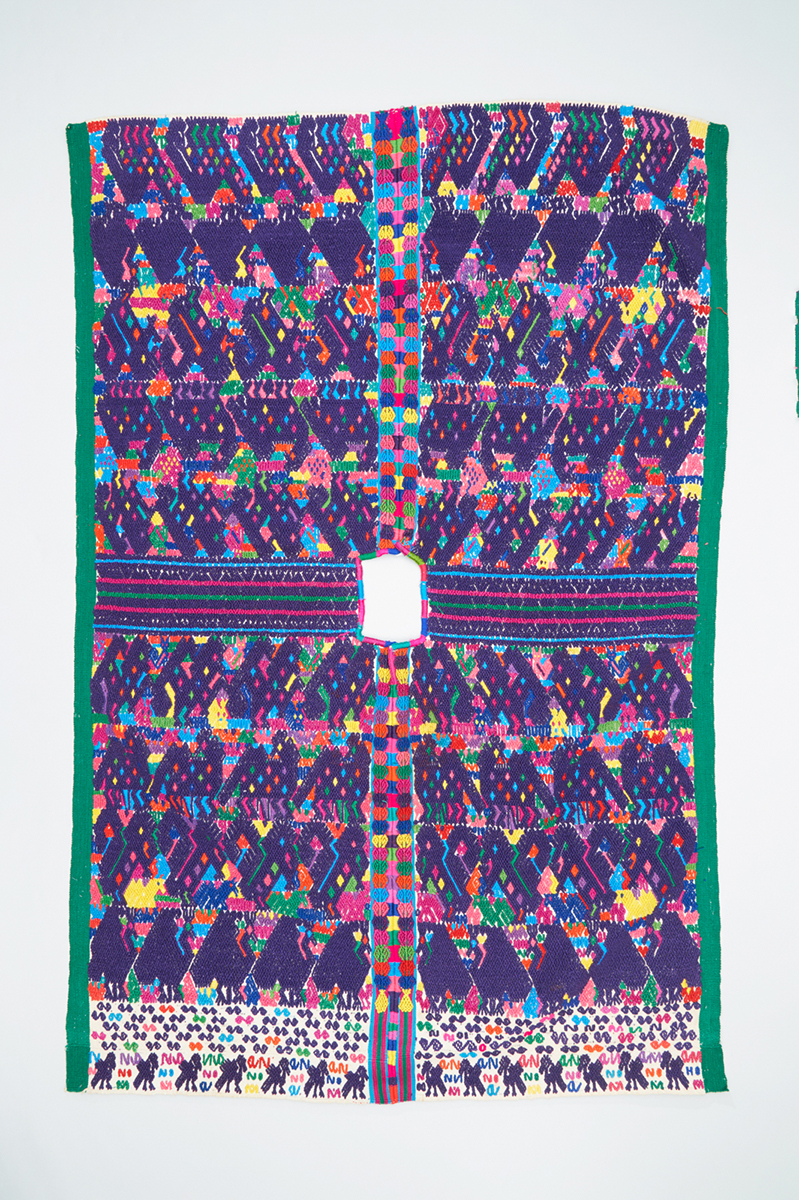
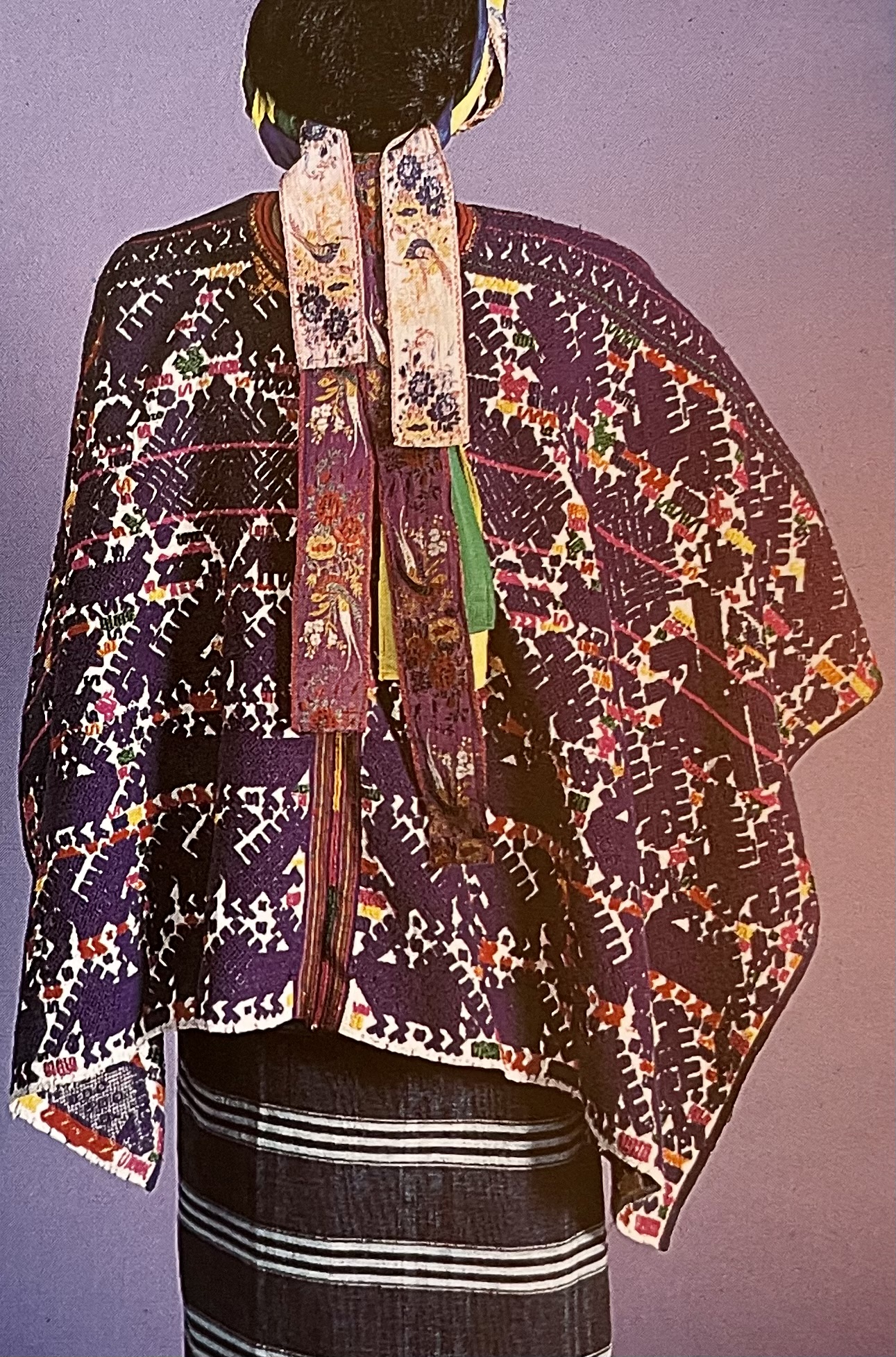
This is a beautiful example of a ceremonial Po't (which the Spanish called a huipil, and in English is commonly called a blouse) made by a Kaqchikel Mayan woman. It is a distinctive style that is worn in and around the villages of the Sacatepéquez region, and features densely patterned brocades in reds and purples on ceremonial po't that are worn open on the sides, outside the skirt. This stands in contrast to everyday huipils which are sewn down the sides. In Threads of Identity, Caroline West describes a po't very similar to the one at the HMA, providing this context:"Osborne suggests that the bold patterns and thick appearance are a style once woven by noble Cakchiquel women which has persisted in ceremonial garb. Heavy buttonhole embroidery plus finer embroidered necklace-like star forms are typical on San Pedro huipiles. Wedding huipils have a wider range than those for cofradías wear and pinks, turquoise, pauve and other pastels are set on a white ground. The mano band across the shoulders is usually purple however. The ceremonial huipil of San Pedro Sacatepéquez is all the more interesting for the unusual ways in which it is worn. During a procession at the patron saint's feast day it is draped over the head and shoulders like a tzute. At weddings the cofradía huipil is hung on the back of a married woman, over her festive huipil. At processions, the marriage huipil is worn inside out" (West 1992: 176).
The HMA ceremonial po't comprises two panels, joined at the center with a band of decorative embroidery called a randa, and woven on a backstrap loom using both supplemental weft and brocade weaving techniques to create the intricate patterning throughout this piece. What first appears to be a blur of abstract patterning can be teased apart with closer examination.
Step one: Find the birds.
If you start at the bottom of the textile in the image at the top of the page, it is easy to spot the row of purple birds against the white background. Working your way up the image, another row of larger purple birds (perhaps turkeys or peacocks) appear in the first register of the multi-colored striping. After that row, we shift animals to a quadruped rampart with a mane and fluffy tail (maybe lions), then another quadruped row, then back to the possible lions, while on the other side of the mano shoulder band most of these animals repeat. The exception is a new animal which appears at the top of the textile in this image, which is another quadruped, this one with an elongated neck. All of these animals appear in the purple brocade pattern, but if you look closely at the multicolored brocade background, you will start to see even more animals appearing! In addition to the animals patterned throughout this weaving, we also see horizontal zig-zags and a sideways S form, which are two common symbols in Maya weavings, interpreted to be associated with the feathered serpent (West 1992: 97). As West elaborates "An important Maya Quiché deity was related to the Aztec feathered serpent, Quezalcoatl. Earth deities and the serpent were especially important to the Cakchiquel" and in textiles and other mediums, the zig-zag is usually interpreted in this way (1992:97). This stunning, detailed weaving is certainly one that took an expert weaver untold amounts of time to weave in order to achieve this level of complexity.
Given the time and attention needed to weave such a masterpiece, it makes complete sense that this is a garment reserved for special occasions. As West described above, Po't like this are worn in weddings, important ceremonies, and in cofradía processions.
%20copy.jpeg)
 copy 2.jpeg)
 copy 3.jpeg)
 copy 4.jpeg)
.jpg)