Off the Roll: Highlights of a Global Textiles ProjectMain MenuOff the Roll: Highlights of a Global Textiles ProjectHome PageClothing - Wearable ArtCreatures - Real and ImaginedDecorative Techniques from Around the WorldSpiritual Iconography and Ceremonial ObjectsThe Things that Make a HomeTextiles Photography ProjectJessica Nelson9a5eb8d4bf9f59a8ae5935bcd61eb6b29c513138
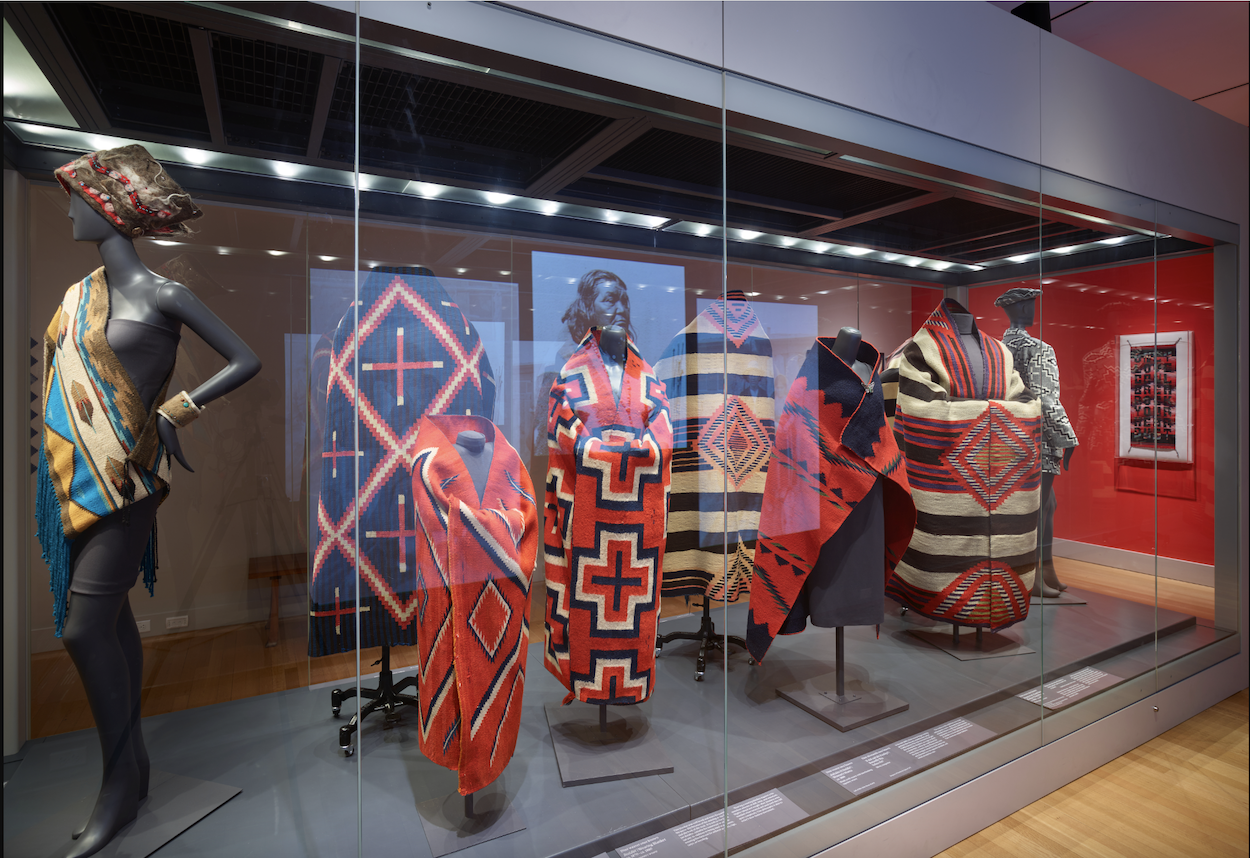
Blankets on display at RISD in "Diné Textiles Nizhónígo Hadadít’eh, They are Beautifully Dressed"
1media/RISD Exhibit Photo of blankets as worn_thumb.png2024-08-07T13:05:46+00:00Jessica Nelson9a5eb8d4bf9f59a8ae5935bcd61eb6b29c51313822Blankets on display at RISD in "Diné Textiles Nizhónígo Hadadít’eh, They are Beautifully Dressed"; image courtesy of RISD Museumplain2024-08-24T23:58:23+00:00Jessica Nelson9a5eb8d4bf9f59a8ae5935bcd61eb6b29c513138
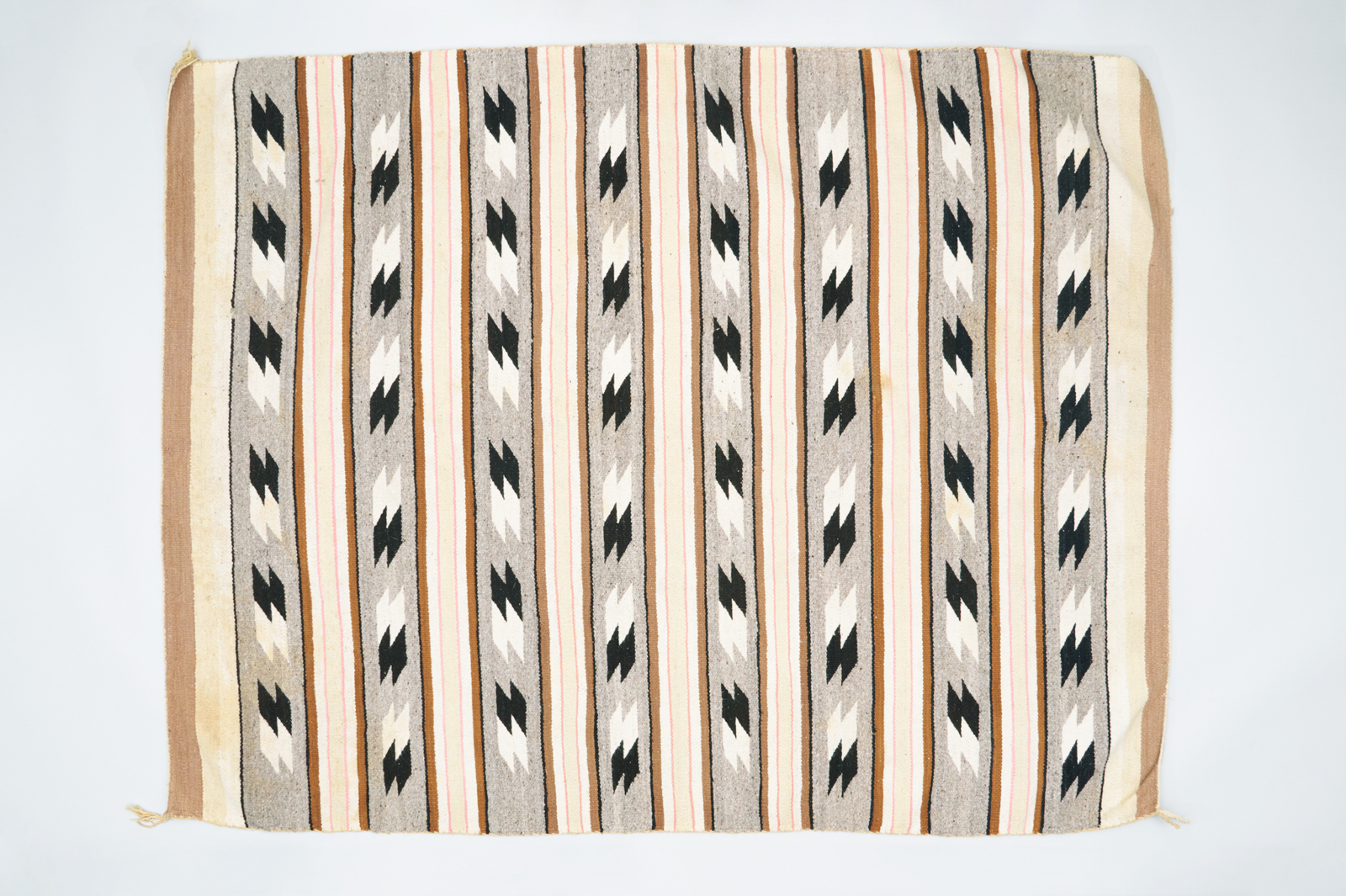
Maker Once Known, Diné (Navajo) People (Southwestern United States) Blanket (ca. 1950) wool, aniline dye, vegetable dye 181.0 x 135.0 cm Gift of Alfred J. Walker 76-23
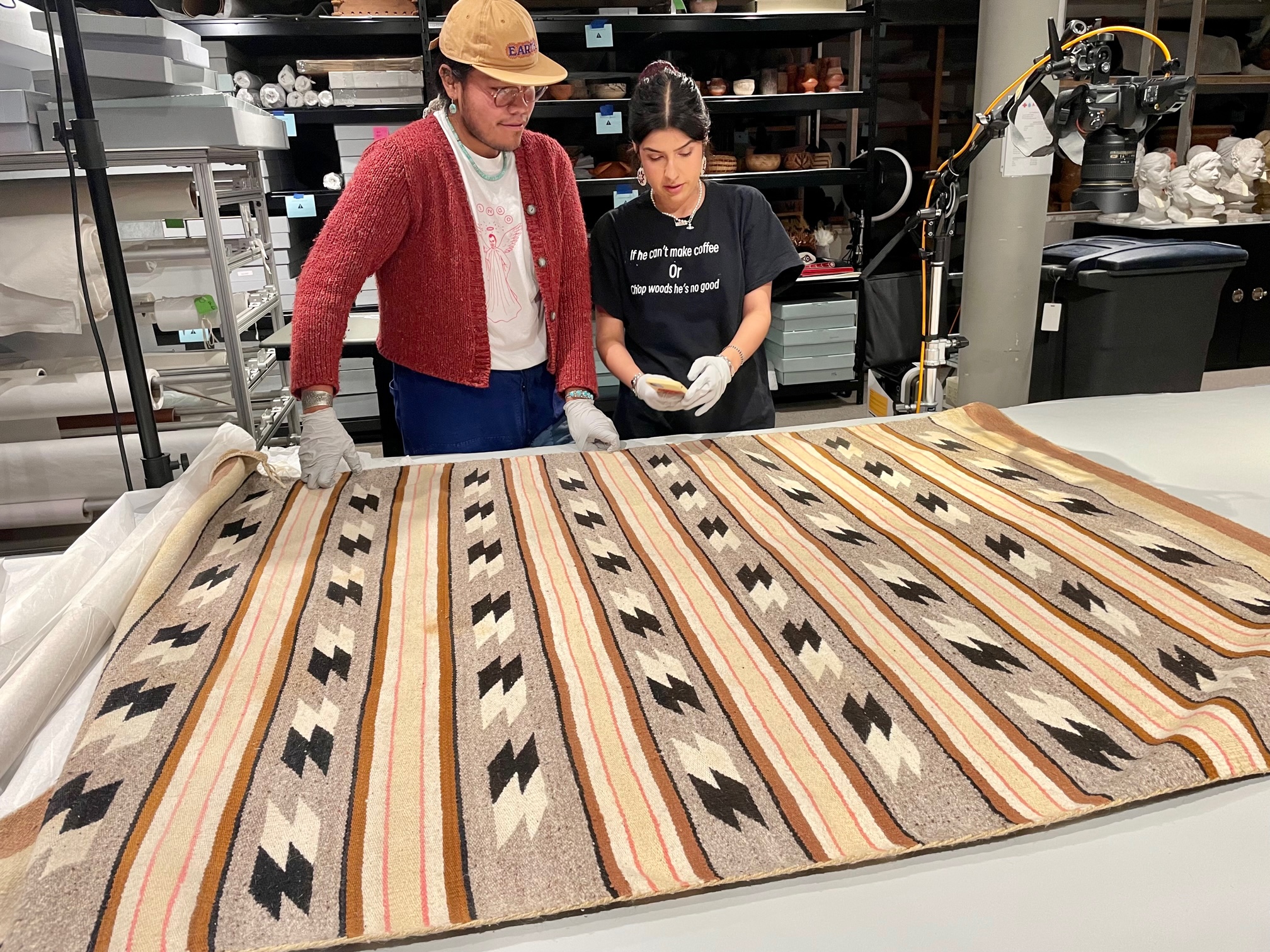
This is a handspun wool blanket, made by aDiné (Navajo) weaver ca. 1950 in a Chinle style pattern, featuring striping bands of varying widths, and some bands with a diamond motif. This style grows out of the Transitional period as regional styles developed in the early 20th century, with the Chinle style characterized by its wide striping bands and palette of earth tones (yellow, gold, tan, brown, terra cotta, and pink being especially common). Diné tribal members Tyrrell Tapaha and Sháńdíín Brown examined this piece together while the Textile Photography Project was ongoing. Tyrrell, a 6th generation weaver in their own right, noted, "This was probably a much more vibrantly yellow when originally woven. The natural mordants used to fix vegetable dyes didn't fix the color as well as more modern metal containing salts."
Western audiences most often think of blankets as household goods for bedding or use as throws, but in many cultures, including Diné (Navajo) culture, blankets can be worn as clothing. In her recent exhibition Diné Textiles: Nizhónígo Hadadít’eh, They are Beautifully Dressed at RISD Museum, Shándíín emphasised the cultural meaning woven into these garments, and the beauty and resilience of the weavers, wearers, and weavings. Wearing blankets, called beeldléí, were multipurpose items, worn over the shoulders, and used as mats, rugs, tarps, or bedding. While we can't say if this particular blanket was worn, we can certainly keep that possibility in mind.