Off the Roll: Highlights of a Global Textiles ProjectMain MenuOff the Roll: Highlights of a Global Textiles ProjectHome PageClothing - Wearable ArtCreatures - Real and ImaginedDecorative Techniques from Around the WorldSpiritual Iconography and Ceremonial ObjectsThe Things that Make a HomeTextiles Photography ProjectJessica Nelson9a5eb8d4bf9f59a8ae5935bcd61eb6b29c513138
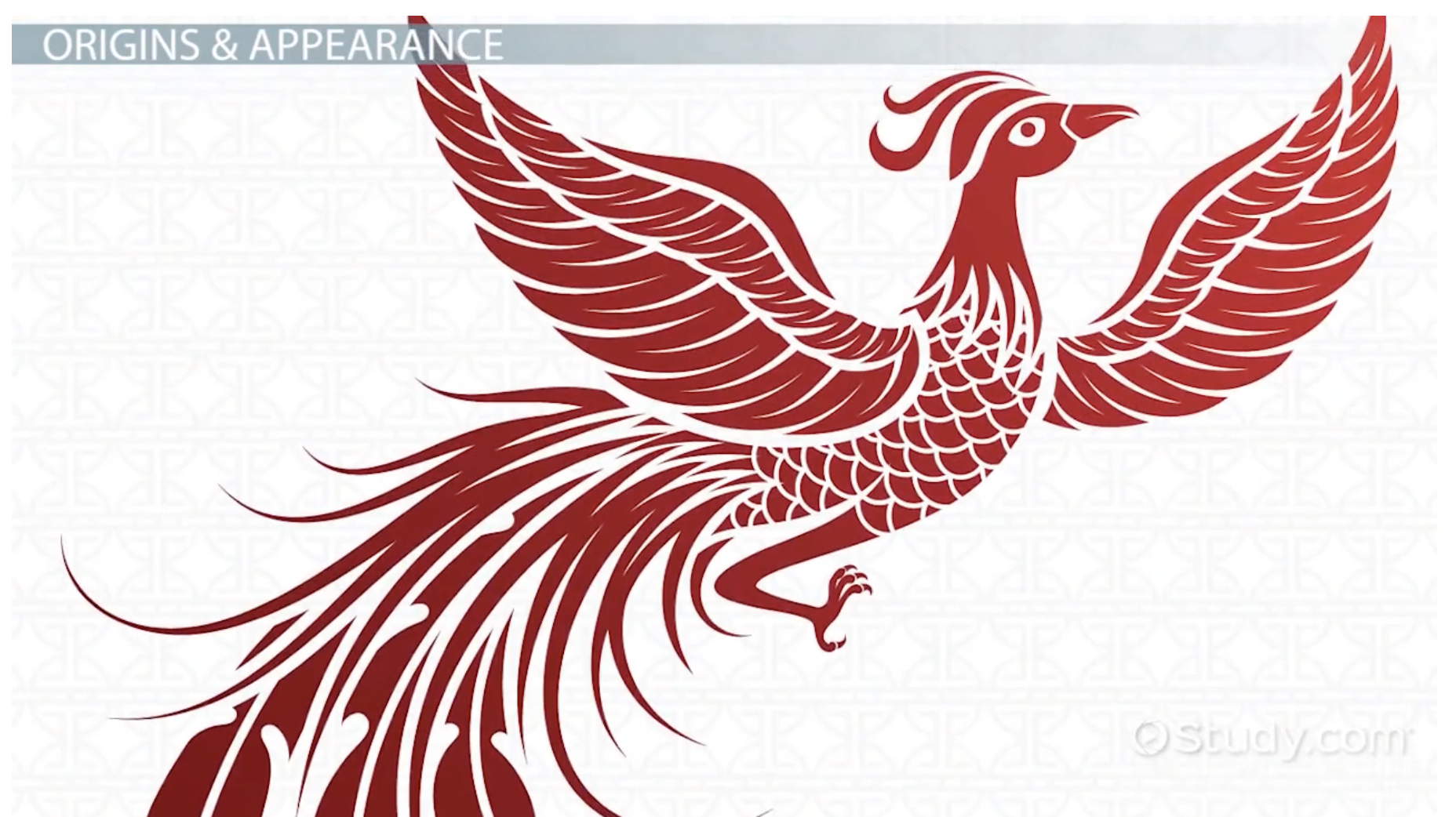
Fenghuang
1media/Screenshot 2024-08-29 at 10.49.28 PM_thumb.png2024-08-30T02:55:26+00:00Jessica Nelson9a5eb8d4bf9f59a8ae5935bcd61eb6b29c51313821A Fenghuang; image courtesy of Study.com Phoenix vs. Fenghuang Bird Lessonplain2024-08-30T02:55:26+00:00Jessica Nelson9a5eb8d4bf9f59a8ae5935bcd61eb6b29c513138
This page is referenced by:
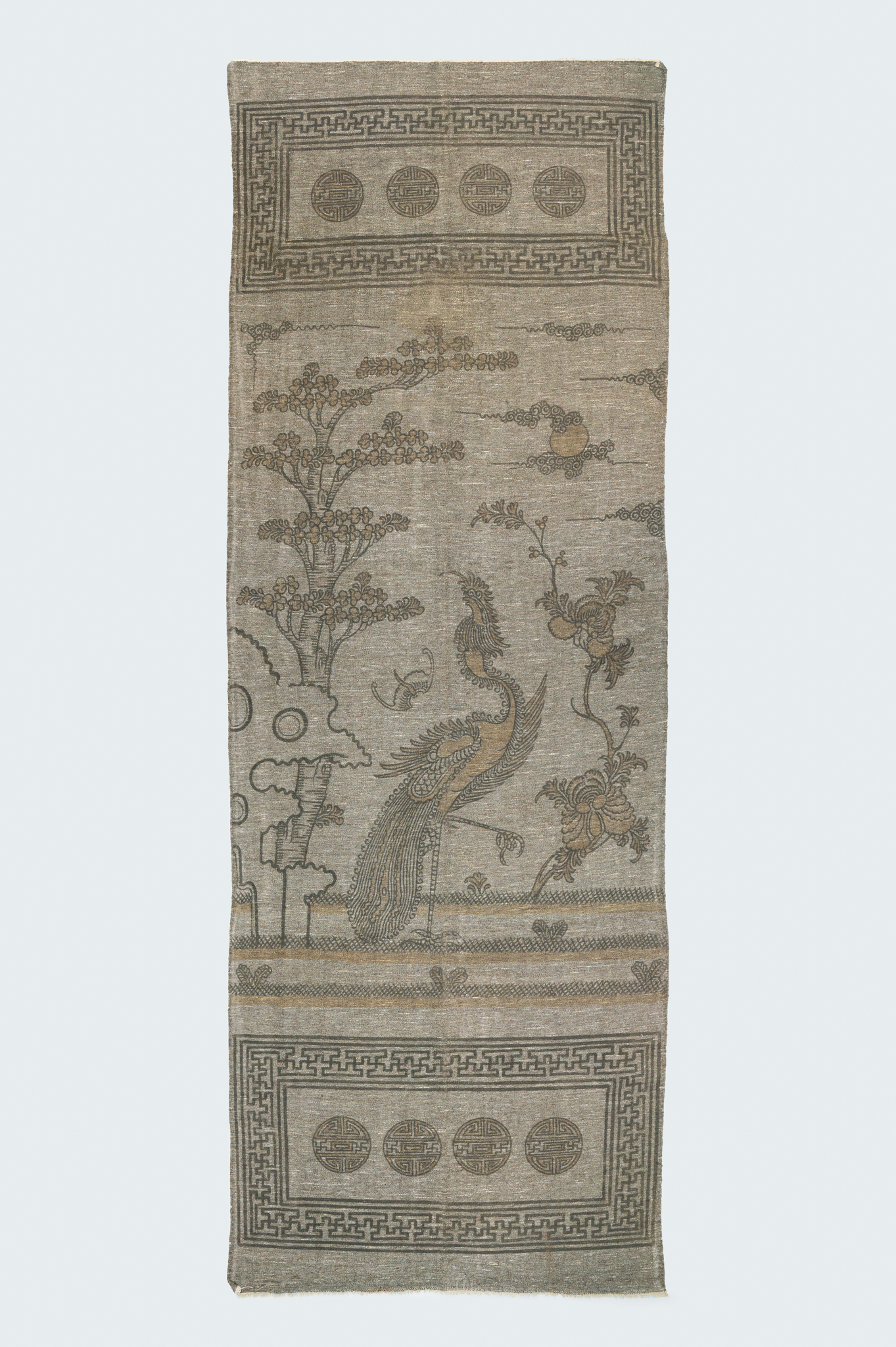
12024-08-30T02:19:43+00:00Fenghuang Textile (Chinese)4plain2024-09-19T14:53:16+00:00 Maker Once Known, Chinese People (China) Fenghuang Textile (n.d.) wool, cotton 327.0 x 118.0 cm Gift of Vice Admiral Alexander G. Lyle 94-140
The Fenghuang is a composite creature, often depicted in art with "the head of a pheasant, the body of a duck, the tail of a peacock, the legs of a crane, the beak of a parrot, and the wings of a swallow." That certainly matches the description of the bird centered in this weft faced wool textile with cotton warps! Featuring a natural grey and black printed pattern with muted yellow detailing, the fenghuang stands in landscape with a tree, rocks, flowers, a bat, the moon, and clouds, and bordered on both ends with Chinese symbols set in a geometric frame. A mythical creature in Chinese mythology, the fenghuang is said to be an immortal creature, embodying both male and female elements. As such, it signifies balance and harmony, much like the yin-yang. References to this creature appear in Chinese culture as early as ca. 1600 BCE with the Shang Dynasty, and the Fenghuang is frequently associated with the emperor, or the crowning of a new emperor.
This cloth, which may have been used as a floor covering or may be part of a larger tapestry textile, was collected by Vice Admiral Alexander G. Lyle in China between 1930-32. According to his biography, "in July 1930, Lyle served with the Fourth Regiment Marines in Shanghai, China. He remained in the area and transferred to USS Houston, then flagship of the Asiatic Fleet. In September 1931, Lyle was promoted to Commander." The following year, he returned to the US, continuing his military service. This timeline provides a bit more context for when this textile may date to – certainly before 1930.