Textile Photography
4
image_header
2024-09-26T15:55:26+00:00
Juan Arce, Photographer
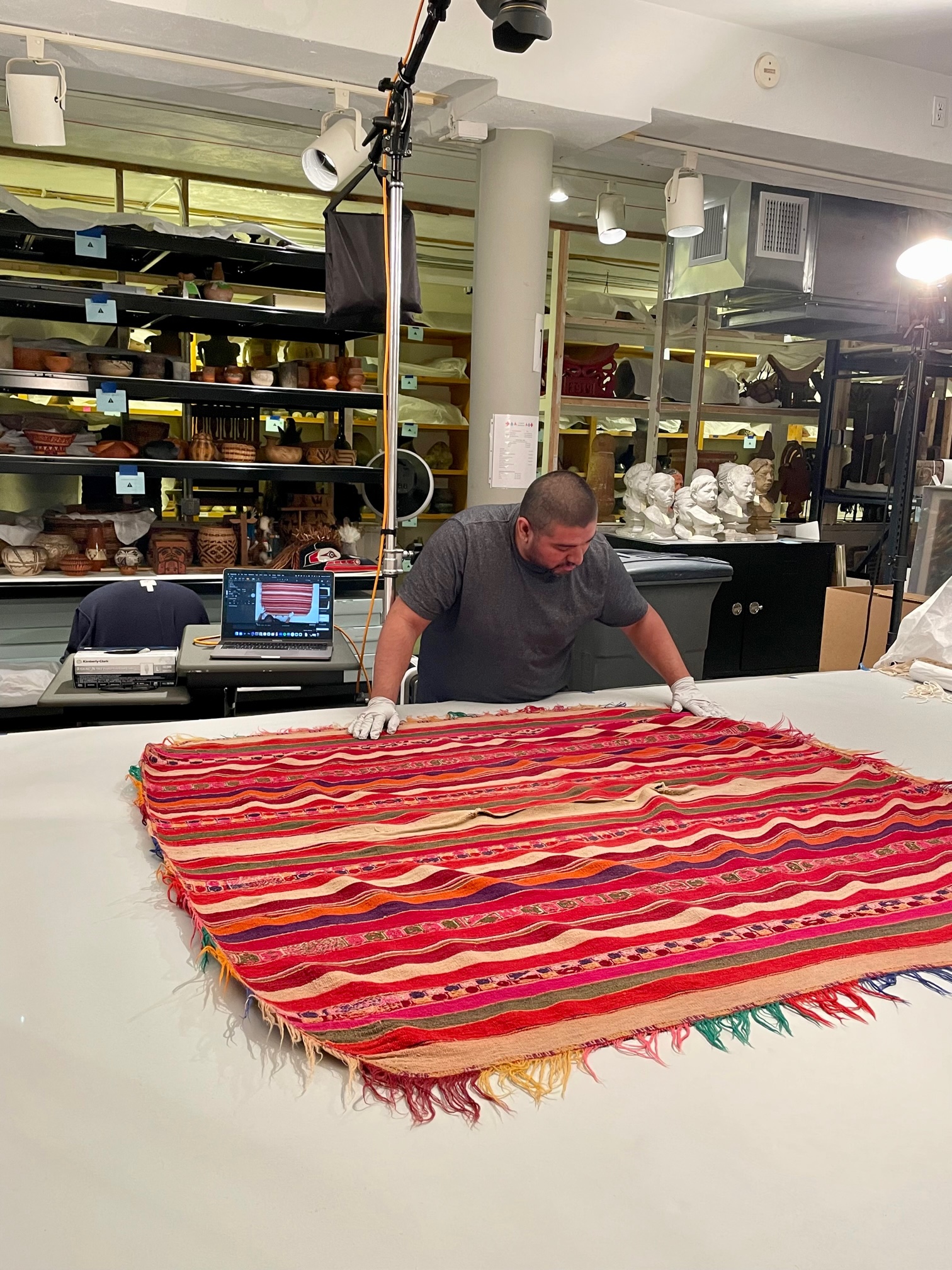
When photographing oversized textiles, several factors must be considered, including…
- The need for assistance due to size, shape, or weight
- An object's dimensionality
- Precise parameters for determining 'oversized'
Oversized
Achieving optimal image sharpness depends on aperture (f-stop), subject distance, and focal length (fixed or zoom). Understanding these elements helps determine the camera's capture capacity—the area where it can gather the most detail while maintaining sharpness. By considering these factors, you can maximize image quality. For this project, the camera was placed on a central tripod on our workspace with the ability to adjust up to ceiling height. If the textile cannot fit within the frame keeping in mind all that has been said above, the textile has been deemed oversized and will require a process called stitching.
Stitching
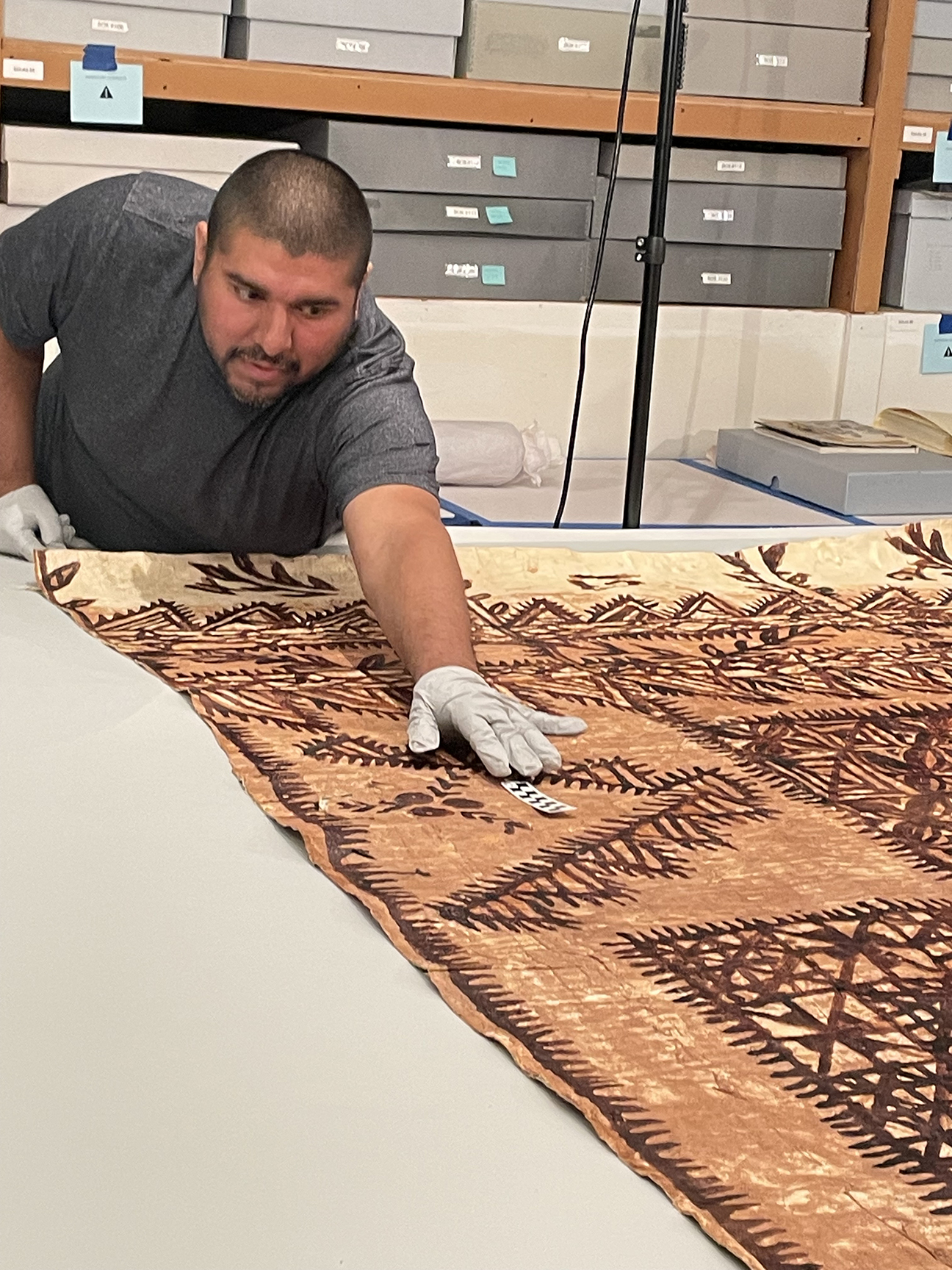
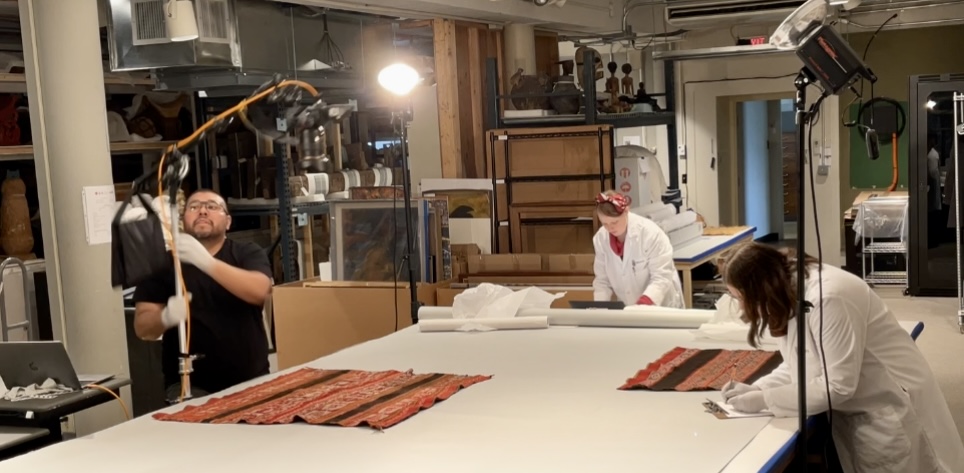
Stitching in Photoshop combines multiple overlapping images into a single, larger image. This technique is often used for panoramas or oversized subjects. Accurately stitching multiple images is challenging, so we use anchor points within the textiles to guide the software. These anchor points, in our case a photographic color checker, help define image boundaries and ensure precise alignment. We are strategic in our placement of these markers, making sure not to cover unique elements of the pattern or coloring on the piece so that these markers can be photoshopped out in the final image. I worked closely with team members Jess and Jennie to coordinate object movement when multiple photographs needed to be taken of an object to limit variation in position between images, which makes stitching more challenging.
Lighting
When photographing objects with diverse surface textures (glossy, coarse, fluffy, etc.), it's crucial to select lighting that accentuates their best qualities. This helps viewers understand the object's tactile nature. While soft, diffused light is ideal for textiles, it can dull the appearance of fabrics with metallic fibers or threads. We opted to position three lights in a triangle around the workspace at maximum power and oriented toward the ceiling, thus utilizing the white walls and ceiling as a large softbox to provide even illumination.