Off the Roll: Highlights of a Global Textiles ProjectMain MenuOff the Roll: Highlights of a Global Textiles ProjectHome PageClothing - Wearable ArtCreatures - Real and ImaginedDecorative Techniques from Around the WorldSpiritual Iconography and Ceremonial ObjectsThe Things that Make a HomeTextiles Photography ProjectJessica Nelson9a5eb8d4bf9f59a8ae5935bcd61eb6b29c513138
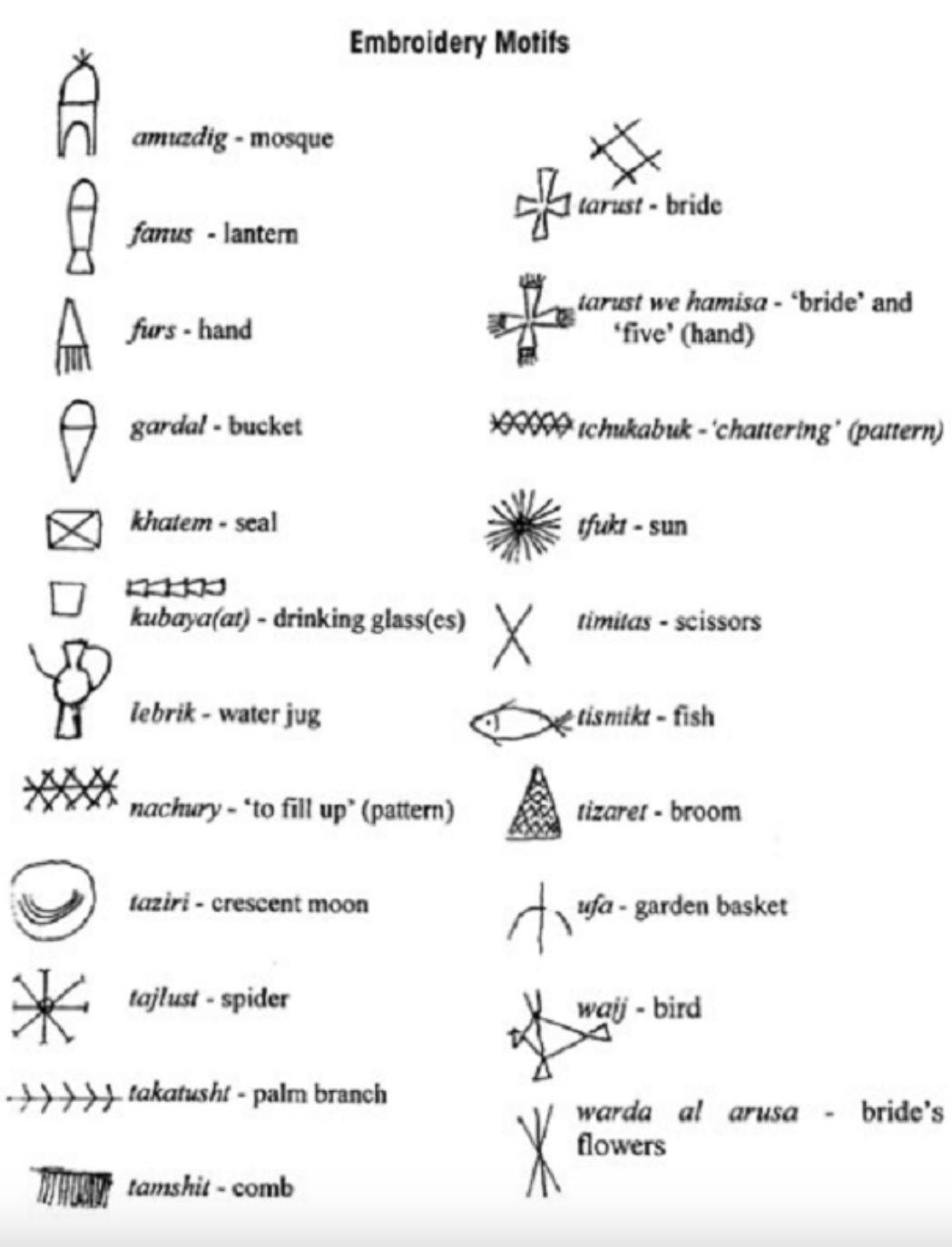
Siwa Oasis Embroidery Motifs
1media/Screenshot 2024-09-23 at 9.05.16 AM_thumb.png2024-09-23T13:19:57+00:00Jessica Nelson9a5eb8d4bf9f59a8ae5935bcd61eb6b29c51313821Siwa Oasis Embroidery Motifs photo from Vale’s Siwa: Jewellery, Costume, and Life in an Egyptian Oasis; image courtesy of https://thezay.org/siwa-oasis_1/#:~:text=The%20embroidery%20threads%20are%20predominantly,date%20palms%20and%20olive%20trees.plain2024-09-23T13:19:57+00:00Jessica Nelson9a5eb8d4bf9f59a8ae5935bcd61eb6b29c513138
This page is referenced by:
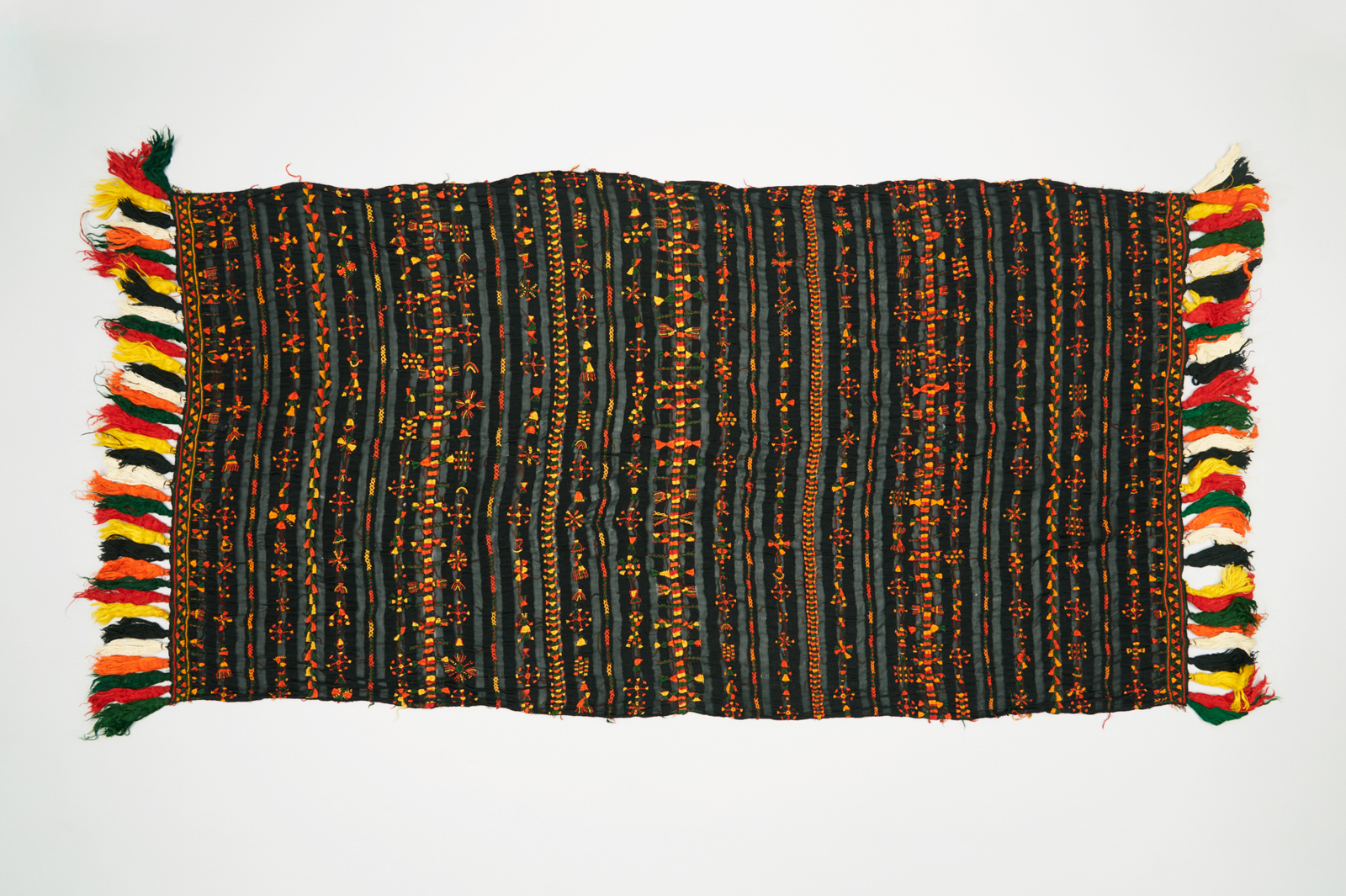
12024-08-19T15:32:56+00:00Wedding Shawl (Egyptian)15plain2026-03-26T13:20:16+00:00 Maker Once Known, Egyptian Peoples (Egypt) Wedding Shawl (1962) silk, cotton 160.0 x 71.0 cm Gift of Prof. Dwight B. Heath and Anna Cooper Heath 1999-33-6
This colorful shawl was made for a wedding in the Western oasis of Bahariya. As described by John Gillow in African Textiles, shawls such as this one made from translucent black or mauve silk with cotton multicolored detailing and fringe were famously produced in the "predominantly Coptic village of Naqada, just south of Luxor, on the west bank of the Nile" (2003: 130). The people of the Siwan Oasis in the western part of Egypt have numerous associated meanings with the colors and the symbols woven into this shawl. The five colors of black, orange, yellow, green, and red are traditional Siwan embroidery colors, and each of the symbols has its own specific meaning. Using this chart from a blog about embroidery and adornment from the Siwan Oasis, how many symbols can you find in this wedding shawl?
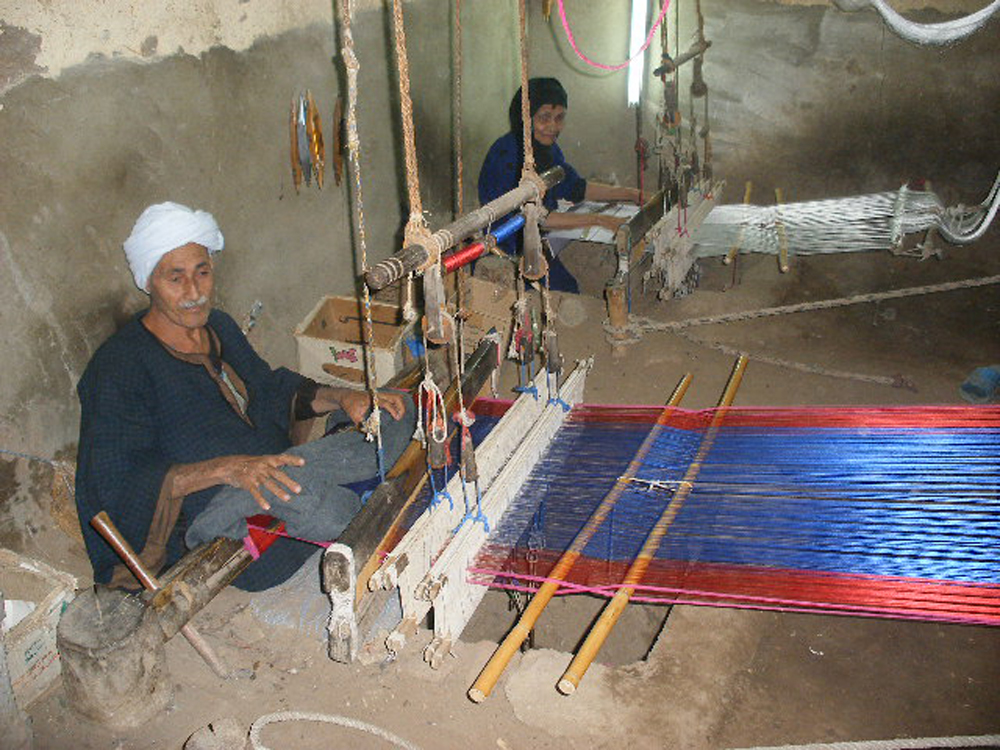
Such shawls were produced on pit looms, a type of manually operated loom that is named from the pit over which the loom is set. The horizontal loom's four posts are sunken into the ground, allowing the treadles to be located inside the pit, which the weaver operates using their feet. Treadles, or foot pedals, raise and lower the shafts of a floor loom. The treadles separate the warp threads to create a gap between the threads, which the weaver then pushes a shuttle through to insert weft yarn. According to UNESCO, these traditional skills and weaving techniques are in danger of being lost under the pressures of modern technology and commercialization. More examples of these pit looms can be seen on UNESCO's site on intangible cultural heritage.