Jennie Condition Reporting
1 media/Jennie Condition Reporting_thumb.jpeg 2024-08-07T13:27:50+00:00 Jessica Nelson 9a5eb8d4bf9f59a8ae5935bcd61eb6b29c513138 2 1 Jennie Smithken-Lindsay Condition Reporting; image by Jessica Nelson plain 2024-08-07T13:27:50+00:00 Jessica Nelson 9a5eb8d4bf9f59a8ae5935bcd61eb6b29c513138This page is referenced by:
-
1
2024-08-21T00:32:45+00:00
Overskirt (Kuba)
19
plain
2026-03-25T20:54:45+00:00
Maker Once Known, Kuba People (Bushoong Group) (Democratic Republic of the Congo)
Overskirt (n.d.)
raffia, bark cloth
160.0 x 74.0 cm
Gift of Anna Cooper Heath
H-654
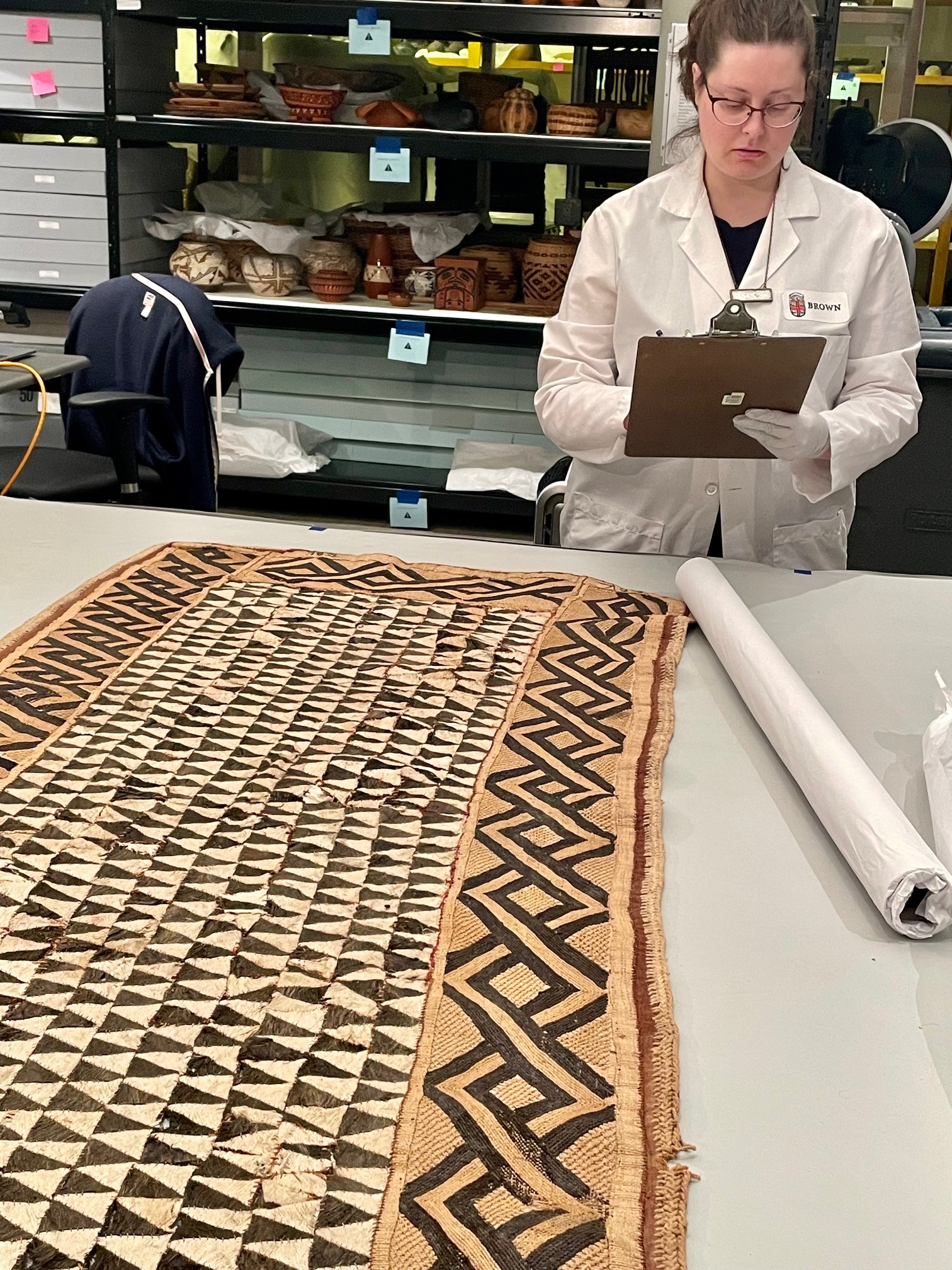
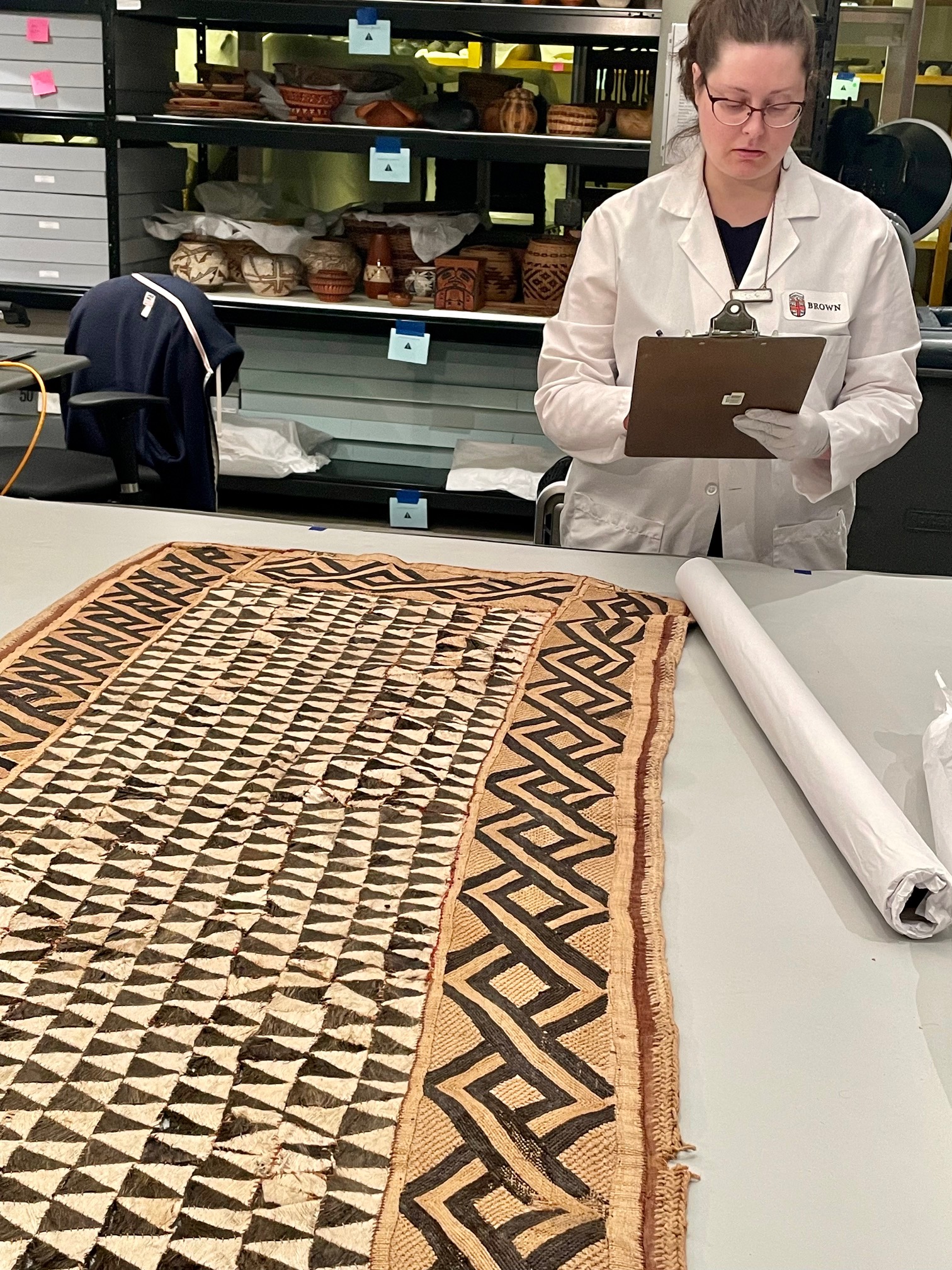
This textile is an overskirt. Made by the Kuba people, this type of cloth is a raffia fiber textile that originates from the Democratic Republic of the Congo. It is known for bold geometric patterns in contrasting colors, such as the black and tan triangles surrounded by a border of black zigzags that can be seen in the cloth above. According the Metropolitan Museum of Art, men and women had specific roles in making textiles: "Cloth was woven from the fibers of the raffia palm by Kuba men and then given to Kuba women, who stitched the separate pieces together, dyed them, and decorated them. Wrappers for both men and women were created from several panels of cloth and embellished with appliquéd cloth or with embroidered geometric designs." You can find out more about Kuba produced textiles from the Met. This particular cloth is characteristic of a Bushoong overskirt, "with a central patchwork panel of black-and-white triangles surrounded on three sides by embroidered raffia panels" (Gillow 2003: 202). In the book African Textiles, author John Gillow indicates that the raffia panels on these overskirts are far more durable than the inner bark cloth panel, so it is not atypical to see older raffia panels reused on new overskirts as the bark cloth wears out (2003: 202). Overskirts of this type are considered to be particularly prestigious, and "are often draped over bodies at funerals" (Gillow 2003: 202).
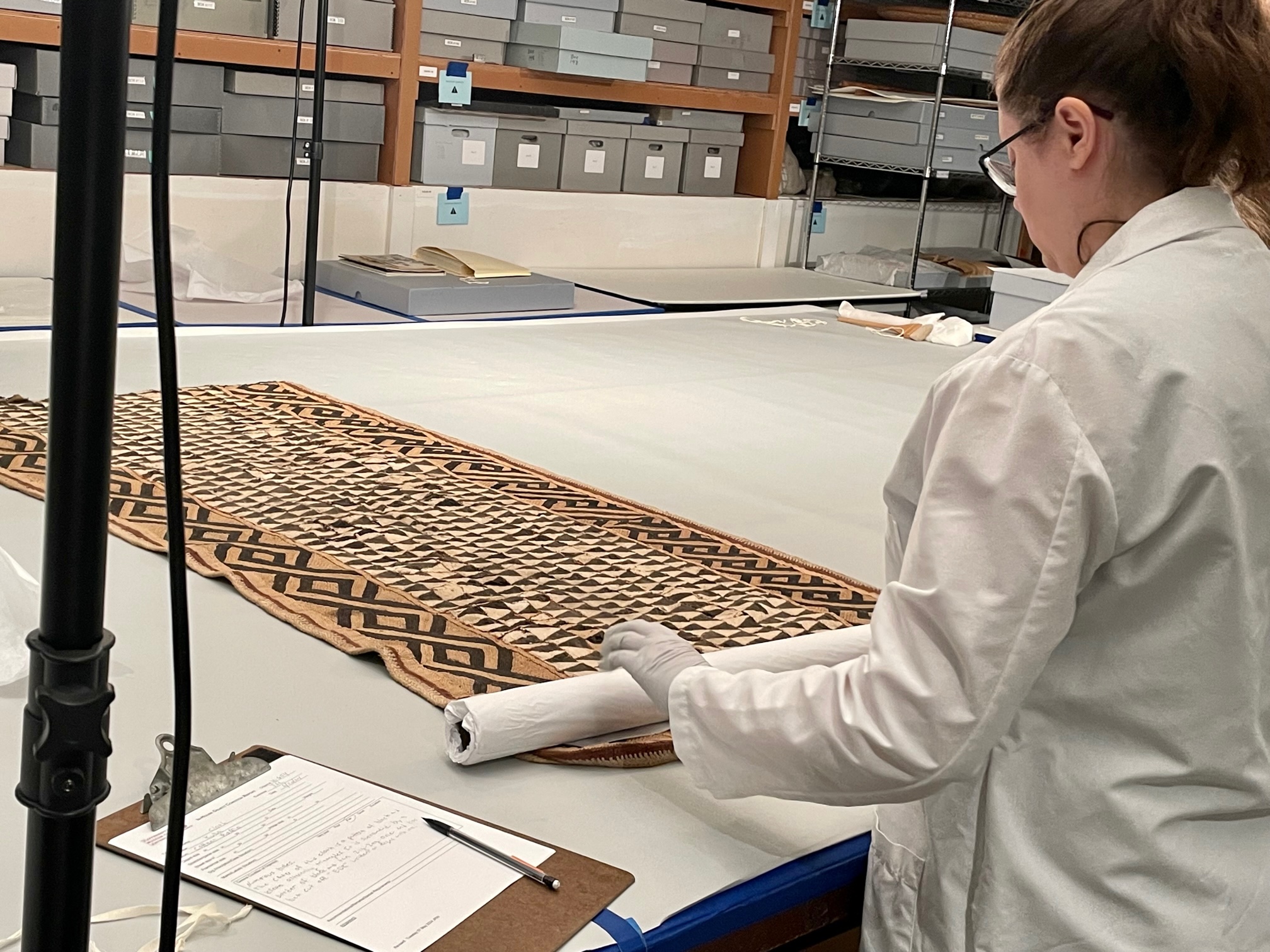
In the image above, Jennie, collection assistant, is filling in a condition report on this overskirt. The top half of the form has fill-in-the-blanks that captures object information such as object name, (overskirt) object number (H-654), artist/maker (Kuba people, artist once known), medium (bark cloth and raffia), dimensions, marks/labels, signature/inscriptions, etc. The form’s bottom half has a blank space for the examiner to write a detailed description of the object’s condition and wear. In this case, the examiner has written “Numerous holes throughout. The center of this tapa is a pattern of black and cream alternating triangles. It is surrounded by a border of black and tan zigzags. One end has been cut off. “EDK” is written on the edge with ink.” These notes are often accompanied by sketches or photographs to illustrate and record any damage. What condition notes would you make about this textile in the photograph? -
1
media/Condition Report for 98-36-53.jpg
2024-08-20T14:59:33+00:00
Condition Reporting
17
image_header
2026-03-25T20:47:38+00:00
Jennie Smithken-Lindsay, Collections Assistant
After the textile has been photographed, the next step in this process is to complete a condition report. A condition report is a written and visual description of an object’s appearance, it’s state of preservation, and any damage, at a particular point in time. The information is captured in a standardized document, that allows collection staff to gather the same information in every instance. You can see an example of a blank report here. Condition reports can be conducted on an object when it first enters a collection, when it is going on exhibit, or when it is part of a project like this.
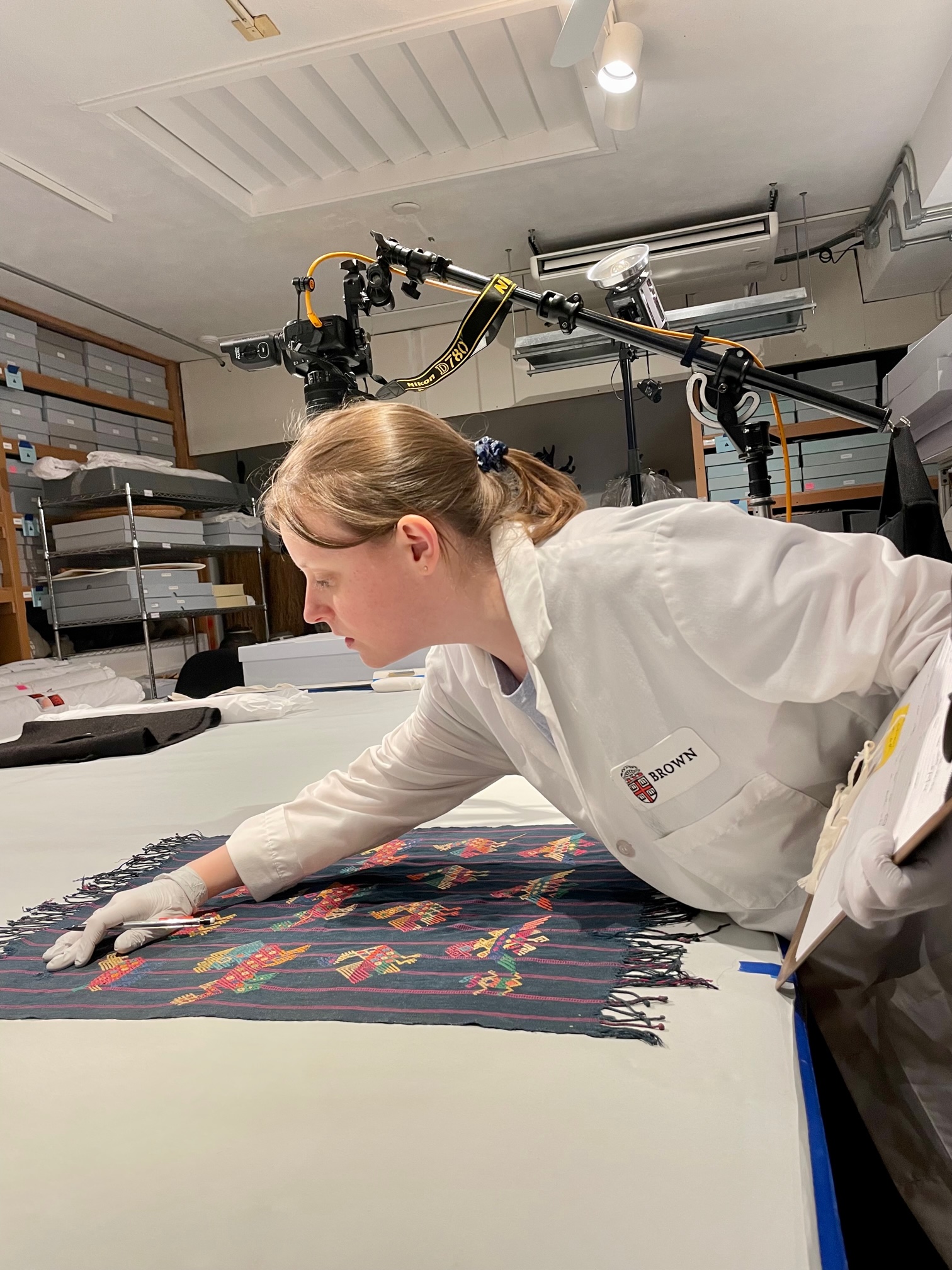
To begin, the textile is laid out on a flat, clean, well-lit area. The tools on hand may be a magnifying glass, a flashlight, a pencil, a paper copy of the condition report form, and a laptop for recording additional information and for access to the museum’s digital collections database.
Next, the collection staff member observes the overall object.Does the object appear to be extremely fragile? Extremely fragile object require extra care and consideration when being manipulated, and this fragility is flagged and special handling needs are noted in the condition report.
Then, the staff closely inspects the object. Are there parts or segments that are folded or closed? If these areas cannot be opened easily they are never forced open. Instead a note is made in the report. Are there any stains, spots, chips on buttons, missing pigment, holes, pulled or frayed threads? All of these are examples of damages that are looked for. Are there any previous repairs? Both the size and location of the damages are recorded.
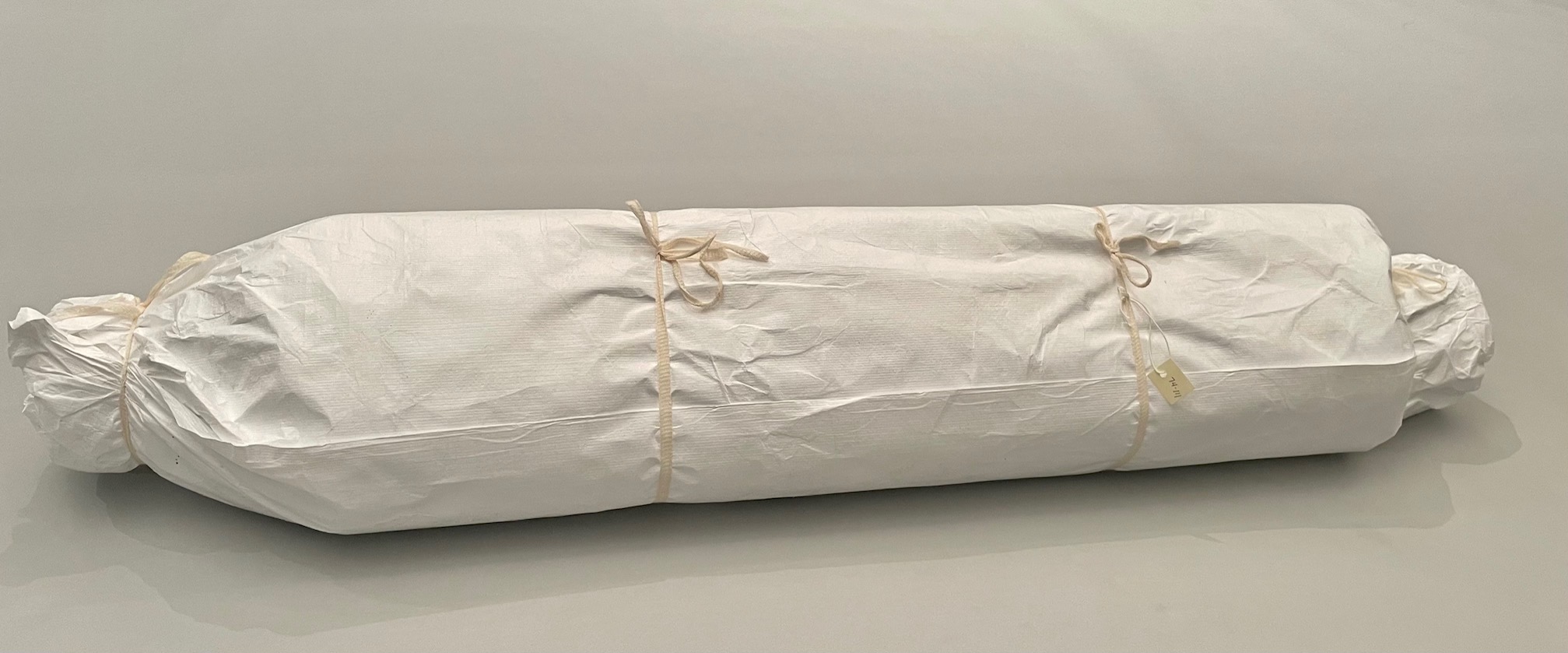
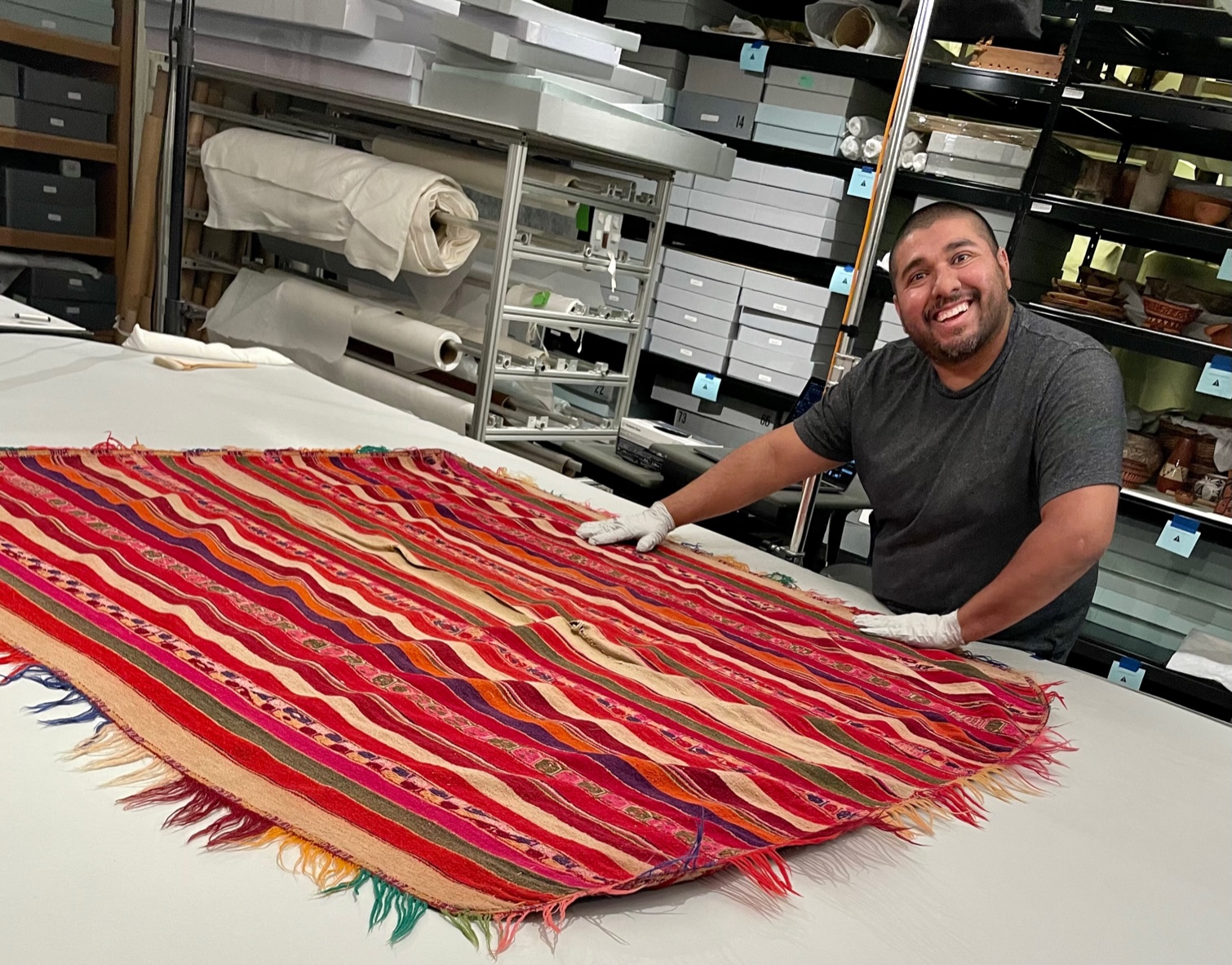
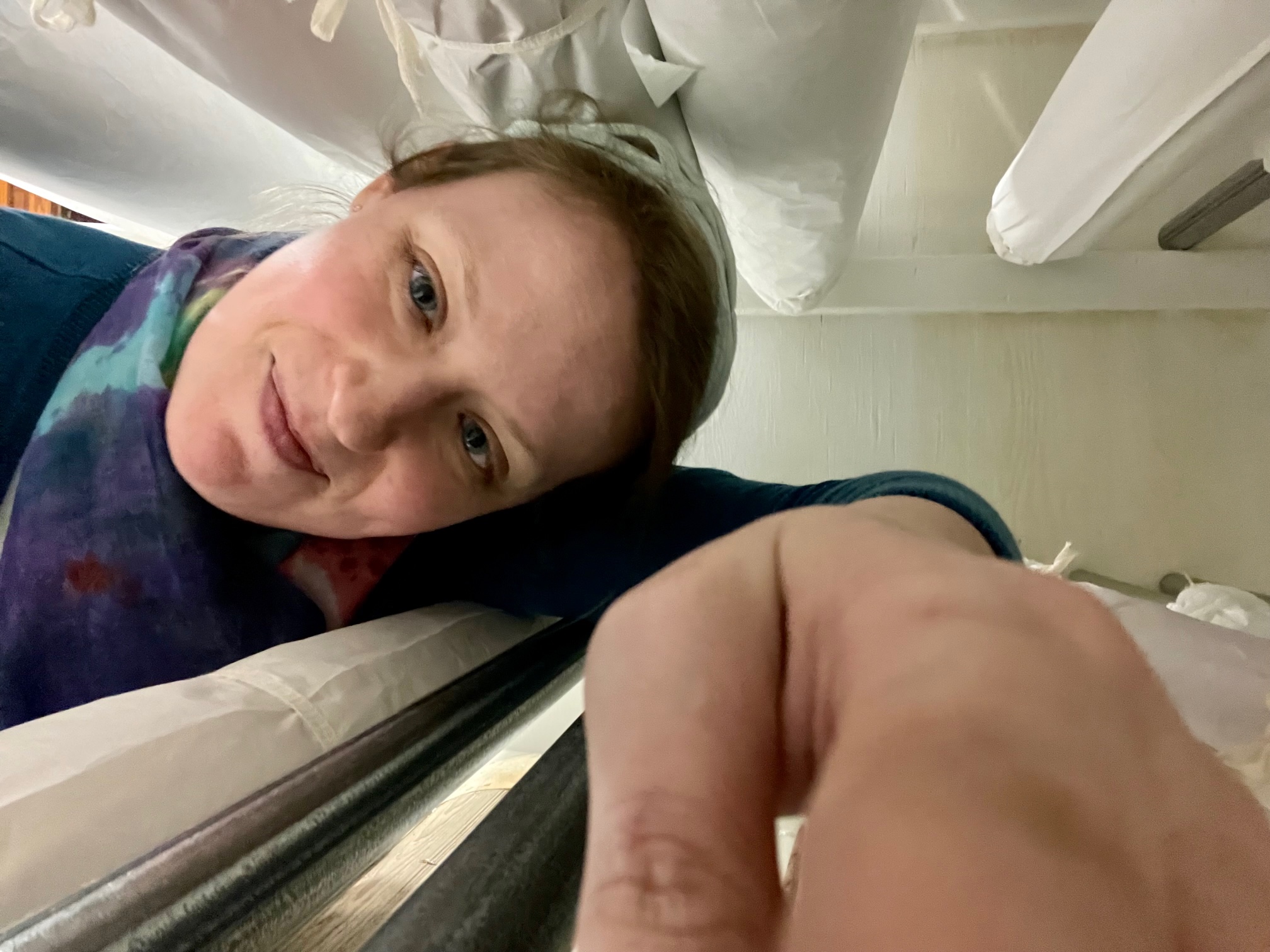
After a condition report is completed, the textile is placed back on its roll. This is done by laying the storage tube at one of the textile, pictured here.Holding the end of the textile to the side of the tube firmly but gently, the staff member begins rolling the tube down the textile, winding the textile around the tube as it goes. Once the entire textile is wound around the tube, a layer of acid-free tissue is tied around it to protect it, as seen here.
By doing a condition report, the collection staff will immediately notice any damage that has occurred. This allows staff to keep track of the physical condition of the object, and apply any necessary conservation measures to ensure the stability of the object. These reports also help staff monitor the overall health of the collection.
-
1
media/Collections_Team.jpg
2024-08-28T00:59:54+00:00
About the Authors and Acknowledgements
12
image_header
2024-09-26T16:06:36+00:00
Off the Roll: Highlights of a Global Textiles Project is a virtual exhibit created by the Collections Team at the Haffenreffer Museum of Anthropology. All team members have been instrumental throughout this project and the creation of the exhibit.
Collections TeamJuan Joel Arce is a still life photographer with a BFA in Photography from Parsons the New School for Design. Arce began his career digitizing the collections of the Smithsonian, MoMA, and the Philadelphia Museum of Art. Currently, Arce serves as Executive Director of GRID Gallery, a 501(c)3 non-profit which champions the work of QTBIPOC Photographers, empowering them with educational and professional development opportunities. Juan photographed and created all of the object images used throughout this exhibition.
Jessica Nelson is a historical archaeologist, with a PhD in anthropology. As Curatorial Assistant at the HMA, she works primarily in collections care, and much of this work takes the form of cataloging, inventorying, and rehousing initiatives. To raise the profile of this type of care, she developed a digital exhibition Engaging the Americas, and spearheaded the development this exhibit, co-creating much of the content in this exhibit.
Jennie Smithken-Lindsay is an art historian, with MA degrees in medieval studies and art history. As a collections assistant, she inventories, rehouses, and cares for the collections. She is also a member of the Social Media committee, helping to create content that educates and informs our audience about the Haffenreffer’s activities and collections. Jennie co-created much of the content in this exhibit.
Jen Wicoff is a physical anthropologist with over 20 years of experience in collections management. As Collections Manager & Registrar, Jen heads the Collections Team with pride, coordinating loans, overseeing the database, and planning for our move. Jen also chairs the Collections and Emergency and Risk Management Committees, working with her colleagues to grow the collections and ensure their safety. She oversaw and guided this project from start to finish and helps to contextualize this exhibit.
Acknowledgements
In addition to the HMA Collections Team members listed here, important contributions to this exhibition were made by many others. We wish to thank: Thierry Gentis, HMA's Head Curator, for his insight throughout the project; Tyrrell Tapaha for sharing their insight into Diné weavings so generously; Sháńdíín Brown for bringing Tyrrell to the HMA for a visit and for sharing her own insights into Diné weavings and iconography; Mary Walker for sharing her knowledge and images of Navajo weavings; the Andrew W. Mellon Foundation whose Transforming the Haffenreffer Grant supported this project by funding collections staff positions at the museum; and the many researchers, artists, collectors, and descendant community members quoted throughout this exhibit for sharing their knowledge with the HMA.