Tzute (Utility Cloth) (Guatemalan and Kaqchikel)
Tzute (Utility Cloth) (1900-1930)
cotton
69.0 x 77.5 cm
Gift of Erik Jacobsen
98-36-57
This textile is a tzute, or woman's utility cloth. Also called servilleta (in Spanish), these brightly woven cotton cloths were used for multiple purposes in daily activities. However, according to the McClung Museum of Natural History & Culture "A servilleta is generally used to cover a basket or to wrap food, and a tzute refers to a head-cloth, neck-cloth, ceremonial wrapping or scarf to carry a baby. Tzutes tend to vary more in style and size depending on its intended ritual purpose."
This particular tzute is constructed of two woven panels joined together with green thread. Each panel is striped with alternating bands of red, blue, and white with blue geometric spots. In addition the surface is decorated with figures of birds, humans, and quadrupeds. The two woven panels consist of weft brocading and warp ikat technique. Ikat is the technique of tying and dyeing individual threads in a pattern before weaving the threads into a textile. In Guatemala, ikat dyes are derived from nature. According to the Center for Culture and Development - The Netherlands,
"In Guatemala, ikat predominantly employs cotton yarns, which are dyed using natural materials like plants, flowers, vegetables, fruits, and bark. These natural elements produce a stunning palette of colours, including the soft pink hues derived from hibiscus flowers, the warm orange hues from carrots, the earthy greens from quilete herbs, the gentle beiges from avocado bark, and the deep indigo blues from indigo plants."
The tzute above is an excellent example of the ikat technique.
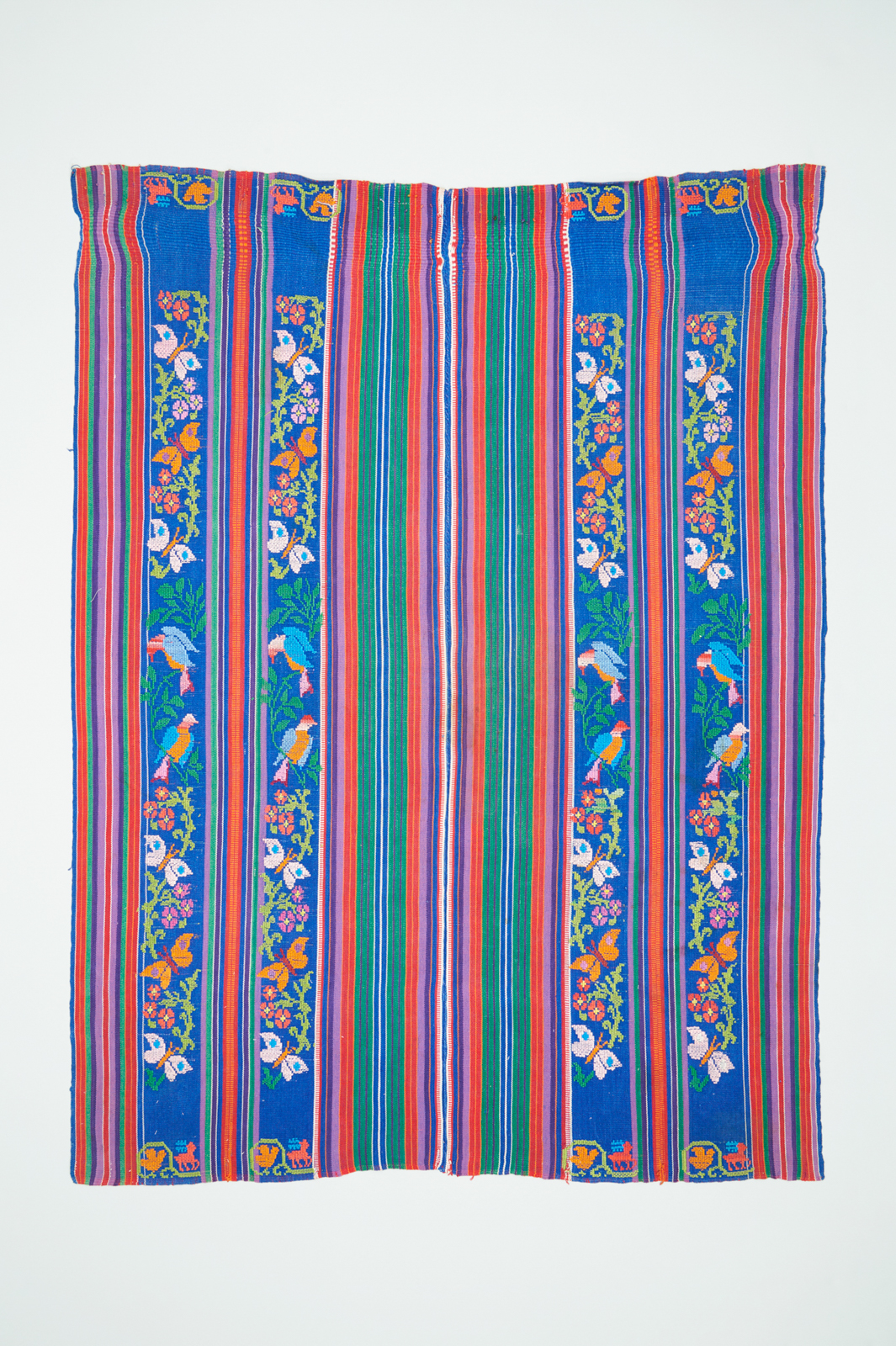
Another example of a tzute can be seen below. This utility cloth was also woven on a backstrap loom. It features two cotton panels sewn together. Each panel consists of stripes in red, green, purple, blue, orange, and lavender, in differing widths and combinations. Between the stripes are wider blue stripes with colorful bands of supplementary weft brocade decoration including flowers, birds, and small quadrupeds at the ends. Designs executed this way can almost resemble embroidery, but as you can see in this post about supplementary weft patterning on backstrap looms, instead the decorations are woven into the fabric using extra contrasting colored wefts (horizontal threads) rather than being later decorative additions as happens in embroidery. In this piece, the two panels mirror each other in terms of decoration.
Maker Once Known, Kaqchikel (Guatemala)
Tzute (Utility Cloth) (1938)
cotton
101.0 x 76.0 cm
Field collected by Margot Blum Schevill with funds from the Haffenreffer Special Fund
79-11
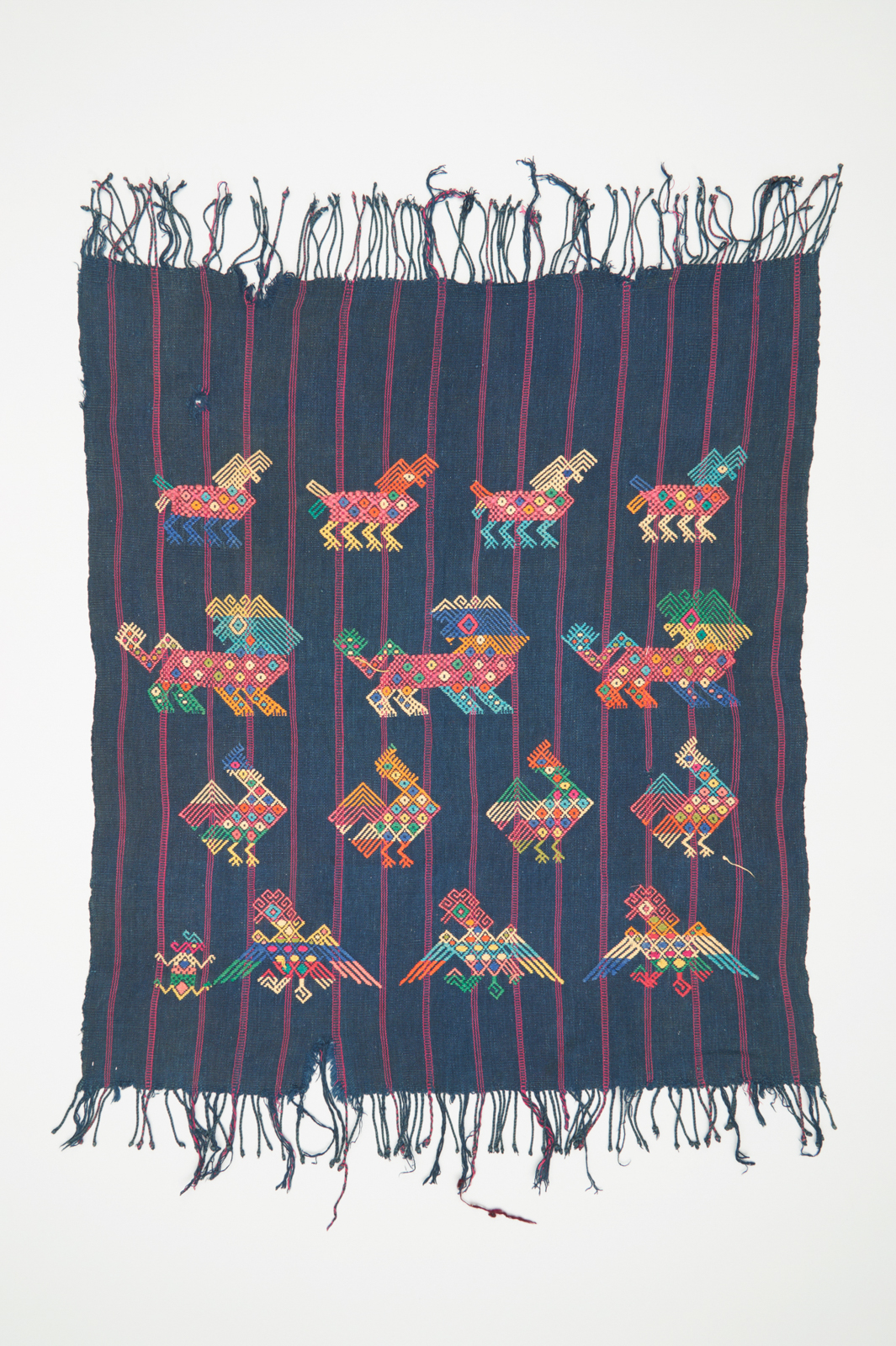
Such colorful decoration is typical of Guatemalan textiles. The figures can be created in one of two ways. One way is to embroider figures and patterns freehand after the cloth has been woven. This uses a needle and thread instead of the loom. This method is very rare in Guatemalan textiles. The second method is though a brocade weave or supplemental weft brocading, as described above, which creates patterns within the weaving itself. Here, additional threads are introduced into the weft during weaving, row by row as the weaver progress according to the desired pattern. The textile above is an example of this type of decoration. Another example can be seen below, as the multicolored birds, lions, and other quadrepeds were woven into the blue background of this tzute. Maker Once Known, Guatemalan (Guatemala)
Tzute (Utility Cloth) (1950-1960)
cotton
78.0 x 57.5 cm
Gift of Erik Jacobsen
98-36-53
This page has paths:
- Creatures - Real and Imagined Jennie Smithken-Lindsay
- The Things that Make a Home Jessica Nelson
- Decorative Techniques from Around the World Jessica Nelson